Depression may make simple daily tasks feel overwhelming for individuals. An intensive outpatient program (IOP) treatment for depression offers professional and structured support. It is an ideal rehab option for individuals who don’t need 24/7 supervision or put their lives on hold. IOP rehab helps you regain control while meeting daily responsibilities.
✨ Highlights:
- IOP treatment for depression works effectively by combining therapies.
- Individuals experience different signs of depression, indicating need for IOP.
- Affordability and flexibility are some of the benefits of IOP depression treatment.
- Start IOP at the FRC NJ to achieve and maintain the long-term recovery.
What is IOP Treatment for Depression?
It is a structured treatment plan for individuals who need structured support for depression without requiring full-time hospitalization. Unlike an inpatient program, an intensive outpatient program offers the flexibility of staying at home while attending scheduled treatment.
It is an ideal treatment approach for individuals who want to continue their treatment and daily responsibilities at the same time.
How Does IOP Treat Depression in New Jersey?
The intensive outpatient care for depression addresses the root causes while allowing you to manage symptoms. Individuals may participate in structured therapy sessions that include Cognitive Behavioral Therapy (CBT) and group counseling. The therapeutic sessions in IOP rehabilitation help you recognize the negative thoughts and build healthy coping skills with improved emotional regulation. This program may include medication management for major depressive disorder based on the individual’s needs for stabilization.
💡 Did You Know
Approximately 21.0 million adults in the USA had at least one major depressive episode, which represents that 8.3% adults in the United States experienced depression.
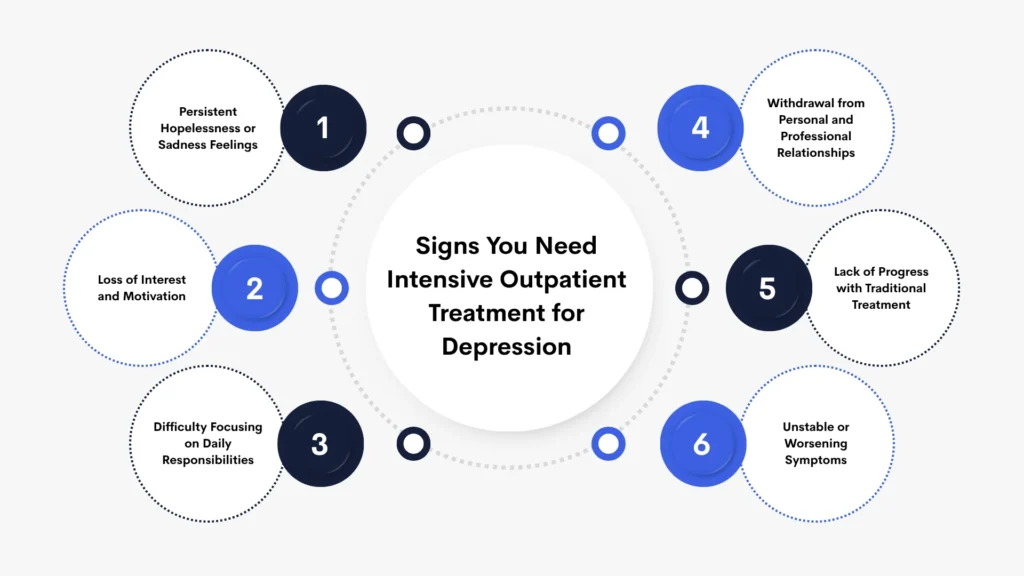
Signs You Need Intensive Outpatient Treatment for Depression
When depression begins to take control of your daily function, energy, and thoughts, it indicates that you need personalized care without full-day hospitalization. Ignoring early signs may make symptoms worse over time. The right IOP support helps you regain control before escalating symptoms.
Persistent Hopelessness or Sadness Feelings
Hopelessness or lower feelings are the major indicators of depression among individuals. The persistent sadness is a sign that you need a more structured and flexible IOP schedule option than intensive and occasional treatment.
Loss of Interest and Motivation
You need structured treatment when you are struggling to find interest or motivation in daily life activities. It may make you feel that activities are a burden, indicating the need for consistent medical intervention and treatment.
Difficulty Focusing on Daily Responsibilities
Daily life tasks like managing household duties, maintaining hygiene, and going to work may seem difficult. These responsibilities can become overwhelming due to difficulty focusing, and indicate that depression is affecting your daily functioning.
Withdrawal from Personal and Professional Relationships
Pulling away from social activities, friends, and family may lead to intense feelings of isolation. Withdrawing from professional and personal relationships is an indicator of the need for streamlined support.
Lack of Progress with Traditional Treatment
You need professional support when you experience persistent symptoms despite treatment. Moreover, the occasional therapy sessions are not enough to manage depression. An IOP treatment offers effective and scheduled care.
Unstable or Worsening Symptoms
A prominent decline in mental health, increased anxiety, and instant mood swings become worse over time. These worst symptoms indicate that you need a structured program for long-term recovery.
What to Expect from the IOP Program for Depression
Starting an outpatient therapy for depression may seem like a major step to deal with overwhelming depression. However, it is important to understand this treatment for easing uncertainty.
IOP treatment programs are carefully created to offer consistent care. These programs may allow you to maintain your daily responsibilities while receiving the treatment.
- Most IOP treatments need scheduled attendance three to five days a week. Each treatment session lasts for a few hours to offer consistent support to individuals.
- Every individual can participate in personalized, individual therapy sessions. These sessions allow individuals to focus on the recovery progress and goals.
- Group therapy is an important component that helps individuals connect with others. Individuals can share their experiences with each other through a strong support system.
- IOP programs may include family counseling to improve communication. This counseling session contributes to a healthier home environment for smooth recovery.
- Regular monitoring of IOP treatment plans based on the individual’s needs. This approach ensures that every individual receives effective care.
Experiencing Different Signs of Depression and Need Immediate Support?
Don’t delay starting your IOP treatment today to overcome depression for lasting recovery.
What are the Benefits of IOP Treatment for Depression?
A right level of care may make a prominent difference in the recovery journey. IOP provides a balanced approach to offer professional and structured support. It also allows individuals to focus on their treatment plans while staying close to their families. Let’s explore the benefits of outpatient care.
Flexibility of Living at Home
The IOP treatment plan is ideal for individuals to receive intensive treatment without proceeding with full-time hospitalization. They also don’t need to leave their home environment, allowing them to live close to their home.
Maintain Daily Responsibilities
The scheduled treatment allows individuals to continue their studying, working, and fulfilling family responsibilities. You can attend the treatment sessions without disturbing your daily routine. Therefore, this treatment does not disrupt your routine completely.
Affordable Treatment Plan
IOP treatment is a cost-effective program for depression compared to other residential programs. This affordable rehab plan offers the ideal level of care, allowing individuals to focus on their recovery rather than worrying about treatment costs.
Strong Support System
Group therapy sessions are conducted to connect individuals who are facing similar problems. It helps individuals in reducing the feelings of isolation with IOP peer support strategies to achieve recovery. This treatment contributes to building a sense of community.
Application of Coping Skills
Intensive outpatient program treatment for depression offers an opportunity to apply the coping strategies in daily life. Real-world application of skills is included in the benefits of outpatient therapy that reinforces your learning of therapy while streamlining the practical recovery.
Reduced Risk of Relapse
IOP offers regular monitoring, skill building, and consistent support during the recovery journey. This treatment helps you manage triggers while reducing the chances of relapse. Therefore, scheduled treatment ensures that individuals don’t experience severe depression again.
Types of Therapies to Treat Depression in an IOP Setting
IOP programs combine a variety of therapies to address distinctive aspects of depression. These treatments also incorporate trauma-informed care, stress management techniques, and mindfulness skills for mental health well-being.
- Cognitive Behavioral Therapy (CBT) helps you recognize and modify negative thinking patterns leading to depression.
- Dialectical Behavior Therapy (DBT) focuses on stress tolerance and emotional regulation.
How Long Does IOP for Depression Last?
The exact timeline for the IOP program for depression varies based on individuals’ needs. It may take 6 to 12 weeks based on treatment goals and progress.
- Severity of depression and intensity of symptoms
- Co-occurring conditions such as anxiety and trauma
- Consistency in attending treatment sessions
- Availability of family support at home
- Pace of achieving treatment goals
Does Insurance Cover IOP for Depression in New Jersey?
Many insurance providers offer coverage for IOP to deal with depression. The treatment for depression is usually included in the mental health coverage. However, coverage may depend on the medical necessity and insurance plan. It is important to verify insurance benefits to avoid the unexpected costs.
Ready to Start IOP Treatment for Depression with Quick Insurance Verification?
Contact the Freedom Recovery Center in New Jersey to access the affordable and personalized IOP program to address your depression effectively.
Start IOP Treatment for Depression Today at FRC New Jersey
No need to face depression alone when you can receive structured and personalized IOP care. It’s time to take the first step to start IOP treatment for depression at the Freedom Recovery Center in New Jersey. Reach out to our certified and trusted professionals to recover from depression.
Common Questions and Answers About IOP Treatment for Depression
Explore the answers to frequently asked questions about the IOP rehab program for depression.
What is outpatient therapy for depression?
A flexible treatment that allows individuals to attend the scheduled therapeutic sessions.
What is outpatient treatment with insurance coverage for depression?
Intensive outpatient treatment with insurance coverage makes it affordable for individuals struggling with depression.
Can I use the self-pay option for intensive outpatient depression treatment?
Yes, you can use the private-pay option for IOP depression treatment if you don’t want to use insurance.
Does intensive outpatient treatment work for depression?
Yes, IOP treatment is an effective rehab program for moderate to severe depression.
How long is IOP for depression?
IOP for depression is approximately 6 to 12 weeks with 3 to 5 days per week.
How to find IOP depression treatment near me?
You can find the IOP depression treatment near you by contacting the FRC in New Jersey.