Trauma may not only trigger your memories, but it also reshapes your body’s response to the world. Understanding how to heal the nervous system from trauma when you feel emotionally numb or anxious. Structured help is available at Freedom Recovery Center to make your nervous system safe.
✨ Key Points:
- IOP treatment for depression works effectively by combining therapies.
- Individuals experience different signs of depression, indicating need for IOP.
- Affordability and flexibility are some of the benefits of IOP depression treatment.
- Start IOP at the FRC NJ to achieve and maintain the long-term recovery.
What Happens to the Nervous System After Trauma?
The body activates a survival response when trauma affects your daily life. Your nervous system may become normal after the passage of the threat. Here is what actually happens to your nervous system.
- Fawn (avoid conflict and please people)
- Fight (irritability and anger)
- Flight (restlessness and anxiety)
- Freeze (shutdown and numbness)
Struggling with Nervous System Trauma and Looking for Structured Help?
Freedom Recovery Center in New Jersey offers structured help to address the trauma of the nervous system.
What are the Common Signs of a Dysregulated Nervous System?
It is important to understand the different signs when you are looking for how to heal your nervous system from trauma. When you experience different signs, it indicates that your body needs to be protected after the breakdown.
- Consistent panic or anxiety
- Chronic burnout or fatigue
- Hypervigilance
- Disconnectivity or emotional numbness
- Frequent nightmares or sleeping problems
Why Nervous System Healing is Crucial for Trauma Recovery
Several individuals may “think their way” out of the traumatic condition. However, trauma affects both physical and mental health. It is a fact that healing requires more than just discussing a traumatic event because your body may store a stressful response.
Healing the nervous system from trauma needs the proper regulation of emotions that stops your body from reacting to the past trauma. The smooth nervous system healing is the foundation of recovery. Here is what happens when your nervous system is balanced:
- Decreased anxiety
- Improved sleep
- Feeling grounded and present
- Strengthened emotional control
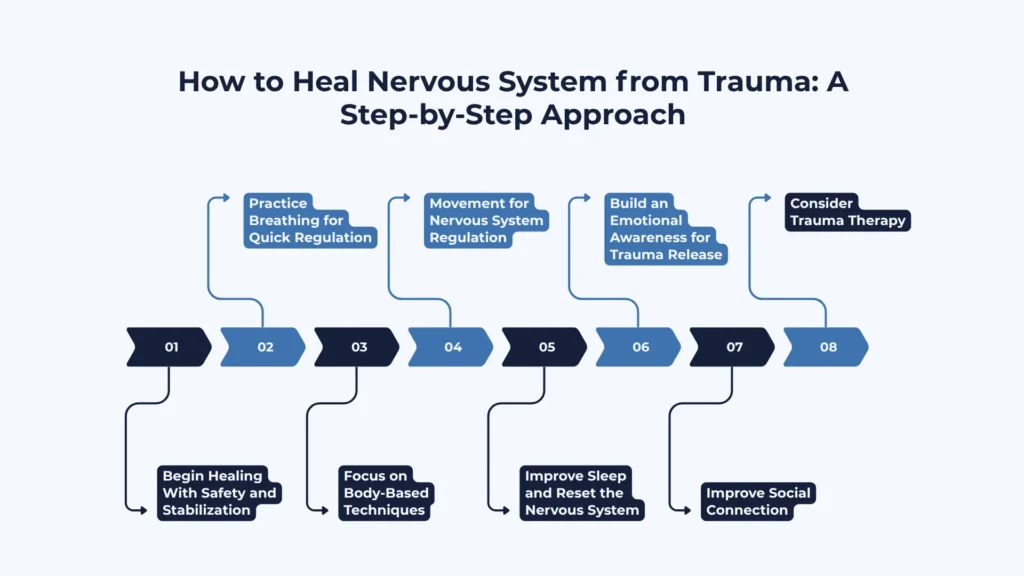
How to Heal the Nervous System from Trauma: A Step-by-Step Approach
Perfection is not required when you are aiming to heal your nervous system because it starts with a consistent approach. Bringing your body into a calm condition from the survival mode is crucial for long-term trauma recovery. At FRC, we also offer the IOP treatment for depression to address depressive disorder effectively.
- Begin Healing With Safety and Stabilization
Safety is the primary fundamental for the smooth healing process. Emotional and physical safety are crucial for relaxing the nervous system. You can set healthy boundaries and organize your space to make your body feel safe. Here is how you can create safety:
- Build a daily routine
- Avoid exposure to triggers
- Live in a comfortable, calm environment
- Spend time in places that offer feelings of safety
- Practice Breathing for Quick Regulation
Your breath is an effective approach to calming down the nervous system. Breathing may become quick and shallow when you are feeling anxious. Slowing down the breath signals your body that danger is passed.
- Practice the box breathing technique to inhale for 4 seconds, hold for 4 seconds, exhale for 4 seconds, and hold for 4 seconds.
- The 4-7-8 breathing strategy allows you to inhale for 4 seconds, hold for 7 seconds, and exhale for 8 seconds.
- Focus on Body-Based Techniques
Physical awareness is important because trauma may be stored in the body. You can focus on the somatic strategies to release tension. There are different body-based skills to help your body enter a relaxed condition from the survival state.
- Ground technique helps you focus on your senses of seeing, hearing, and feeling.
- Body recognizing strategy allows you to consider relaxing the areas of tension.
- Progressive muscle relaxation suggests you tighten and release muscles smoothly.
- Movement for Nervous System Regulation
Movement is a natural approach to discharging stress. Individuals may experience trapping of stress because they usually don’t release it physically. Making consistency is essential because daily 10 to 15 minutes can make a major difference.
- Walk outdoors for movement
- Gentle stretch or yoga
- Light exercise for regulation
- Improve Sleep and Reset the Nervous System
Sleep allows the body to repair itself. Trauma may disrupt sleep patterns. Better sleep offers better regulation to individuals struggling with trauma. It’s a critical step in how to reset your nervous system after trauma. Here is how to improve sleep.
- Maintain a dark and cool sleeping space
- Consider a consistent sleep routine
- Don’t use the screen before going to sleep
- Focus on a calming nighttime schedule
- Build an Emotional Awareness for Trauma Release
Knowing how to regulate your nervous system after trauma is necessary because emotions may suppress the nervous system. Healing needs safety and awareness about releasing trauma. It is about creating the space for trauma release.
- Proper journaling of feelings and thoughts
- Engage in creative expressions like art and writing
- Talking to a trustworthy person
- Improve Social Connection
Human connection is effective for proper healing. Safe relationships are helpful for regulating the nervous system through the co-regulation process. The positive interactions may help your body to feel safe.
- Spend quality time with individuals who make you feel calm
- Avoid the stressful or toxic people
- Join support communities or groups
- Consider Trauma Therapy
It is important to consider professional trauma treatment when you are not recovering through self-help techniques. Trauma therapy helps to reset the nervous system after trauma through structured healing. You can reach out to Freedom Recovery Center to receive help for overwhelming trauma symptoms.
- Cognitive Behavioral Therapy (CBT)
- Dialectical Behavior Therapy (DBT)
- Eye Movement Desensitization and Reprocessing (EMDR)
💡 Did You Know
According to Mental Health America Organization, approximately 75 to 93 percent of youth experienced some degree of trauma in their lives.
How Long Does It Take to Heal the Nervous System from Trauma?
When you know how to calm the nervous system after trauma, it is important to consider how much time is usually required for healing. There is no fixed timeline for healing the nervous system because recovery depends on severity, PHP, IOP, environment, support system, and practicing regulation techniques.
Some individuals notice improvement in healing within a few weeks. However, deeper healing may take months. The progress may feel slower, but every step in the recovery journey matters.
Avoid Common Mistakes That May Slow Nervous System Healing
Healing is never about bringing change forcefully because it is all about creating a safe space for the body to heal from trauma. Avoiding the following common mistakes may improve the healing journey.
- Focusing only on thoughts while ignoring the physical symptoms of trauma.
- Avoiding the regulation of trauma while trying to “push through.”
- Inconsistency with the healing practice to regulate trauma.
- Avoiding professional help when it is needed the most.
Quick, Structured Daily Routine to Regulate the Nervous System
You need a consistent approach every day to heal your nervous system. It’s important to build habits that make your body feel safe throughout the day. Here is an easy routine that helps you stay balanced and calm.
Morning Routine
It’s a good strategy to activate the body and set a calm tone to start the day. This approach is effective in preventing your nervous system from jumping into a stressful state. Here is what you can do in the morning routine:
- Deep breathing for 2 to 5 minutes
- Light walking or stretching
Midday Routine
It is a reset point that helps you to pause and focus on your body before stress starts to affect it. You may need to take short breaks during the day to prevent overwhelming feelings. It also helps you keep yourself grounded.
- Short grounding exercise
- Try to avoid stress
Evening Routine
You need to tell your nervous system intentionally that relaxation and recovery are safe. A peaceful evening routine may improve sleep while supporting long-term nervous system healing in New Jersey.
- Relaxation activity
- Calm breathing before bed
Ready to Stabilize Your Nervous System from Trauma?
Get help from the Freedom Recovery Center today and heal smoothly from trauma.
Start the Nervous System Healing Today at Freedom Recovery Center
The certified professionals at the FRC NJ help you verify insurance and understand how to regulate the nervous system after trauma. We help you emphasize and follow the small steps because healing is possible with consistency. Let’s contact us today to learn how to heal the nervous system from trauma!
Answers to Common Questions About How to Heal the Nervous System from Trauma
The frequently asked questions about healing the nervous system from trauma are answered here.
How to repair a severely dysregulated nervous system?
Gentle exercise, such as yoga, stretching, and walking, is recommended to repair a severely dysregulated nervous system.
How long does it take to heal a dysregulated nervous system?
Healing a dysregulated nervous system may take several months to a year, and progress can be noticed within 3 to 6 months.
How do I know if my nervous system is dysregulated?
The dysregulated nervous system may feel like being stuck in lower energy or high-alert conditions.
What are the signs of a dysregulated nervous system?
Chronic anxiety, digestive problems, fatigue, irritability, emotional numbness, muscle tension, and sleep issues are the signs of a dysregulated nervous system.
How to reset your nervous system anxiety?
You can reset your nervous system anxiety through the activation of the parasympathetic nervous system.