When you are completely normal and suddenly you start behaving as if someone is calling you, you don’t even hear them because you are in some other dream. Sometimes a person forgets what they did before. If you are seeing that your interest is fading from everything, this is a sign of dissociation.
If you are also wondering and just want to know how to stop dissociation fast, you are not alone. Our Freedom Recovery Center in New Jersey offers different treatment programs and also uses different science-based therapies that help you to make your mind active and achieve recovery faster. Before going towards how to get rid of dissociation, let’s first talk about what is dissociation.
What is Dissociation?
Many people experience dissociation in their lives, and they are called dissociative. Dissociation is defined as when you disconnect from yourself; you don’t know what is happening around you.
For example, sometimes you are detached from your body and feel like everything happening in the world is unreal. When you read a book or watch a movie, you get so absorbed in it that you have no awareness of your surroundings. Sometimes you drive yourself to a destination but forget how you got there. When you show these signs of dissociation, it is necessary that you seek professional help and know how to stop the dissociation.
Recognizing Signs Why Do We Dissociate?
Finding the main cause of dissociation is important to recognize its symptoms. While it is not clear why dissociation happens, many experts believe that it is closely linked to severe stress or other co-occurring disorders. If you are also struggling with co-occurring disorders, our FRC experts are offering PHP for co-occurring disorders. We use evidence-based therapies to make recovery quick and last longer.
- Emotional Disturbance
Many people don’t know how to pronounce the name or how to show the reaction in anger, sadness, or happy situations. This dissociation makes people emotionally numb in stressful or depressive situations. Stress and depression disturb the emotional mechanism in the body.
- Chronic Stress
If you are constantly facing stress or depression, it can cause dissociation. High levels of chronic stress can trigger episodes of stress in people with trauma. This mental condition makes it harder for the brain to process emotions. It can lead to more frequent dissociative episodes.
- Cognitive Signs
A person has difficulty concentrating on the conversation. Having gaps in memory makes it difficult to recognize when this happens. For example, sometimes they drive themselves to a location and they forget how they got there. The person is always dreaming and out of the world, that’s why this personality is called depersonalization. Memory issues are common in dissociation and depression affects daily functioning.
- Environmental Perception
It is the sense that you are detached from your mind and body. A person feels strange and unfamiliar with their surroundings. They seem like everything is unreal. This condition is called derealization. Derealization is a clear symptom that has been reported in patients. As 81% of dissociative patients feel like they are in a dream, or their mind and body are distracted from what is happening around them.
Break Free From Dissociation and Reclaim Your Life
If dissociation is affecting your daily life and work. Our experienced team provides personalized treatment plans and compassionate support to guide you toward stability and healing.
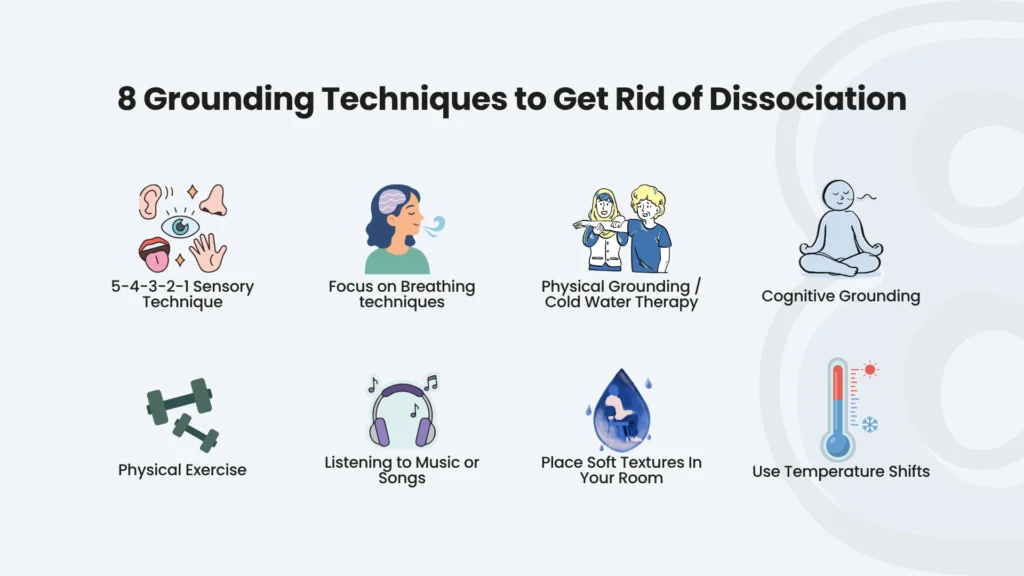
How to Stop Dissociation in the Moment: 8 Quick Grounding Strategies
Grounding is a practice that pulls your attention back to the present moment with the help of sensory input and physical sensations. These grounding techniques help to interrupt the dissociative process and help to make life feel normal. Learn the 8 grounding techniques that help you to overcome dissociation.
- 5-4-3-2-1 Sensory Technique
The 5-4-3-2-1 grounding technique is the best way to practice mindfulness. This exercise can be done anywhere at any time and it doesn’t require any tool to perform this grounding technique. It is a really good grounding technique to manage your emotions when you are feeling overwhelmed. To explore the process, read the steps below.
- 5 things you can see: Look around you and name five things in detail. Notice colors, shapes and texture of the product you choose. For example, you see a black mug of coffee placed on the table with chips and biscuits.
- 4 things you can touch: Notice the physical sensation of four things. Feel your feet on the floor and your back against the chair. The texture of your clothes or an object in your hand.
- 3 things you can hear: Find three sounds. It can be traffic sounds, birds chirping and the sound of songs.
- 2 things you can smell: Notice any scents or smells. For example, you can choose coffee or biryani. You can choose scented lotion and perfume for scents.
- 1 thing you can taste: Take a sip of juice or candy. Notice the current taste in your mouth.
- Focus on Breathing techniques
Deep focus on breathing can help you slow down and calm your mind and body. It can also help you come back to the present when you are dissociating. There are two breathing techniques used to fix dissociation.
- Box Breathing Technique ( 4-4-4-4)
Empty the air from your lungs completely. Slowly inhale through your nose for 4 seconds, then hold your breath as you count to four. Exhale for another four seconds, and hold your breath again as you count to four. Repeat this activity four times for best results.
- 4-7-8 Breathing Technique
The 4-7-8 breathing technique is based on pranayama yoga that is linked with breath control for relaxation. This technique allows you to relax the sympathetic nervous system that is responsible for the fight-or-flight response. It helps to activate the parasympathetic nervous system to bring you back to a normal heartbeat. Explore some important steps to perform the 4-7-8 breathing technique.
Start by emptying the air from your lungs. Slowly inhale through your nose for four seconds, then hold your breath as you count to seven. Exhale through your mouth as you make a “whoosh” sound for eight seconds, trying to push the air out of your mouth. Repeat this activity four times to complete one session of the 4-7-8 breathing technique.
- Physical Grounding / Cold Water Therapy
The physical sensation of grounding gives you a very grounding experience. Holding an ice cube in your hand creates an intense sensation that demands attention. This cold can break you out of dissociative fog. In the same way, splashing cold water on the face activates the mammalian dive reflex that triggers physiological changes to make you alert.
- Cognitive Grounding
When your mind does not concentrate on the things that are happening around you, you should loudly pronounce the names of things present in the room. You need to read backward counting and backward alphabets that help you become more attentive.
- Physical Exercise
Take a brisk walk and do jumping jacks to make yourself attentive. Physical movement increases the regulation of blood in the body. It helps you to stay focused on the task and follow the work attentively to get success.
- Listening to Music or Songs
You can also listen to songs that make you more attentive. When you are listening to the song, you need to focus on the song lyrics and rhythm of the music.
- Place Soft Textures in Your Room
Try to choose a textured object in your room, like a rough stone, fuzzy blanket, or tennis ball. Place the object in your hand and analyze the texture.
- Use Temperature Shifts
A quick shift from hot to cold and vice versa can activate your senses. If you are inactive and you splash cold water on your face and drink hot coffee, it helps make you more active. Your attentiveness can help you to achieve success in work.
Long-Term Tips For Coping With Dissociation
You cannot prevent dissociation completely by using grounding techniques. If you want to achieve recovery, experts recommend some long-term strategies. These strategies help you achieve recovery faster and for the long term.
- Professional Therapy
Therapies are very helpful in finding the root cause. They give better emotional and psychological support to those who dissociate. Here are several therapeutic approaches that will be effective in stopping dissociation.
- Trauma-Based Therapy: Due to dissociation, people also go into trauma because a lot of stress, depression and anxiety. Eye Movement Desensitization and Reprocessing (EMDR) targets memories that often cause chronic dissociation. This therapy helps you control trauma and reduces triggers for dissociative episodes.
- Cognitive Behavioral Therapy: Freedom Recovery Center is offering IOP and PHP programs in which we use different evidence-based therapies. If someone is dissociating, we also use cognitive behavioral therapy. This therapy helps you modify thoughts and bring the person back from dissociation.
- Dialectical Behavioral Therapy: Dialectical Behavioral Therapy (DBT) builds skills in emotional regulation and distress tolerance. These mindfulness techniques prevent you from dissociative responses.
- Change The Lifestyle
There are several lifestyle changes that can bring you back from dissociation. Here are a few tips that help you get rid of dissociation.
Sleep Pattern
Quality sleep is better for mental and emotional health. It helps you to regulate your emotions and maintain a healthy stress response. This is a better way to handle the challenges faced in dissociation and prevent dissociation.
Nutrition
Eat balanced and nutrient-rich foods like fruits and vegetables. Eating healthy can affect your brain chemistry and make your overall mood good. It gives you energy and reduces the risk of dissociation.
Avoid Substance Use
Use of alcohol and drugs can worsen dissociation. If you are addicted to drugs and you experience dissociation, you need FRC because we offer IOP for drug addiction. You will get professional support to cope with drug addiction and dissociation as well.
Stress Management
Using different strategies that help you reduce stress. Reducing co-occurring disorders can also reduce the risk of chronic dissociation.
Find Lasting Relief From Dissociation
Short-term grounding helps in the moment but lasting change comes from professional treatment. Our team offers lifestyle guidance and support to help you stay grounded and focused.
Find Professional Mental Health Support At Freedom Recovery Center in NJ
At FRC, we provide expert mental health and addiction treatment through partial hospitalization and intensive hospitalization programs. Our experienced team uses science-based therapies to reduce the risk of dissociation and support long-term recovery. If you are struggling with co-occurring disorders and dissociation, you can visit our Freedom Recovery Center to achieve faster recovery.
Frequently Asked Questions To Stop Dissociation
How Long Does Dissociation Last?
Dissociation can last for a few minutes to hours. This can change depending on the severity of the condition. If you often experience dissociation, you should contact professional support.
Is Dissociation Linked to Autism?
Dissociation is not the main symptom of autism. Many autistic people may experience dissociation episodes. Both conditions involve emotional regulation and feeling disconnected from the world.
What is Dissociative Rage?
Dissociative rage is a condition of intense anger or aggressive outbursts that occur during or after dissociative episodes. The person feels detached from emotions or actions.
How to snap someone out of a dissociative episode?
Use gentle grounding techniques to help someone come out of a dissociative episode. Ask them to notice specific things, such as how the floor feels under their feet or the texture of a chair. You can use other grounding techniques to help bring the person back to normal life.
Are people aware when they dissociate?
People who are dissociating may not be aware that it is happening. Other people may notice that they seem foggy and disconnected from everything happening around them. During severe dissociative episodes, they may experience memory gaps or feel like the world around them is not real.
How do people act when they dissociate?
When people dissociate, they may show signs such as a blank or delayed response to questions. They may seem unresponsive even when another person is calling them. Some people may not be able to speak properly because they freeze in the middle of a sentence or speak slowly.