It is a challenging decision when choosing a rehab program. Choosing the right rehab and appropriate treatment is the best way to achieve recovery faster. Before going to rehab, many people are concerned about their jobs and ask, “Can I get fired for going to rehab?” or “Can my employer fire me for going to rehab?”.
In the USA, several laws protect employees, including the Americans with Disabilities Act, the Rehabilitation Act, and the Family and Medical Leave Act. These laws provide support, so an employer cannot simply fire someone for seeking treatment. This blog will help clear your fears and explain the laws that may protect you from being fired.
Can You Be Fired For Going To Rehab?
Yes, you can get fired if addiction interferes with your job. Going to rehab does not mean that you will lose your job. Eligible employees may receive job-protected leave under the Family and Medical Leave Act (FMLA), while the Americans with Disabilities Act (ADA) may protect individuals from discrimination when seeking treatment for a substance use disorder.
However, these protections depend on factors such as your eligibility, workplace policies, proper notice, and whether there was previous misconduct or substance use that affected job performance or safety.
Protect Your Job While Taking the First Step Toward Recovery
Understanding your legal rights can help you seek rehab with greater confidence. Freedom Recovery Center NJ offers personalized treatment options to support your recovery while maintaining personal responsibilities.
Understanding The Laws And Rules For Going To Rehab
Before choosing rehab, it is important to understand your legal rights, treatment requirements, and employment options. The rules may vary by state and treatment program, so learning about them in advance can help you make informed decisions and enter treatment with confidence.
Family and Medical Leave Act (FMLA)
The Family and Medical Leave Act was passed in 1993. It allows up to 12 weeks of unpaid leave during 12 months for qualifying life events. It is clear that if an employee or workplace professional is addicted to substance use and needs to go to rehab for treatment, they will not be fired. According to the FMLA, an employee should not be fired or denied a promotion for this reason if they perform well in their professional work.
Eligibility criteria for FMLA
To get leave for going to rehab, you need to meet the eligibility criteria of FMLA.
- Not all employees are eligible for FMLA. You must work for an organization that provides FMLA leave coverage.
- The employer may be a private company or public agency with more than 50 employees.
- You must have worked for the employer for at least 1,250 hours during the last 12 months. If you want to know about the month, it would be 100 hours per month.
Americans with Disabilities Act (ADA)
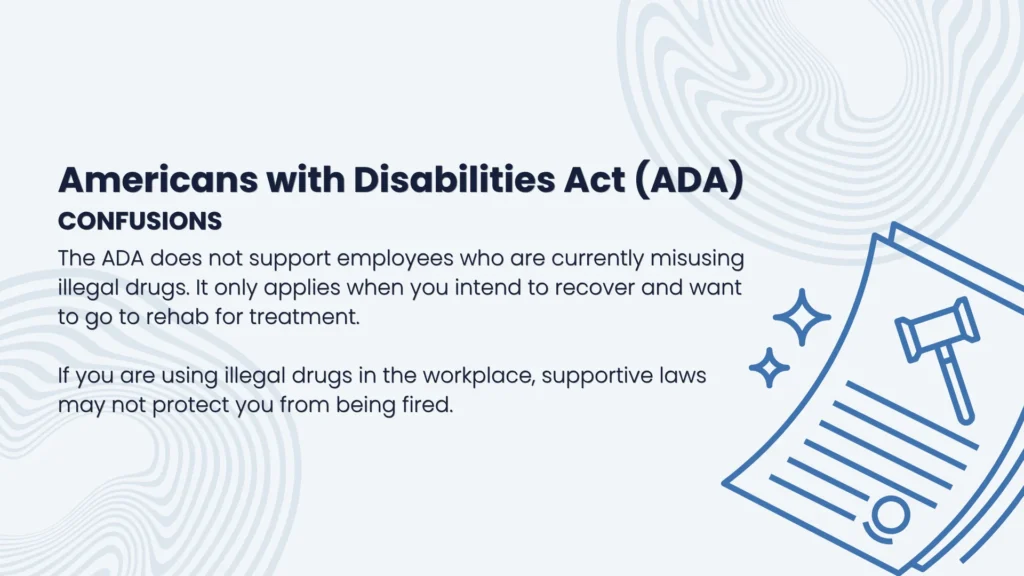
The Americans with Disabilities Act was signed on July 26, 1990. It was the first civil rights law for people with disabilities. Its main aim is to prevent discrimination against individuals with physical or mental illnesses across various sectors.
If you are also looking for IOP treatment for alcohol addiction, our FRC in New Jersey is the best place, offering evidence-based therapy sessions and different treatment programs provided according to each person’s needs.
Common Fears About Attending Rehab While Working
Many working professionals worry about losing their job or managing treatment with daily responsibilities. Understanding flexible outpatient options and available support can help reduce these concerns and make seeking recovery feel more manageable.
The Rehabilitation Act 1973
The Rehabilitation Act of 1973 may protect you if you work in a federal government position. This law prevents discrimination against qualified individuals with disabilities in federal employment. It may also protect eligible employees from discrimination and other employment-related decisions.
Health Insurance Portability and Accountability Act (HIPAA)
The Health Insurance Portability and Accountability Act (HIPAA) protects your personal health information, including details about addiction treatment. Your treatment provider generally cannot share information about your rehab or medical care with your employer without your permission, except in certain legally permitted situations. This privacy protection allows you to seek treatment with greater confidence.
Fair Housing Act
The Fair Housing Act was enacted in 1968. It protects eligible individuals from disability-based discrimination in housing. People in recovery may receive protection when looking for housing or requesting reasonable accommodations. This law does not protect current illegal drug use or behavior that creates a direct safety threat.
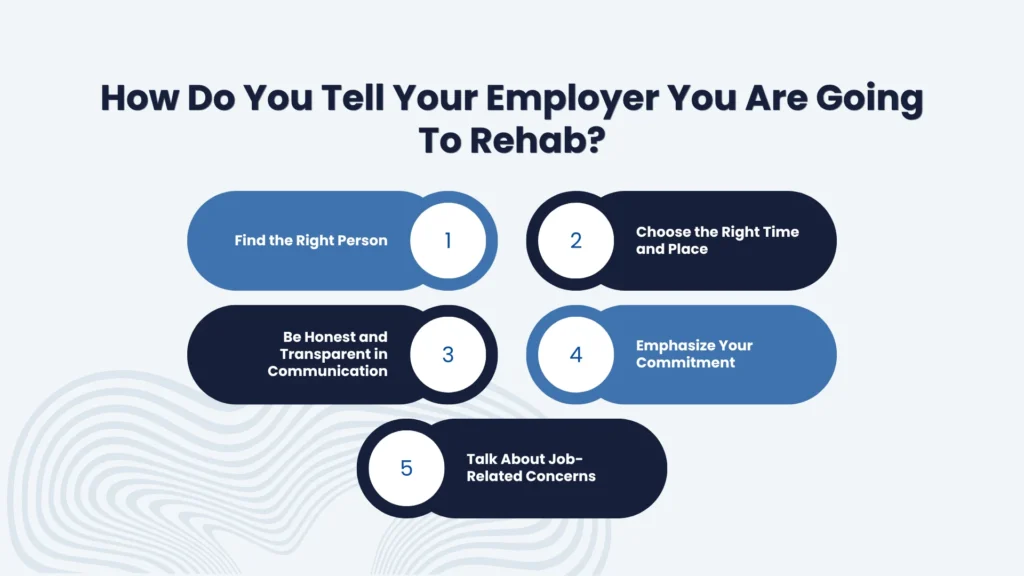
How Do You Tell Your Employer You Are Going To Rehab?
When you are aware of legal protections, you may know the best way to inform your employer before going to rehab. Clear communication can prevent misunderstandings and help ensure a smooth journey. Here are some tips to make the discussion easier.
- Find the Right Person
Start by speaking with your human resources department or direct supervisor. HR can explain your leave options, required documents, and workplace policies. You do not need to share every personal detail about your treatment.
- Choose the Right Time and Place
Request a private meeting with your employer or HR representative. Choose a quiet time when you will not be interrupted or rushed. A private conversation can help you discuss your treatment and leave plan comfortably.
- Be Honest and Transparent in Communication
Explain that you need professional treatment for a health condition and may require time away from work. Share your expected treatment dates if they are available. You can be honest while keeping specific medical details private.
- Emphasize Your Commitment
Let your employer know that you value your job and are committed to returning prepared and focused. Explain that seeking treatment is an important step toward improving your health and work performance. You may also prepare a plan for ongoing responsibilities before your leave begins.
- Talk About Job-Related Concerns
Discuss how your absence may affect your projects, schedule, and workload. You can also ask about FMLA, medical leave or flexible outpatient treatment options.
Can I Use FMLA Leave For Going To Rehab?
Yes, eligible employees may use FMLA leave for inpatient or outpatient rehab when an experienced healthcare professional provides substance use treatment. FMLA may provide up to 12 weeks of unpaid leave, but eligibility depends on your employer’s coverage. It generally covers treatment, not absences caused by substance misuse.
Outpatient Vs Inpatient Rehab: Which Option You Choose For Going To Rehab
If you are working, outpatient rehab may be a suitable option because it allows you to attend scheduled treatment sessions while continuing your job and daily responsibilities. However, the right choice depends on your addiction severity and medical supervision.
If you need detox, 24/7 care or a break from triggers, inpatient rehab may be safer even if you need to arrange FMLA leave. A qualified treatment professional can assess your situation and recommend the appropriate level of care.
If you are concerned about balancing treatment with your job, explore these 20 Ways IOP Fits Around Your Work Schedule to learn how intensive outpatient care may fit into your routine.
Begin Recovery With Confidence and Professional Support
You don’t have to choose between your health and your future. Our compassionate team can help you understand your treatment options and guide you toward a more stable life.
Find Personalized Addiction Treatment at Freedom Recovery Center, NJ
Freedom Recovery Center NJ offers structured levels of care to meet individuals’ needs for a smooth recovery journey. The level of care is often personalized depending on alcohol abuse and health history.
Partial Hospitalization Program (PHP)
Individuals should consider the partial hospitalization program if they are struggling with moderate to severe substance use addiction. This level of care enables individuals to attend daytime treatment and return home in the evening.
Intensive Outpatient Program (IOP)
People experiencing mild to moderate addiction may enroll in the intensive outpatient treatment to achieve a flexible recovery experience. They can attend scheduled treatment while continuing their daily responsibilities.
Benefits Of Choosing Rehab From Freedom Recovery Center
It is true that individuals prefer a recovery center based on the benefits they usually get during and after their treatment. The Freedom Recovery Center has become the best recovery center in NJ that offers the following benefits.
- Ideal Detox Experience: We provide a safe and secure environment for patients looking to remove toxins from their bodies before proceeding with inpatient or outpatient treatment. Patients get 24/7 medical and emotional support during the detox program.
- Evidence-Based Therapies: Substance abuse treatment in New Jersey includes evidence-based methods like CBT and DBT. The qualified therapists carry out these effective therapies to address the root causes and symptoms of drug addiction in NJ.
- Tailored Treatment Facility: It’s a fact that two individuals can’t experience addiction in the same way. Our New Jersey rehab center offers a personalized treatment facility to individuals based on each patient’s needs and goals.
- Effective Relapse Prevention: Long-term recovery is beyond the completion of outpatient or inpatient treatment. We offer proper relapse prevention planning and effective sober living strategies to maintain long-term recovery with top-notch aftercare support.
Make a Healthier Future with the Right Addiction Treatment
Choosing the right addiction treatment can help you begin recovery while managing your work and personal responsibilities. Whether you need the structured support of inpatient rehab or the flexibility of outpatient care, the right program can provide personalized therapy, professional guidance and relapse-prevention skills. You can get a healthier and more stable future with compassionate support from experienced professionals.
Frequently Asked Questions (FAQs)
Can you go to rehab and keep your job?
Yes, many people go to rehab and keep their job, especially when they use protections like FMLA or choose outpatient treatment that fits around work. However, you must still meet performance and safety standards at work and follow company policies.
Can you be fired for being a recovering addict?
In most cases, you cannot be fired just for being a recovering addict, because recovery from addiction is often protected under laws like the ADA. Employers can still take action if your substance use or behavior violates workplace rules or affects job performance.
Should I tell my employer I am an alcoholic?
You are not required to share every detail, but you may need to tell your employer you have a serious health condition and need treatment or medical leave.
Can you get FMLA for being an alcoholic?
Yes, if you and your employer are covered, you may get FMLA leave for treatment of alcohol use disorder when a healthcare professional provides care. FMLA does not cover absences caused by drinking itself; it covers treatment for a serious health condition.
What do I do if FMLA does not cover small companies?
If your employer is too small for FMLA, you can ask about using sick leave, vacation time, unpaid leave, or flexible scheduling for treatment. You may also explore state leave laws, short‑term disability, or an Employee Assistance Program if available.
Can I use sick days or vacation time instead of FMLA for rehab?
Yes, many employers allow you to use sick days or vacation time for rehab, especially if FMLA does not apply or you want paid time off. Check your company’s leave policy and speak with HR about how to schedule treatment around your benefits.
What should I do if I relapse after returning to work?
If you relapse, reach out quickly to your treatment provider, support group, or therapist and be honest about what happened. You may need to adjust your recovery plan, increase your level of care, or temporarily step back to focus on treatment before continuing work.