You smile, meet deadlines, and consistently show up to work. Everything looks fine from the outside, but you may struggle with high-functioning depression (HFD) internally. Unfortunately, several individuals are silently struggling with functional depression. This depressive disorder usually remains unnoticed because life appears to be in control. Recognizing early signs allows you to receive professional help from FRC for long-term stability.
✨ Highlights:
- You may have high-functioning depression (HFD )and still can manage responsibilities.
- There are emotional symptoms, behavioral signs, and physical symptoms of high-functional depression.
- Understand the biological, psychological, and environmental factors contributing to depression.
- Receive the professional treatment for high-functional depression from Freedom Recovery Center.
What is High-Functioning Depression?
Functional depression is a type of persistent depressive disorder (PDD) in which individuals experience depressive symptoms while functioning in their daily responsibilities. Individuals may maintain relationships and continue work even when they are feeling low.
The chronic and mild symptoms of high-functioning depression may make it overlap with persistent depressive disorder. It is not easy to recognize functional depression because a person maintains a routine while having depression.
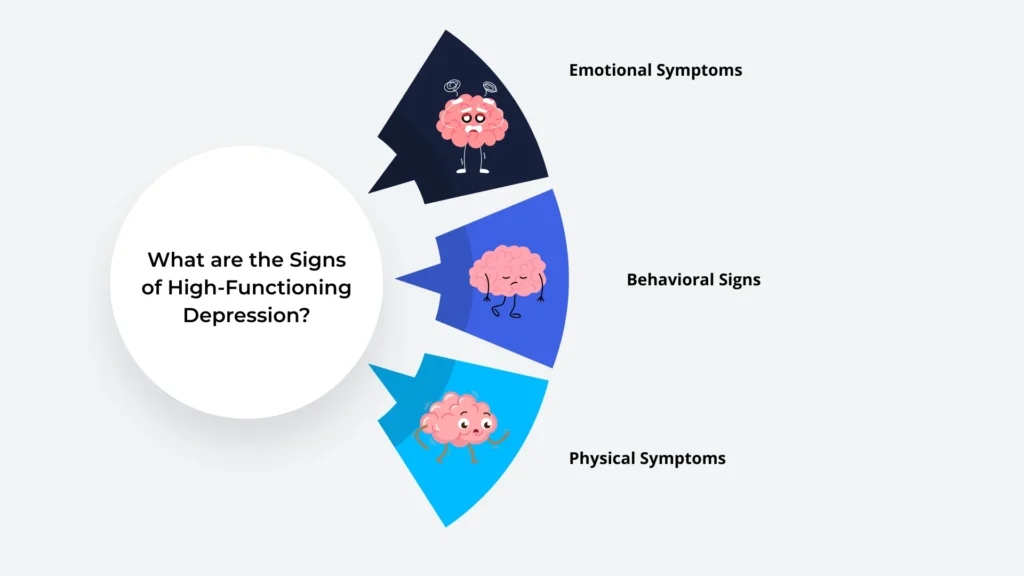
What are the Signs of High-Functioning Depression?
The internal experience may feel draining and heavy even when life looks stable externally. Functional depression symptoms may appear in subtle ways and can be easily ignored. Recognizing signs early may help you seek professional treatment for stability. This is how to know if you have high-functioning depression (HFD).
Emotional Symptoms
The emotional symptoms of depression affect the internal feelings. These symptoms may persist in the background, limiting individuals’ ability to enjoy life fully. Due to emotional symptoms, individuals’ emotional balance and self-worth are usually affected.
- Emptiness or feelings of sadness are signs of depression. Individuals may feel consistently low most of the time, even without having a valid reason.
- Difficulty experiencing excitement or joy is another sign of depressive disorder. Activities that usually make individuals happy may not bring the same feelings anymore.
- A consistent low self-worth despite achievements. People with this depressive disorder may accomplish goals, but they feel like they are not good enough.
- Emotional disconnectivity or numbness also indicates depression among individuals. They may feel like they are spending their lives without truly enjoying them.
Behavioral Signs
These signs of depressive disorder appear in daily life habits and in how individuals react to them. For instance, you may become productive at the cost of mental peace. There are different behaviors as coping mechanisms to hide the internal challenges.
- Feeling mentally exhausted while staying productive. It means individuals may be capable of fulfilling their responsibilities while still feeling drained internally.
- Seeking or overlooking perfection in everything. Individuals may push themselves hard to avoid experiencing how they really feel about striving for perfection.
- Don’t want to engage in deep emotional conversations due to functional depression disorder. They try to keep themselves away from topics involving honesty or vulnerability.
- Continuing daily routine to mask the internal challenges. This routine may help individuals function smoothly, even when they are not feeling well internally.
Experiencing Emotional, Behavioral, or Physical Symptoms of Depression?
Contact the Freedom Recovery Center today to recognize signs and treat high-functioning depression.
Physical Symptoms
Depression not only affects the mind, but it also impacts physical health. These high-functioning depression symptoms are usually overlooked while individuals blame their lifestyle. Individuals need to pay attention to these signs and understand the deeper emotional problems.
- Low energy or chronic fatigue is a physical symptom of depression. Individuals may feel tired consistently everyday even after having enough rest.
- Changes in the sleep patterns or appetite indicate depressive disorder. Therefore, individuals may sleep and eat less or more than their usual routine.
- Ongoing body aches or headaches can lead to depression. It is a fact that physical discomfort is commonly linked with emotional stress.
- Lack of motivation while still staying active in daily life responsibilities. Individuals may keep going while feeling forced without natural feelings.
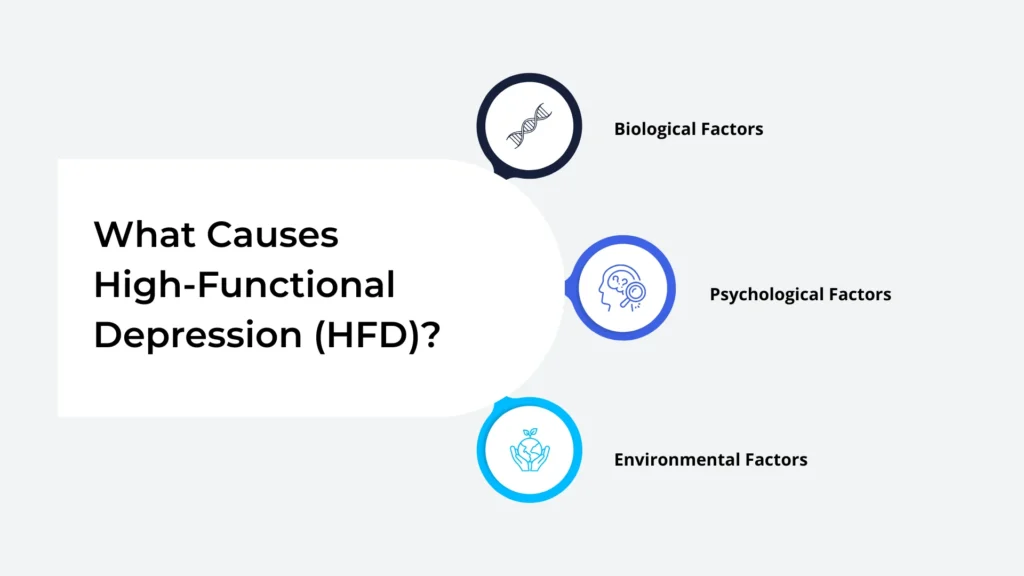
What Causes High-Functional Depression (HFD)?
Individuals don’t experience high-functioning depression overnight because it develops over time. There are different external and internal factors influencing depression among individuals. Identifying the triggers helps you understand patterns and take crucial steps for streamlined healing.
Biological Factors
Brain chemistry has a critical role in regulating emotions and mood. The disturbance in the neurotransmitters may make it difficult to maintain emotional stability. Genetics may increase the risk of depression in cases of family history. These biological factors influence how you feel based on changes in dopamine or serotonin levels.
Psychological Factors
Emotional habits and thinking patterns impact how you process stress. There are also specific personality traits that may make you prone to internal problems. Unresolved past experiences may affect your mental health over time. Individuals commonly experience perfectionism and negative thinking patterns.
Environmental Factors
The daily experiences and the surrounding environment shape the mental well-being more than your expectations. The ongoing stress from relationships or work affects your emotional resilience. External expectations may push you to keep performing even when you are struggling with internal challenges.
💡 Did You Know
According to a study, 72 out of 120 participants experienced high-functioning depression (HFD), and 17 faced extreme HFD.
Why High-Functioning Depression is Difficult to Detect
Functional depression may be hidden from individuals. The invisibility of depression can make it an overlooked mental health problem. Here are the potential factors why depression may become hard to detect.
- Individuals continue to fulfill their responsibilities while others think they are fine.
- Society may link productivity with a mental health condition.
- People usually try to keep their feelings hidden and meet their responsibilities.
- Symptoms are usually mistaken for personality traits like “introverted” or “serious.”
High-Functional Depression vs Major Depression
Both types of depression usually have similar emotional symptoms. The key differences are in their visibility and severity. The untreated functional depressive disorder may develop into more severe depression.
High-Functioning Depression (HFD)
You can manage responsibilities, relationships, and work without any prominent disruption. However, you may struggle internally and experience a drained, persistent low. There will be ongoing symptoms without disrupting daily life. This functional depression remains hidden because of stable external performance.
Major Depression
You may experience intense symptoms of major depression that can disrupt normal functioning. Therefore, you can notice the effect on your daily routine and responsibilities. It may become difficult for you to get out of bed, maintain daily responsibilities, or focus. It is easy to identify major depression, but difficult to manage it.
What are the Risks of Ignoring High-Function Depression?
Ignoring warning signs does not make them invisible, but it may make them worse. It is important to address signs of high-functioning depression.
- Exhaustion and emotional burnout
- Declined personal commitment and relationships
- Higher risk of substance abuse or anxiety
- Increased risk of severe depression
What is Treatment for High-Functioning Depression?
When you are struggling with depression, it is important to consider how you can recover smoothly. At Freedom Recovery Center in New Jersey, we offer structured treatment options for functional depression. Let’s take a look at how to treat high-functioning depression:
Levels of Care
Both the Partial Hospitalization Program (PHP) and the Intensive Outpatient Program (IOP) are available to address different levels of depression. The certified professionals assist you during your depression recovery journey.
Therapy
Talk therapy is an effective approach to treating depression disorder. For instance, Cognitive Behavioral Therapy (CBT) is used to recognize and change negative thinking patterns. It also helps you build healthier coping mechanisms.
Medication
High-functioning depression medication, like antidepressants, are effective in regulating the mood. The licensed professionals at the Freedom Recovery Center guide you on medication for depression management.
Want to Receive the Structured Treatment for High-Functioning Depression?
Schedule your appointment today at Freedom Recovery Center and receive personalized treatment.
Start High-Functioning Depression Today at FRC
High-functioning depression (HFD) is a real health problem that needs timely attention. You need to receive a professional evaluation from Freedom Recovery Center, even if you are managing responsibilities. Take the first step today by scheduling an appointment and verifying insurance for functional depression treatment.
Answers to Common Questions About Functional Depression
How do I know if I have high-functioning depression?
It involves fatigue and a feeling of worthlessness while still being successful and productive in daily life.
Do I have high-functioning depression?
Yes, you may have functional depression when you are fulfilling your daily responsibilities while struggling internally.
What is high-functioning depression also called?
It is also called dysthymia or Persistent Depressive Disorder (PDD).
What does functioning depression look like?
Functional depression looks like someone is able to manage school, family responsibilities, and work while battling with low energy and sadness.
How long can you have high-functioning depression?
You can have high-functioning depression for approximately 2 years or more.
What triggers high-functioning depression?
Unhealthy diet, lack of physical activity, and poor sleep trigger functional depression.