Can you work while attending an Intensive Outpatient Program (IOP)? Absolutely. The Intensive Outpatient Program (IOP) is a flexible and structured treatment used to treat substance use or co-occurring disorders. It is helpful to get treatment while managing your work, school or family responsibilities. Inpatient rehab requires 24-hour stays but IOP offers evening, weekend, and telehealth sessions. You don’t have to sacrifice your work schedule to balance treatment anymore. We have listed 20 ways IOP fits your work schedule.
What Is an Intensive Outpatient Program (IOP)?
IOP stands for Intensive Outpatient Program. It is a structured treatment program used to treat mental health disorders. You spend only a few hours in therapy sessions and do not need to stay overnight. IOP provides more support compared to traditional outpatient therapy but is less intensive than a partial hospitalization program and an inpatient program.
The intensive outpatient rehab program is used to treat different conditions like anxiety and depression. The benefit of this therapy is that you have to attend scheduled sessions. These sessions give you more attention and increase your chances of a quick recovery.
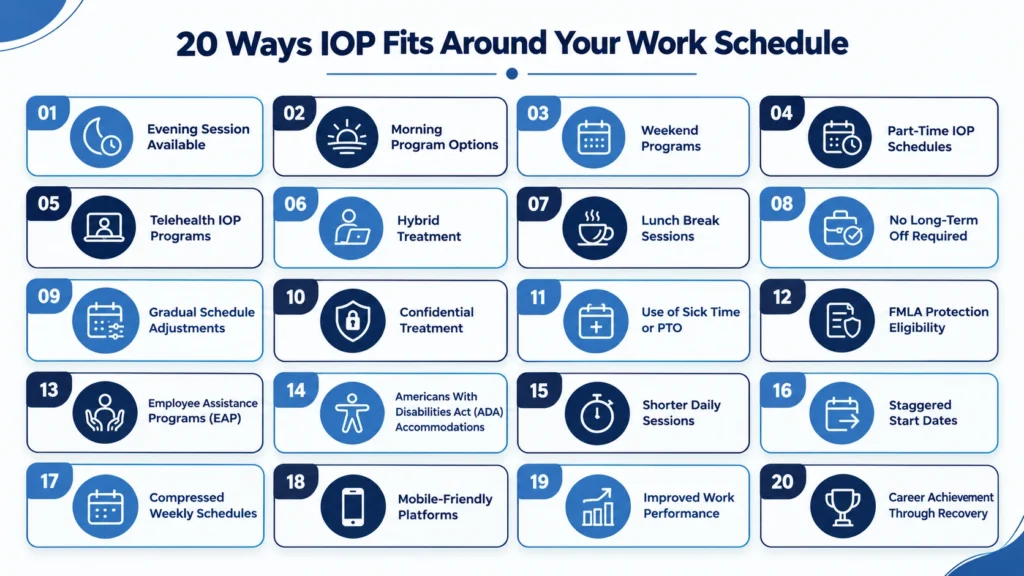
20 Flexible IOP Scheduling Options for Working Professionals
Most intensive outpatient programs require 9 to 15 hours of treatment per week with sessions scheduled 3 to 5 days for about 3 hours per day. Many IOPs offer evening, weekend, and telehealth options specifically for people managing full-time work schedules. These 20 flexible scheduling strategies help you balance addiction treatment with your job responsibilities without sacrificing either.
1. Evening Session Available
Most people have work in the day, which makes it difficult for them to attend morning IOP schedules. Many rehab centers offer evening IOP sessions so that office-going individuals can pursue treatment along with their job. These treatments include group therapy, individual counseling, and peer support activities. Many students and working professionals attend therapy after the workday ends without taking leave from work.
2. Morning Program Options
These early morning sessions start before regular 9-5 work. Early bird sessions like these usually begin around 6-9 AM before work. Morning sessions are best for a calm atmosphere. Many clients attend morning therapy so they can stay positive throughout the day. Outpatient programs are a great option for early risers to start their day with support and structure.
3. Weekend Programs
Weekend IOP has flexible sessions for those who cannot attend weekday sessions due to work or job. These Saturday therapy sessions are perfect for those with inflexible weekday schedules. You can easily maintain full workweek attendance with this work-friendly treatment. This weekend program is popular for people who have fixed-timing jobs or caregiving responsibilities during the day. If you come to Freedom Recovery Center, you can get all treatments like Partial Hospitalization Program, Intensive Outpatient Program, and outpatient therapy to achieve recovery and bounce back from dual diagnosis.
4. Part-Time IOP Schedules
Instead of attending IOP all week, you can attend part-time intensive outpatient. You get to attend 3 days instead of the usual 5. These sessions are conducted on different days during the week. You can easily balance treatment intensity with work through this reduced-schedule treatment. This reduced schedule allows you to do work while getting professional guidance.
5. Telehealth IOP Programs
Telehealth IOP programs are virtual IOPs that you can attend from home or a private office space. This treatment is perfect for those who live far from the treatment center and face many other challenges like transportation challenges or convenience of care. At FRC, we ensure that all sessions are conducted through secure HIPAA-compliant platforms, which makes your information confidential. Telehealth IOP programs include the same evidence-based therapies and peer support to achieve sobriety faster.
6. Hybrid Treatment
These programs combine in-person and virtual sessions. Hybrid IOP schedules allow you to attend virtually on your busy workdays. When your work schedule is manageable, you can attend in-person sessions thanks to the flexible treatment format. You can attend some therapy sessions onsite with face-to-face support. Freedom Recovery Center is best in offering treatment programs without compromising on the care quality.
7. Lunch Break Sessions
Lunch hour treatment offers midday therapy sessions to use your lunch break productively. These sessions last 40-60 mins every day. These focused sessions fit in your lunch hours and keep you on track with recovery while maintaining professional responsibilities. You can return to work after each session refreshed and supported. This session covers coping strategies, IOP for relapse prevention, and works on emotional wellness. Lunch programs are perfect for those who cannot stay longer due to their busy schedules.
8. No Long-Term Off Required
The key difference between outpatient vs inpatient treatment is that you do not have an extended absence from work or school. You can attend treatment daily without leave. This flexibility is very helpful in maintaining your employment during recovery. You can continue your daily routine while receiving intensive support for substance use or co-occurring disorders. You can keep earning and maintain health insurance through employment.
9. Gradual Schedule Adjustments
IOPs start with more frequent sessions but you can be adjusted by reducing session frequency. This approach will help you transition smoothly to less intensive care while maintaining support and preventing relapse. In the beginning, you can start with 5 sessions per week and move to 3 sessions. This adjustable treatment schedule understands professional responsibilities and meet according to your needs.
10. Confidential Treatment
IOPs maintain workplace privacy with confidential addiction treatment. HIPAA and 42 CFR Part 2 ensure your privacy and guarantee job safety. At Freedom Recovery Center, we keep your personal information, treatment progress and session details private allowing you to maintain confidentiality and expected to respect each other’s privacy. You can attend sessions without worrying about employer, family or other community findings.
11. Use of Sick Time or PTO
Intensive outpatient programs can help you spend your sick leave or Paid Time Off (PTO) smartly. You can use your existing time-off benefits to attend IOP. You can use your days off to schedule your treatment. Ask your HR department to understand your company policy on using PTO for addiction or mental health. Instead of wasting these, you can legitimately use them for medical benefits. Proper planning is important so you can attend therapy and your work responsibilities are not impacted.
12. FMLA Protection Eligibility
The Family and Medical Leave Act, or FMLA, may protect your job while you attend IOP treatment for substance use or mental health disorders. Employers can cover substance use treatment for up to 12 weeks of protected leave if needed. FMLA provides job protection during your recovery. Your employer cannot legally fire you for enrolling in a treatment program. You will return to the same position after completing treatment.
13. Employee Assistance Programs (EAP)
Employee Assistance Programs cover IOP for dual diagnosis where individuals get EAP benefits. These can partially or fully cover the cost of IOP. You can use workplace mental health benefits with employer-sponsored treatment under confidentiality. This program helps manage many challenges without impacting work responsibilities.
14. Americans With Disabilities Act (ADA) Accommodations
Americans with Disabilities Act (ADA) enables you to recover from substance use disorder by getting workplace accommodations. You can request a change in your work schedule during your treatment. This act will allow you to get reasonable accommodation for recovery. It safeguards you against discrimination while providing recovery support at work.
15. Shorter Daily Sessions
IOPs have shorter therapy sessions to manage your work schedules. These 2 to 3 hour sessions do not require a full day commitment. You can easily fit IOP around your 9 to 5 work schedule. You receive comprehensive treatment regardless of the schedule flexibility of IOP. It can be easily managed for those who need treatment with jobs or family responsibilities.
16. Staggered Start Dates
These IOPs give you flexible enrollment options. You can join these sessions when it fits your job schedule. They offer rolling admission treatment without waiting for monthly groups. It’s a great option to join treatment without disrupting your work schedule. It helps you reduce stress and commit to recovery while managing professional responsibilities. Planning ahead can help achieve smooth recovery without sacrificing career goals.
17. Compressed Weekly Schedules
These are intensive weekly treatments with tightly scheduled therapy. This option is suitable for those with unpredictable daily schedules. Some IOP programs offer 2-3 longer sessions as compared to 5 shorter ones. Such IOPs maintain treatment intensity with fewer attending days. You can discuss with the treatment team if a compressed schedule is available and suitable for your recovery plan. This approach is helpful to maintain sobriety and achieve recovery faster.
18. Mobile-Friendly Platforms
IOPs have adopted modern technology by providing smartphone therapy access. This is helpful for those with busy schedules or limited transportation. For example, you can complete your tasks assigned by your therapist during commutes or breaks. You are connected with your community 24/7 through these mobile apps.
19. Improved Work Performance
You can focus and concentrate on your work better after your recovery. Your productivity in recovery increases as well. Professional relationships improve with your workplace performance after treatment. Sobriety has many career benefits, such as increased motivation, showing positive changes in behavior, and doing work with a team after completing the treatment.
20. Career Achievement Through Recovery
Recovery from addiction or mental health issues improves work performance and gives professional growth in recovery. You build resources for long-term recovery through networking. It shows your commitment to personal growth which accelerates your career. Your skills built in recovery, such as resilience and stress management help with career advancement. Sobriety not only improves your health but also helps you grow in your professional journey.
Begin Your Work-Friendly Recovery Journey at Freedom Recovery Center
Starting your recovery journey doesn’t mean you need to stop your professional life. IOPs are designed for working professionals. These programs are a popular choice among them due to their work schedule compatibility. The biggest challenge in recovery is to ask for help, which is a sign of strength. When choosing a rehab center, look for work-friendly treatment options. A good treatment program is an investment in both health and career. Do not let your work get in the way of your recovery. Programs like IOP help individuals balance recovery and careers. Contact Freedom Recovery Center today to discuss scheduling options. Thousands of people balance IOP and work to keep on track.
Answer the Questions to Get an Intensive Outpatient Program with a Flexible Schedule
How do IOPs work?
IOPs offer structured treatment in a therapeutic environment with a compassionate approach. They provide medical care while allowing the person to maintain their daily routine.
What is the daily schedule like in IOP?
An intensive outpatient program requires 9 to 15 hours of treatment per week. You need to go 3 to 5 days with sessions about 3 hours per day.
How many hours per day is IOP?
IOP usually lasts 3 to 4 hours per day. It depends upon the treatment center and personalized plan. Some programs offer shorter sessions for 2 to 3 hours with demanding work schedules.
How many hours a week is IOP?
Most IOPs provide therapeutic sessions for several hours a day each week. These usually range from 9 to 12 hours per week.
What is the next step after IOP?
After completing an IOP, the next step is a standard outpatient therapy program with fewer weekly sessions. This helps to achieve sobriety and a quicker recovery.