Recovering from addiction and mental health problems can be a really isolating experience. That’s exactly why peer support is such a game-changer in Intensive Outpatient Programs (IOP). In an IOP, you don’t just get therapy but you also learn to rely on each other to build resilience and a strong recovery community that sticks with you long after treatment is over.
Peer support in IOPs helps people connect on a deeper level, builds trust and motivation. These are 30 effective peer support strategies that help individuals make smooth progress in their recovery and move towards outpatient treatment.
What Is Peer Support in an Intensive Outpatient Program (IOP)?
Peer support involves people in recovery by helping through shared experiences, emotional support, and practical guidance. At Freedom Recovery Center in New Jersey, we provide peer support in an Intensive Outpatient Program to build client trust, reduce isolation and develop coping skills through shared experiences. These evidence-based therapies help individuals support their recovery. It allows you to maintain work, school, and family responsibilities while enrolling in IOP.
Why Peer Support Matters in an IOP
Peer support in an Intensive Outpatient Program matters because it makes the gap between clinical learning and real life by sharing lived experiences so individuals who suffer can get motivation and recover faster. They normalize the practice of new strategies in daily life and offer practical examples of their own. Below are some important points that help you identify why peer support matters in IOP.
- Emotional Encouragement
When you are struggling with addiction and co-occurring disorders, many ups and downs come in life. Involving peer support gives you courage during the ups and downs of recovery by showing empathy. They help you build trust and support to overcome emotions or doubts that appear in the recovery journey.
- Shared Experiences
When you listen to another person’s journey, it helps you learn how to solve your own problems. You can even get motivation from peer success and failure, which gives you courage in the recovery process.
- Reduced Isolation
Involving peers in therapy not only helps with mental illness but also helps to reduce anxiety, stress, or depression. A randomized study by Lai and Colleague in Canada shows that peer support intervention helps to reduce loneliness and isolation among older Chinese immigrants. Active emotional connection with peers can help individuals feel they are not alone in facing mental health issues or life challenges.
- Give Advice
Peer support in IOP provides coping strategies to the individual that they learned from professional therapists in counseling. Peer support learns coping strategies in group sessions and applies them individually to prevent triggers, manage stress and build a healthy life.
- Improved Accountability
Being a part of peer support creates a sense of responsibility to achieve recovery goals for the person suffering from mental health issues or addiction. The mutual accountability between peers and the individual can reduce the risk of triggers and strengthen the ability to achieve recovery goals.
Build Healthy Connections in Recovery
Join an IOP community where you can share experiences, practice coping skills and stay motivated through every stage of recovery.
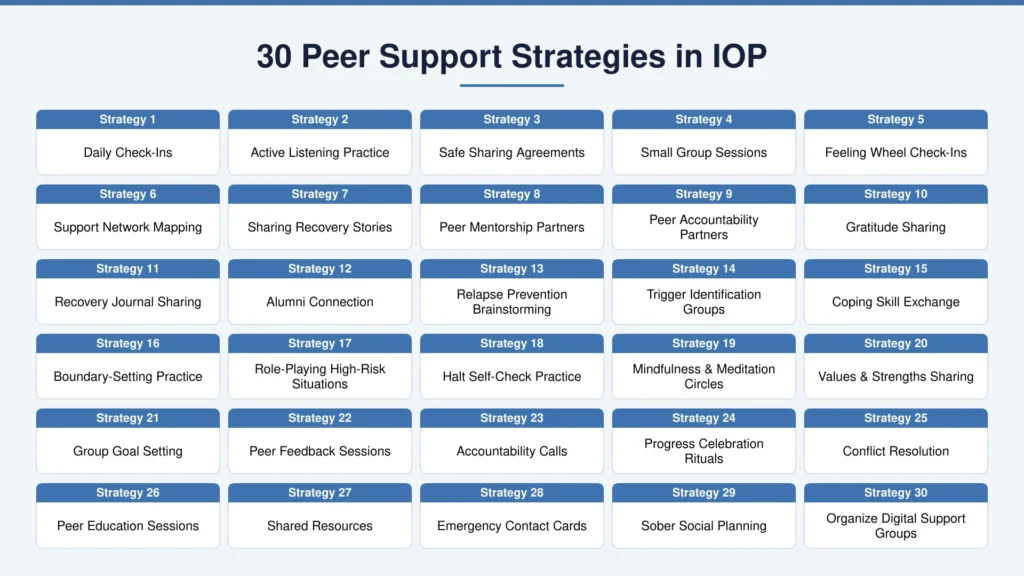
30 Peer Support Strategies in IOP for Lasting Recovery
Peer support in IOPs helps people connect on a deeper level, builds trust, empathy and motivation. These are 30 effective peer support strategies that help individuals make real progress in their recovery while strengthening coping skills or balancing family responsibilities.
- Daily Check-Ins
Daily check-ins can create consistency and participants can share their mood, cravings, and recovery goals with their therapist. The therapist can give a personalized treatment plan after analyzing the cravings, mood, and mental health. Consistently going to rehab can help peers identify the signs of relapse and get treatment early before it gets worse.
- Active Listening Practice
Active listening means giving full attention to the participant without interrupting, judging, or advising. Peers just ask open-ended questions like “You are looking weak?” This strategy builds trust between the participant and the person who wants to understand the participant.
- Safe Sharing Agreements
Safe sharing agreements are the peer support group rules that protect the participant’s privacy and make the information confidential. They set boundaries like who can stay in the room, which helps to make a comfortable environment for the individual. These agreements can help you have honest conversations about your challenges and talk about your stories, which helps you learn lessons to achieve sobriety.
- Small Group Sessions
In a small peer group, there are 6 to 12 participants where deeper communication happens and every person gets more speaking time in comparison with large groups. These groups give the person a full chance to share their life challenges with other participants or the therapist. They get feedback and honest advice from the participants that helps in recovery. It makes a strong bond between participants and achieves lasting support within IOP.
- Feeling Wheel Check-Ins
Feeling wheel check-ins help peers to use accurate names for their emotions so their feelings are not hurt. Instead of saying “I feel bad,” the participant should use an appropriate sentence like: “I feel discouraged and lonely,” which helps peers to respond accurately. These small things improve communication between participants and get meaningful feedback from peers.
- Support Network Mapping
Support networking mapping is a visual tool that helps to identify people who can give personal and emotional support. It may include friends, family, peers, and therapists. You can make a sheet and give a rating to each relationship to identify gaps. After analyzing the rating, you should take action to strengthen those who give you support in your recovery journey.
- Sharing Recovery Stories
Sharing recovery stories allows participants to openly share their struggles and successes without any hesitation. They do not have any fear that someone will judge or interrupt them. This practice reassures peers that they are not alone in their recovery. Some peers face challenges together, while others are still living in recovery.
- Peer Mentorship Partners
Making a partner with a mentor who is willing to help the patient in their recovery journey. The mentor shares coping strategies and gives a personalized treatment plan to achieve recovery faster. This structured program not only provides treatment but also develops confidence in the patient to last recovery long term.
- Peer Accountability Partners
Peer accountability partners are someone to remind you to complete sessions and assignments or stick to your wellness routine for achieving faster recovery. These partners help each other by being honest, celebrating wins, and solving problems together. It reduces personal isolation and helps to achieve recovery faster.
- Gratitude Sharing
Involvement of any participant at the start or end of sessions that genuinely helps to build positivity and emotional healing. This practice shifts your weakness toward strength and makes you able to reduce negative thinking. They help to improve mood, increase motivation, and bring life towards recovery.
- Recovery Journal Sharing
When people record their recovery experiences in a journal and share their entries in group discussions. It highlights the challenges and gratitude moments in the journal. In IOP settings, journal sharing provides deep knowledge and encourages those who are also suffering from co-occurring disorders or substance use disorders.
- Alumni Connection
Alumni connection programs are linked with IOP participants who maintain long-term sobriety by giving encouragement, mentorship, and practical advice. This program reduces the feeling of isolation and gives continuous support to achieve quick recovery.
- Relapse Prevention Brainstorming
Relapse prevention is a group activity in which peers identify personal warning signs and high-risk actions. They do some interventions and use grounding techniques so that the craving urge can be controlled before it happens. Our FRC also offers IOP for relapse prevention in which our staff arranges different engaging sessions where therapists teach effective ways to avoid relapse through different strategies. Peers can also be involved in that session so that if their person also relapses, they can handle it themselves.
- Trigger Identification Groups
Trigger identification groups help those participants whose emotions, thoughts, and sensations get triggered so that they can be saved from relapse risk. Involvement of peers in these groups increases awareness and makes them able to control the relapse of their participants. These things give the peer experience that if they also face any challenge of this kind, they can handle themselves.
- Coping Skill Exchange
Our FRC offers different treatment programs with different evidence-based therapy sessions. We also organize coping skills sessions that allow participants to learn different strategies so that they can handle anxiety, stress, and emotions themselves. Peer involvement will let the therapists know what the person is doing and when they go home. These things help you achieve long-lasting recovery.
- Boundary-Setting Practice
Boundary setting is where participants are taught to say “no” to protect their recovery time and communicate some limitations with friends, family, or coworkers. Clear boundaries help you lower relapse rates and improve emotional regulation in outpatient treatment. This skill helps participants prioritize sobriety over unhealthy obligations.
- Role-Playing High-Risk Situations
High-risk situations allow participants to practice refusing substances and set boundaries so that cravings or relapse can be controlled. This strategy helps to build confidence, strengthen refusal skills, and reduce anxiety in recovery.
- Halt Self-Check Practice
HALT stands for Hungry, Angry, Lonely, Tired is used for relapse prevention or recovery from substance addiction. HALT is an easy assessment where peers talk about being hungry, angry, lonely, and tired. These four common things can help you increase relapse vulnerability and prevent you from emotional escalation by maintaining stability.
- Mindfulness & Meditation Circles
Group meditation or mindfulness exercises help build calmness and a sense of shared healing energy, which is always a good thing. These practices reduce stress and improve emotional regulation by activating the parasympathetic nervous system. Regular mindfulness practice is linked with better treatment and lower relapse rates among individuals with co-occurring disorders.
- Values & Strengths Sharing
Values and strengths sharing involves peers identifying their core personal values and discussing how recovery aligns with living those values. Participants also highlight each other’s strengths to build self-worth and counter shame. These strengths build motivation in a person and help individuals achieve recovery.
- Group Goal Setting
Group goal setting is a session where participants discuss their recovery goals. This practice encourages participants and helps them achieve recovery faster. Group goal setting brings changes in your behavior and enhances sobriety rates to return to a normal or healthy life.
- Peer Feedback Sessions
Peer feedback sessions allow participants to give kind and specific observations about others’ behaviors and recovery efforts. These structured exchanges help individuals recognize blind spots, celebrate their strengths, and adjust strategies based on real-world insights from those with lived experience.
- Accountability Calls
Having a weekly phone or video call with someone to check on each other’s mental health, triggers, and progress can be a real lifesaver. This simple practice reduces isolation and the potential risk of relapse before it gets worse.
- Progress Celebration Rituals
Progress celebration rituals in IOP are a therapeutic approach used to honor milestones and encourage you to change behavior so you can achieve recovery quickly. These rituals provide structural support to make life free from substance addiction.
- Conflict Resolution
Conflict resolution in peer support teaches you to resolve misunderstandings and disagreements in a healthy way. Role-playing conflict can be a great way to build stronger emotional intelligence in the group. This approach helps you focus on the solution rather than blaming.
- Peer Education Sessions
Peer education sessions empower individuals in recovery to take leading discussions on various topics like relapse prevention, coping skills, nutrition or stress management. Involvement of peers reinforces their own knowledge and builds confidence to create a collaborative learning environment.
- Shared Resources
Having a shared bulletin or online board for inspirational quotes, podcasts, or educational videos can really let people contribute to each other’s growth. This strategy encourages other participants to achieve recovery quickly. Some people get demotivated when they are not getting sobriety, but some interesting and motivational stories on these resources help them start the path of recovery.
- Emergency Contact Cards
Emergency contact cards are small cards that list support people, coping strategies, and a call to a therapist in emergency situations. Peers can also get help from this card when a participant is not in control. Having these resources can help prevent relapse or cravings.
- Sober Social Planning
Sober social planning prevents you from those gatherings where alcohol or substance addiction is used. You can join gatherings where coffee and other co-curricular activities are involved. This strategy helps you to build a healthy social life and maintain sobriety for a longer time.
- Organize Digital Support Groups
Many messaging apps, video calls, and online forums help to make a peer connection between IOP sessions. These practices allow participants to tell their therapist about their daily routine if they have a busy schedule. Peers can also get feedback about participants’ progress. You can attend sessions, get personalized treatment, and book appointments through the website directly. If you also want to get an appointment from FRC while living in New Jersey, don’t wait and book an appointment today.
Don’t Wait and Start Recovering with Peer Support Today
Join a supportive IOP community at Freedom Recovery Center where shared experiences, coping skills and peer accountability help you stay sober and rebuild your life.
How To Maintain Long-Term Peer Support Networks After IOP Completion
Maintaining long-term peer support networks after completing an Intensive Outpatient Program (IOP) is essential for sustaining recovery and preventing relapse. At Freedom Recovery Center in New Jersey, we encourage people to stay connected through support groups, therapy sessions, and alumni programs. This continuous connection provides emotional encouragement and guidance to get back to a healthy life while managing work and family responsibilities. It is recommended to go for outpatient therapy after IOP to maintain sobriety for a longer time.
Begin Your Recovery Journey with Peer Support at Freedom Recovery Center
Starting recovery is easier when you have a supportive community. At FRC, our Intensive Outpatient Program gives peer support so that trust is built among people and isolation is reduced, along with coping skills through shared experiences. Our experienced therapists and peer mentors work together to give a personalized treatment plan that helps improve the patient’s recovery. Our IOP treatment plan allows you to go home after completing sessions and therapies. Our Freedom Recovery Center makes it possible to spend your life normally without putting a hold. Take the first step today and get peer support for long-term recovery.
Answer The Questions To Get Peer Support in an Intensive Outpatient Program
What is an intensive outpatient program?
An Intensive Outpatient Program is a structured program used for mental or substance use disorders without requiring an overnight stay at a facility. It requires 3 to 5 days a week and 9 to 15 plus hours weekly attendance in this program. It allows you to maintain daily responsibilities or work while getting IOP.
Do I Have to Share My Story in a Peer Support Group?
No, you are not required to share your story in a peer support group. You can listen and participate at your own comfort level. Many people become comfortable and share, but it is not compulsory to share your personal challenges.
Can I Join a Peer Support Group if I’m Not yet in Recovery?
Yes. You can join a peer support group even if you are not in recovery. Many groups welcome individuals who want to get involved in treatment and feel motivated to start their recovery journey.
How Often Do Peer Support Groups Meet in IOP Treatment?
Peer support groups in IOP treatment meet 3 to 5 times per week, depending on your treatment plan and schedule. Sessions are arranged during the day or evening to accommodate work and family commitments.
Can I access peer support outside of IOP sessions?
Yes, you can access peer support outside of IOP sessions through alumni programs, community support groups and ongoing therapy sessions. Freedom Recovery Centre encourages continued connection to maintain long-term sobriety and prevent relapse.
Is peer support confidential?
Yes. Peer support is confidential. Group members are expected to respect each other’s privacy and keep shared information within the group. Treatment centers also follow strict privacy laws, such as HIPAA and 42 CFR Part 2 to protect your personal and medical information.