Individual therapy is one-on-one, private psychotherapy. A therapist works with individuals to change their harmful thinking patterns and improve their quality of life. The trained professionals help you understand distressing emotions and life challenges. The safe environment of the 1-on-1 therapy allows you to manage emotions, anxiety, stress, and isolation.
✨ Highlights:
- Individual therapy is one-on-one, personalized mental health support.
- Treat conditions such as addiction, depression, anxiety, and trauma.
- Confidential therapies include CBT, DBT, EMDR, ACT, ART, Solution-Focused, and Humanistic therapy.
- Schedule an appointment to start therapy sessions at the Freedom Recovery Center.
What Is Individual Therapy?
Individual therapy is a one-on-one therapeutic approach catering to individuals’ needs. This psychotherapy addresses personal problems such as stress, trauma, depression, and anxiety. Individualized therapy involves setting goals to process memories while managing the triggers.
An experienced therapist conducts this therapy with a client in private settings. This environment allows individuals to heal smoothly from the trauma while managing mental health and emotional pain.
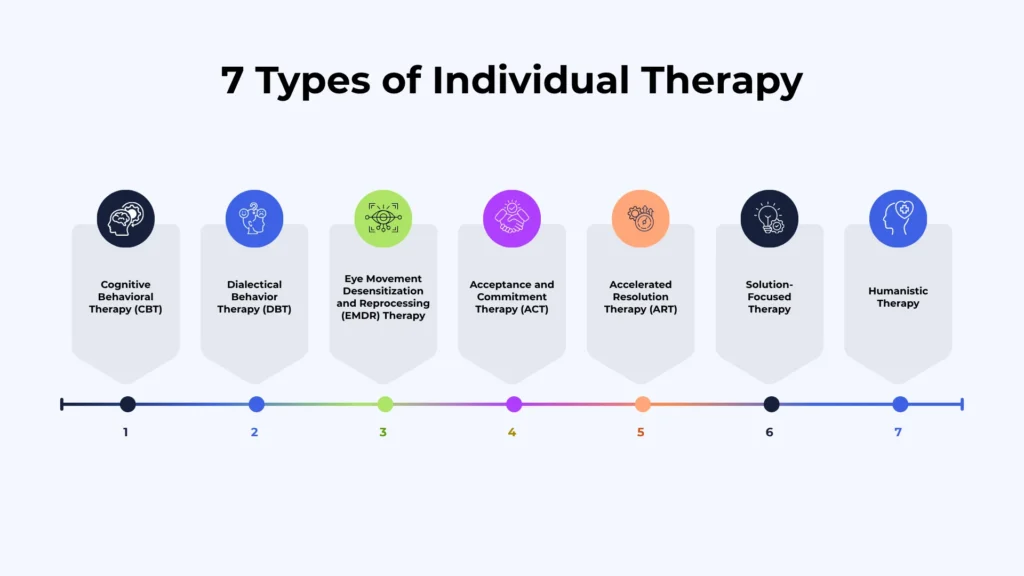
What are the 7 Types of Individual Therapy?
Understanding different types of one-on-one therapy helps individuals address mental health disorders and set personal recovery goals. Let’s take a look at different common types of individual counseling and therapy.
- Cognitive Behavioral Therapy (CBT)
CBT therapy focuses on identifying and changing harmful behaviors and thinking patterns. It is a highly effective and confidential therapy to address depression, anxiety, and stress-related problems. CBT techniques help individuals develop positive thinking patterns.
- Dialectical Behavior Therapy (DBT)
A specialized type of personalized therapy that emphasizes distress tolerance, mindfulness, and emotional regulation. DBT therapy helps individuals struggling with harmful behaviors and emotions. This emotional regulation therapy helps individuals manage their intense emotions.
- Eye Movement Desensitization and Reprocessing (EMDR) Therapy
EMDR therapy for trauma is an effective therapeutic approach to help individuals process and recover from traumatic experiences. This eye movement desensitization and reprocessing therapeutic approach is effective in controlling the impact of destructive memories.
- Acceptance and Commitment Therapy (ACT)
A private therapy for individuals that encourages them to accept their feelings and thoughts rather than spending time fighting them. One-on-one sessions of ACT therapy focus on mindfulness while promoting actions that improve personal values.
- Accelerated Resolution Therapy (ART)
An evidence-based and brief individual therapy that helps individuals in reframing their traumatic memories. The use of visualization techniques is effective in addressing the distressing thoughts. ART therapy for PTSD produces quicker results compared to traditional therapies.
- Solution-Focused Therapy
The goal-oriented therapy techniques focus on practical solutions rather than spending time exploring the root causes of the problems. This therapy has become effective in identifying the individuals’ strengths while encouraging them to take actions for positive change.
- Humanistic Therapy
A confidential therapy that focuses on self-awareness and personal growth, helping individuals to achieve their full potential. This therapy offers a supportive environment that allows individuals to express their feelings and improve their sense of self.
What Conditions Can One-on-One Counseling and Therapy Treat?
Therapy is not just for addressing problems; it is a powerful tool for emotional stability and personal growth. Individual therapy is ideal for treating different emotional and mental health challenges.
- Anxiety Disorders: Improve coping strategies and reduce excessive worry to stabilize anxiety disorders.
- Depression: Address negative thinking patterns and improve mood to support people struggling with depression.
- PTSD and Trauma: Process the distressing experiences in a secure environment to heal individuals from trauma and PTSD.
- Substance Abuse and Addiction: Offer structured, healthier behaviors to overcome substance addiction and abuse.
- Family and Relationship Issues: Enhance emotional understanding and communication to resolve family problems and improve relationships.
- Burnout and Stress: Teach a variety of stress management strategies to reduce burnout and stress effectively for a healthy lifestyle.
- Low Self-Esteem: Promote self-awareness while addressing the low self-esteem to build both self-worth and confidence.
Want to Leverage the Maximum Benefits of Individual Therapy in New Jersey?
Contact the Freedom Recovery Center to access one-on-one therapy with maximum benefits for lasting recovery.
What are the Top 5 Benefits of Individual Therapy?
There are a number of benefits of individual counseling for individuals. Individuals prefer this effective, confidential therapeutic approach to improve the overall quality of life, including mental and physical health. Let’s explore the advantages of individual therapy.
Personalized Attention
An individualized therapeutic approach focuses on the unique challenges, requirements, and recovery goals. The professional individual therapist creates a personalized plan to target the specific concerns. This personalized therapy offers meaningful and effective progress with the passage of time.
Confidential and Safe Space
The individualized therapy sessions in a confidential environment allow you to express your emotions and thoughts freely. Individuals don’t need to worry about the misunderstanding, criticism, and fear of judgment. This sense of safety is included in individual therapy benefits, building trust for honest conversations.
Coping Skills Improvement
Individuals learn practical coping techniques to manage everyday challenges, including anxiety and stress. They can apply these coping strategies in different real-life conditions. Over time, these are effective skills that help individuals respond to difficult times in a balanced and healthier way.
Better Emotional Awareness
Individual counseling benefits also include a deeper understanding of behaviors, feelings, and thoughts. This emotional awareness enables individuals to identify the triggers and patterns affecting their emotional well-being. It helps individuals to make positive and well-informed decisions.
Long-Lasting Mental Wellness
One-on-one therapy not only offers short-term relief but also provides long-term stability for mental health. Individuals can develop effective skills to support resilience and emotional stability. With stable mental health, individuals will note improvement in their quality of life even after therapy sessions end.
💡 Did You Know
In 2021, 1,207 out of 12,237 women and 655 out of 10,544 men received psychotherapy in the United States.
What to Expect in the 1st One-on-One Therapy Sessions
It may feel difficult to start private therapy in New Jersey. However, knowing what to expect may make the process easier for you.
- Initial Assessment: During the evaluation, therapists usually ask questions related to challenges, background, and goals.
- Goal Setting: The therapist and the individual together will define the realistic goals to be achieved through therapy sessions.
- Open Discussion: Individuals need to talk openly about their experiences, emotions, and thoughts in a safe environment.
- Session Structure: Therapy sessions may be scheduled for biweekly or weekly, with an approximate duration of 45 to 60 minutes.
Signs You May Need Individual Therapy in New Jersey
Are you not sure whether you need individualized therapy or not? Here are the common signs to consider personalized therapy in New Jersey.
- Feeling stressed or overwhelmed consistently
- Struggling to manage the intense emotions
- Facing the challenge of maintaining relationships
- Experiencing a lack of motivation or feeling stuck
- Dealing with loss or trauma
Why Choose Individual Therapy Over Group Therapy?
Both individual and group therapies are effective for improving mental health. Individual talk therapy offers flexibility and personalized attention. It focuses on the unique challenges and experiences in the individual setting. Here is how an individual therapeutic approach offers deeper emotional understanding and quicker progress compared to group therapy.
- Provides personalized attention based on every individual’s needs unlike group therapy that focuses on a general format.
- Allows you to share personal or sensitive problems in a completely confidential and private environment.
- Offers close monitoring, allowing individual therapists to adjust the techniques in real time for improved effectiveness.
- Builds a trustworthy, stronger relationship between the therapist and individuals for enhanced long-lasting emotional growth.
How to Choose the Right Individual Therapist Near You
Finding the right therapist is important to ensure successful treatment. Here is how you can choose the most reliable therapist for individual counseling in New Jersey.
- Check Credentials: Consider the certified and experienced therapists.
- Consider Specialization: Work with a therapist who specializes in therapy for specific problems like addiction or trauma.
- Verify Insurance Coverage: Make sure that your chosen therapist accepts insurance for therapy coverage.
- Schedule An Appointment: Contact the admission team to schedule a consultation for therapy sessions.
Ready to Start Confidential Therapy with Insurance Coverage?
Get in touch with the qualified and experienced professionals to start personalized therapeutic sessions.
How Much Does Individual Therapy Cost in New Jersey?
The cost of therapy may vary based on the duration of the session and the therapist’s experience. Here are the potential factors influencing the expense of therapy.
- Qualifications and experience impact therapy price because specialized professionals usually charge higher fees.
- Frequency and length of sessions affect overall cost, particularly when you choose longer or weekly sessions.
- The type of individual therapy, such as specialized treatments like DBT or EMDR, may influence overall cost.
How to Get Started with Individualized Therapy
Taking the first step may feel difficult, but it’s worth starting today for streamlined recovery. Here is how you can start therapy in New Jersey.
- Identify your needs and recovery goals to choose the right therapy based on your condition.
- Search online for “individual therapist near me” to find the local therapists in New Jersey, or visit FRC NJ.
- Take some time to check the credentials of therapists to receive support from qualified professionals.
- Complete the insurance verification process to understand services that are covered and manage out-of-pocket costs.
Why Choose FRC NJ for Professional Individual Therapy
If you need trusted and confidential mental health support in New Jersey, choosing Freedom Recovery Center may make the difference.
- Certified and experienced therapists
- Customized treatment plan
- Smooth insurance verification
- Confidential support
Start Individual Therapy At Freedom Recovery Center
Don’t delay in accessing effective individual therapy when you need the confidential, personalized support. Freedom Recovery Center offers individualized support to individuals who want to achieve and maintain lasting recovery.
Frequently Asked Questions About One-on-One Therapy Answered
Let’s explore the answers to common questions about personalized talk therapy.
What is individual counseling?
A personalized, one-on-one talk therapy where a certified counselor works with individuals.
What are individual therapy examples?
Cognitive Behavior Therapy (CBT), Dialectical Behavior Therapy (DBT), EMDR therapy, and Psychodynamic therapy are examples of individual therapy.
Is individual therapy covered by insurance?
Yes, individual therapy is usually covered by insurance, which may require medical necessity.
How much does individual therapy cost without insurance?
The cost of individual therapy varies without insurance, based on the therapist’s experience and session duration.
Is individual therapy worth it?
Yes, individual therapy is worth it to improve coping skills, self-awareness, and mental health.
What are the benefits of individual therapy over group therapy?
The benefits of individual therapy over group therapy are a personalized therapeutic approach, flexible schedule, and customized treatment.