Yes, many insurance plans cover intensive outpatient program (IOP) treatment for mental health and substance use disorders when the care is medically necessary. Many insurance companies like Aetna, Cigna, Medicare, Medicaid, and UnitedHealthcare cover insurance for IOP treatment programs. IOP coverage depends on the specific insurance plan and can vary based on coinsurance and deductibles. It can help to make the treatment more affordable. If you are looking for an insurance-covered IOP, Freedom Recovery Center works with different insurance providers to maximize benefits.
What is an Intensive Outpatient Program?
An Intensive Outpatient Program (IOP) is a structured mental health treatment program that requires 3 to 5 days a week for 3 to 4 hour sessions. It allows individuals to return home after completing all sessions and therapies. It is less intensive than a partial hospitalization program but gives more support than outpatient therapy.
An intensive outpatient program may include individual and group therapy, mental health treatment, family therapy, and medication management. This treatment involves approximately 9 to 20 hours of sessions per week based on the individual’s needs. An IOP treatment addresses anxiety, depression, trauma, Substance Use Disorder (SUD) and co-occurring disorders.
Does Insurance Cover IOP Treatment?
Yes, many health insurance companies cover IOP treatment for mental health or substance use disorders. Insurance-covered IOP programs may include alcohol use disorder (AUD) treatment, counseling and therapy, and dual diagnosis care. The Mental Health Parity and Addiction Equity Act (MHPAEA) provides federal protection for certain types of health plans. This law requires insurance plans to cover mental health illnesses or substance use disorders in a similar way to medical and surgical benefits. Treatment coverage can vary depending on the insurance plan. How much does IOP cost with or without insurance.
Take the First Step Toward Long-Term Recovery
Freedom Recovery Center provides personalized IOP treatment, transparent insurance verification and ongoing recovery support. Contact us today to learn whether your insurance can cover your treatment.
Which Insurance Companies Cover IOP Treatment?
There are many major insurance companies that cover IOP treatment for mental health and substance use disorders. Some common insurance providers may include Aetna, Cigna, UnitedHealthcare, Medicaid, and Medicare. Explore the headings below to find out which insurance companies cover IOP treatment.
Does Aetna Cover IOP Treatment?
Aetna is a health insurance company that also covers IOP treatment for mental health and substance use disorders. Many Aetna plans require preauthorization before IOP admission and require you to choose an in-network treatment center. Their insurance plans may cover group therapy, individualized counseling, dual diagnosis treatment and relapse prevention strategies.
Does Cigna Cover IOP Treatment?
Yes, Cigna provides coverage to treat substance use disorder and co-occurring disorders in comparison to medical and surgical care. It includes benefits for IOP treatment when it is clinically necessary. In some cases, pre-authorization is required and in-network providers may facilitate the lower out-of-pocket cost.
Does United Healthcare Cover IOP Treatment?
UnitedHealthcare is a national insurance provider that offers behavioral health coverage through its Optum network. Their services may include relapse-prevention planning, psychiatric care, individual therapy and group counseling. IOP insurance coverage may vary depending on medical necessity, authorization and whether the rehab program is in-network with your plan.
Does Blue Cross Blue Shield Cover IOP Treatment?
Horizon Blue Cross Blue Shield (BSCS) is known for providing health insurance coverage and traditional indemnity plans for individuals and employers. Their health insurance covers more than 3.2 million people throughout New Jersey. Their insurance plans may include medication management, behavioral therapy, and counseling sessions to provide recovery support. BCBS insurance coverage may vary depending on the plan you select.
Does Medicaid Cover IOP Treatment In New Jersey?
Yes, the Medicaid program covers IOP in New Jersey, which helps individuals get low-cost healthcare coverage. It may cover substance use disorders, co-occurring disorders and medication-assisted treatment for better recovery. It is necessary to verify the eligibility requirements because they can affect PHP program coverage.
Does Medicare Cover IOP Treatment?
Medicare may offer IOP for drug addiction or mental illness treatment when services are based on medical necessity and provided by a Medicare-approved facility in New Jersey. The coverage usually includes substance abuse treatment, counseling, therapy and specific behavioral health services. Individuals can be responsible for coinsurance, copayment, or deductible based on their Medicare coverage.
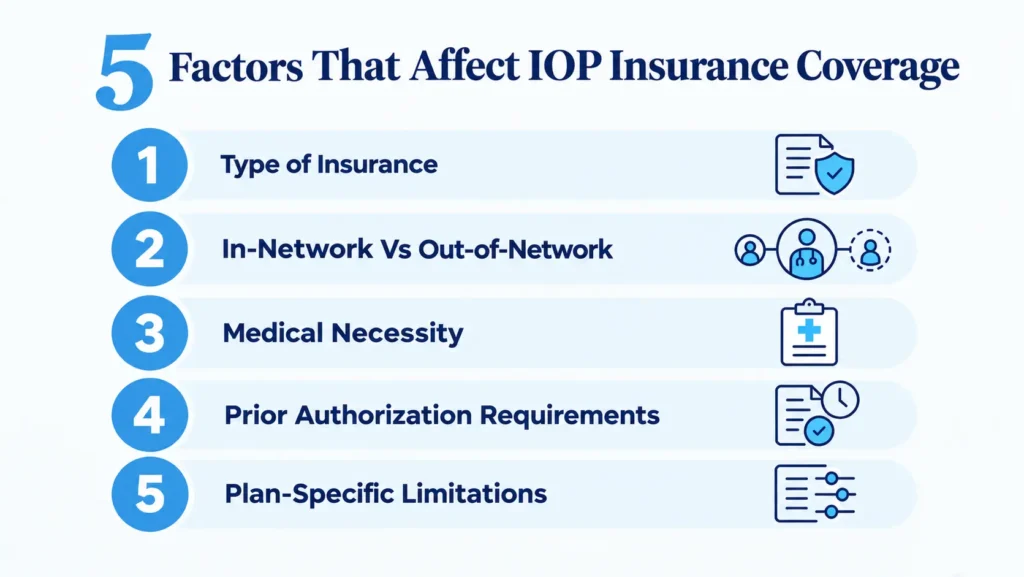
What Factors Affect IOP Insurance Coverage?
There is a significant treatment cost even with insurance coverage. Many factors impact the out-of-pocket cost for addiction and mental health treatment. Every insurance plan includes different coverage policies and provider networks. Understanding the crucial factors may help you estimate the overall cost while avoiding unexpected financial stress.
- Type of Insurance
Your insurance plan type, such as HMO, PPO, EPO or HDHPs affects which providers you can use and how much of the IOP cost is covered. Some plans offer broader coverage and lower out-of-network costs, while others require pre-authorization and referrals. That is why understanding your insurance plan helps you make a well-informed decision.
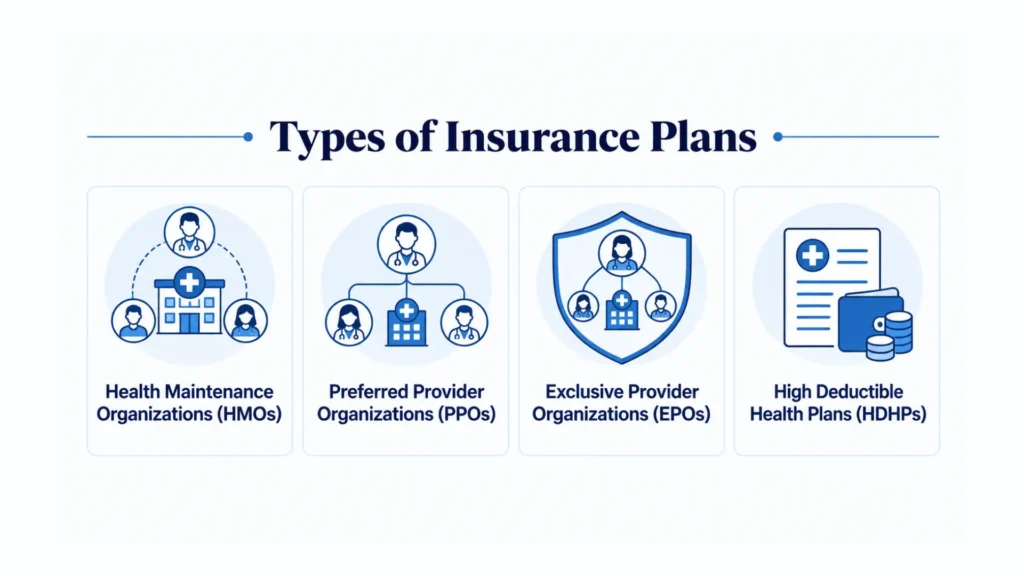
Health Maintenance Organizations (HMOs)
Health insurance organizations are types of insurance plans that feature a network of health care providers who treat a patient for a prepaid cost. HMOs combine financing and care delivery to provide incentives for cost-efficient, high-quality care.
Preferred Provider Organizations (PPOs)
Preferred provider organizations (PPOs) are health plans that consist of a network of doctors, hospitals, and other providers who agree to offer services at reduced rates for plan members. Patients with PPO coverage can access specialists without a referral. It allows members to receive care from both in-network and out-of-network providers.
Exclusive Provider Organizations (EPOs)
Exclusive provider organizations (EPOs) are a type of managed care health plan that requires members to use a network of health care providers for coverage, except in emergencies. EPOs play a middle-ground role between HMOs and PPOs. Individuals working in different organizations can benefit from a smoother recovery journey.
High Deductible Health Plans (HDHPs)
High-deductible health plans (HDHPs) have lower premiums but higher deductibles. This means you need to pay more out of pocket before insurance coverage begins. These plans are paired with health savings accounts that can be used for treatment costs.
- In-Network Vs Out-of-Network
Doctors and facilities in the plan network meet credential requirements and agree to accept discounted rates from the health plan to be part of the network. This gives you access to a network of doctors and facilities to save money on health care costs. This is called in-network.
Doctors and facilities do not have an agreement with the health plan, and you may need to pay the full price of the treatment. This is known as out-of-network. Its cost is much higher than the in-network discounted rates.
- Medical Necessity
Insurance companies cover IOP treatment when it is medically necessary. If you are struggling with a substance use disorder or mental health condition, you may need an intensive outpatient program. You can choose outpatient treatment for less intensive care.
Our FRC-certified therapists first assess the patient’s condition and then recommend treatment according to their needs. We submit documentation to the insurance company to show that the patient needs IOP treatment. The insurance company can review and provide insurance according to your needs.
- Prior Authorization Requirements
Many insurance companies require prior authorization before covering IOP treatment. This process requires the treatment facility to submit the patient’s clinical information to the insurance company. When the insurance company reviews the information, it provides coverage to eligible candidates. They may request additional documents before approving coverage. It is necessary to confirm with the rehab whether they provide insurance coverage for treatment before you enroll; you can avoid unexpected costs.
- Plan-Specific Limitations
Insurance plans may have specific limitations that affect coverage. There may be limits on the length of time for when IOP treatment is covered with insurance. Insurance may cover IOP treatment, but if you need to extend it, the insurer will review your case and ask your rehab center for an update. After reviewing the information, they decide whether extending treatment is necessary to meet your recovery goals.
How much does IOP cost with Insurance at FRC?
The cost of an IOP with insurance is $20 to $200 per day and the cost without insurance can range from $250 to $650 per day. The final cost can vary depending on your specific plan, including your deductible, copay, coinsurance and out-of-pocket maximum. This coverage can make treatment more accessible for individuals and families who cannot afford to pay for recovery care on their own.
| Cost factor | What its mean | How it affects an IOP cost |
| Deductible | The amount that you pay for healthcare services each year before insurance begins to pay. | You may need to pay the full IOP cost until your deductible is met. |
| Copay | It is the fixed amount that you have to pay for healthcare services whenever you receive a service. | Once your deductible is met. You may pay a set copay per session, |
| Coinsurance | Percentage of a covered healthcare or property cost that you pay after you meet your plan’s deductible | Individuals may also need to pay an amount as a deductible before insurance covers eligible services. |
| Out-of-Pocket Maximum | You pay the highest amount to cover healthcare services in a plan year. | Once you reach this limit, your insurance covers 100% of eligible IOP costs for the rest of the year. |
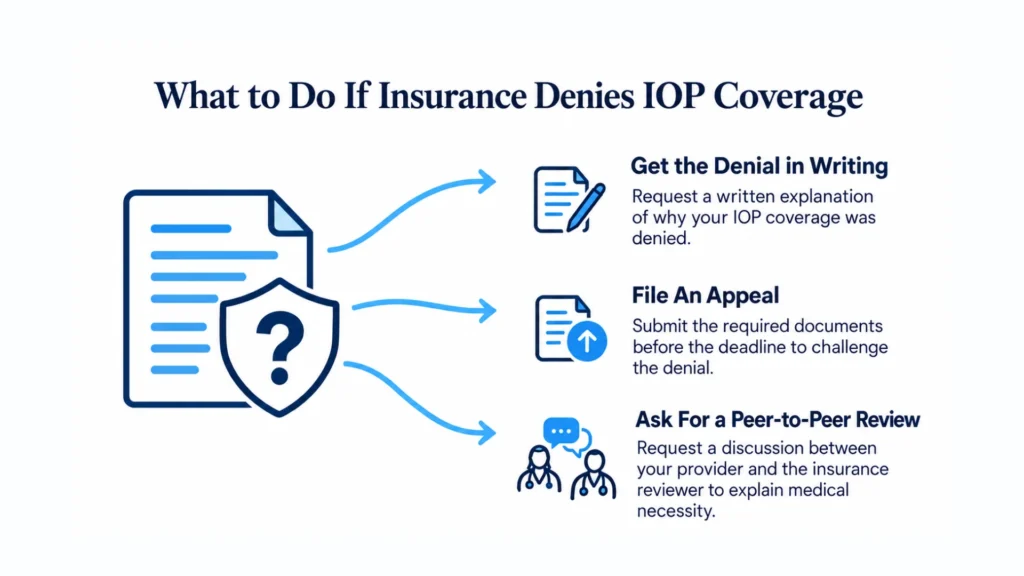
What to Do If Insurance Denies IOP Coverage
If your insurance company denies IOP coverage, you should never assume the decision is final. You have the right to understand the reason for the denial and request a review. If the company requires additional documents, you should submit them. Taking quick action can help you get the coverage you need.
- Get the Denial in Writing
Ask your insurance company to send you a written explanation of the denial. The letter should include why the insurance was denied and what criteria were used. Make a copy of that letter, as it will help you when filing an appeal.
- File An Appeal
Submit an appeal before the deadline listed in your denial letter. Include the necessary documents that show why you need IOP treatment. A clear appeal can help increase the chance of turning a denial into an approval.
- Ask For a Peer-to-Peer Review
Some insurance companies allow a peer-to-peer review, where a certified therapist or doctor directly speaks with the insurance reviewer to explain why IOP is necessary for the individual. This can help resolve denials faster.
How To Verify Insurance Benefits At Freedom Recovery Center
Verifying your insurance is an essential step when you are looking for affordable IOP treatment. Our professional team helps you understand the insurance benefits through the smooth verification process.
- Call the insurance company to ask whether IOP treatment is covered under your plan. Make sure to ask about the copay, deductible and coinsurance. Understanding these basics can help you quickly understand your insurance coverage for IOP.
- Ask Freedom Recovery Center whether it is in-network or out-of-network with your specific plan. In-network care is usually less costly than out-of-network care. Confirming this can help you avoid unexpected costs.
- Request a free insurance benefits verification with the help of Freedom Recovery Center. This verification step is essential to understand the benefits and estimated rehab cost.
- Ask about the preauthorization requirements because some insurance providers require approval before the rehab journey starts. Completing this step is helpful to avoid delays.
Verify Your IOP Insurance Coverage Today
Freedom Recovery Center works with major insurance providers to help make IOP treatment more affordable. Contact our team for a free insurance verification and get clear information about your coverage and treatment costs.
Why You Should Choose Freedom Recovery Center For IOP
Choosing the FRC for IOP can help you afford the treatment with insurance. Our insurance coverage for treatment programs can reduce the financial stress of the individual. It can make it accessible for every individual who can’t afford the treatment. Here are some benefits that highlight the benefits of choosing Freedom Recovery Center for long-term sobriety.
Licensed and Certified Staff
Our team at FRC are certified and licensed therapists who use different strategies to reduce trauma and co-occurring disorders. Each member of the rehab team strictly follows the clinical standards to maintain safety and quality.
Transparent Insurance Verification
Our Freedom Recovery Center is very clear and doesn’t take upfront insurance checks. You can verify the insurance at FRC before confirming the admission. Our admission team informs you about the benefits and limitations of treatment options according to your needs.
Strong Recovery Outcomes
We offer strong substance recovery and long-term stability through aftercare and relapse-prevention planning. Patients gain coping skills and continuous support to maintain recovery for a longer period.
Honest Reviews
At FRC, we have 93% to 99% satisfaction scores across care, planning, and therapists in 2024 surveys. Our highlighted five-star reviews show the professionalism of our staff. Our authentic testimonials show you why new patients choose us from day one.
Get The IOP Treatment With Insurance At Freedom Recovery Center
Starting your intensive outpatient Program at Freedom Recovery Center means you can focus on recovery without worrying about hidden costs or insurance surprises. Our team verifies your insurance coverage and provides clear information about treatment costs or any out-of-pocket expenses before you begin. We provide personalized treatment by combining evidence-based approaches and coping skills to support your recovery journey. You can contact our team to get insurance and understand its benefits. Start your recovery journey by getting insurance and managing your financial stress.
Frequently Asked Questions About IOP Insurance Coverage
What insurance covers IOP?
Many private insurance companies, like government programs and federal health benefits, cover Intensive Outpatient Programs to treat mental health and substance use disorders. This coverage can depend upon the specific policy, medical necessity, and whether the treatment center is in-network.
What happens if I change insurance plans during IOP?
If you change insurance plans during IOP, your coverage and out-of-pocket costs may change. Contact the new insurance provider and recovery center to confirm whether your treatment is still covered by insurance.
Is a virtual IOP covered the same as an in-person one?
Virtual IOP is covered similarly to in-person IOP, especially when it is medically necessary. The coverage can vary depending on the selected insurance plan.
How much does IOP cost with insurance?
IOP programs may cost approximately $20 to $200 per day and $0 to $3000 monthly. The type of facility, duration of treatment, and insurance coverage are factors affecting the overall cost of the IOP program.
What insurance plans offer good coverage for addiction IOPs?
Aetna, Cigna, Blue Cross Blue Shield (BCBS), and United Healthcare insurance plans offer good coverage for addiction IOPs in New Jersey. Verifying insurance helps you understand the exact coverage.
Does Medicaid or Medicare Cover IOP?
Yes, Medicaid and Medicare may cover IOP when the program is medically necessary and provided by an approved treatment facility. Coverage details, eligibility requirements, and out-of-pocket costs can vary by state and plan.