If your loved one is struggling with drug or alcohol addiction and you want to explore treatment options. Many people think addiction treatment means staying at a facility for weeks or months, which is why they often choose residential care. This is a common misconception, because outpatient rehab does not require you to live at the treatment center. Instead, it allows you to receive treatment while still managing work, home, and family responsibilities.
At Freedom Recovery Center, we offer different treatment programs that help people to recover from drug and alcohol addiction. Our professional staff at FRC provides different therapies and counselling so patients can overcome the challenges they face during recovery. Many people feel confused when choosing an outpatient program, like how outpatient rehab works and what are the different types of outpatient rehab. To find the answer, you can read the complete blog.
What Is Outpatient Rehab?
Outpatient rehab is a non-residential treatment program that allows a person to receive care while continuing to manage home responsibilities and work. On the other hand, Inpatient rehab does not allow a person to stay at home during treatment. Everyone wants to overcome drug and alcohol addiction without leaving their comfort.
This outpatient addiction treatment is specially designed for people who do not need 24-hour supervision. It includes counselling and therapy sessions that can help a person recover more quickly. If you are also looking for the right rehab that gives you compassionate care, you are in the right place. Our FRC in New Jersey is offering Intensive outpatient and partial hospitalization programs to help those who are struggling with addiction on a daily basis.
Get Addiction Treatment Without Leaving Your Daily Life
Outpatient rehab at FRC lets you recover while managing work, school, and family. Start your journey with flexible and compassionate care.
Difference Between Outpatient And Inpatient Rehab?
| Feature | Outpatient Rehab | Inpatient Rehab |
| Definition | A non-residential treatment program where the person lives at home and attends scheduled sessions at the center. | A residential treatment program where the person stays at the facility full-time. |
| Living arrangement | The person goes home after each session. | The person stays at the rehab center 24/7. |
| Time commitment | Part-time and flexible. | Full-time and highly structured. |
| Session timing | Standard outpatient sessions usually happen 1 to 2 times per week and last about 1 to 3 hours. Intensive outpatient programs may run 3 to 5 days per week, with sessions lasting around 3 to 4 hours. | Treatment is daily and continuous with 24/7 support. |
| Program length | Often lasts about 6 to 12 weeks for standard outpatient care, while intensive outpatient programs may last 8 to 12 weeks or longer depending on progress. | Commonly lasts 30, 60, or 90 days, though some people stay longer if needed. |
| Supervision | No 24-hour supervision; support is available only during scheduled visits. | 24-hour supervision and monitoring are available. |
| Best for | People with mild to moderate addiction or those who need to continue work, school, or family responsibilities. | People with severe addiction or those needing strong medical supervision. |
| Cost | Usually less expensive. | Usually more expensive because it includes room, board and constant care. |
| Therapy included | Counselling, group therapy, individual sessions, and relapse prevention support. | Counselling, therapy, detox support, and intensive treatment. |
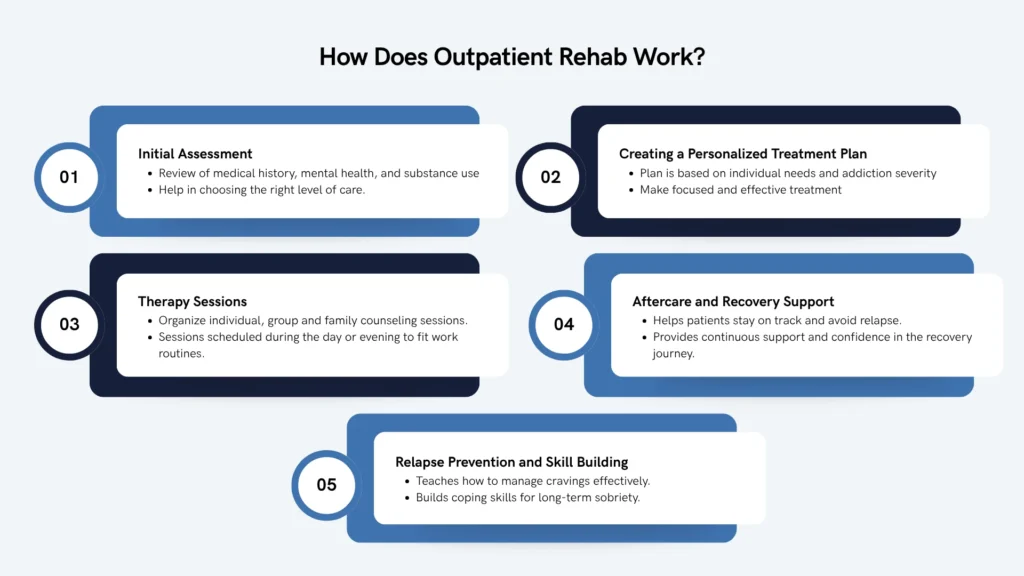
How Does Outpatient Rehab Work? What We Expect
Outpatient rehab allows you to receive treatment while living at home and managing your daily responsibilities. You can expect a personalized treatment plan, regular therapy sessions, and ongoing support to help you achieve lasting recovery.
- Initial Assessment
The first step in outpatient rehab is a complete assessment. During this stage, the treatment team reviews the person’s medical history, mental health condition, and substance use background. They may also ask about family life, work, school, and any challenges the person is facing. This helps the staff understand the full situation and choose the right level of care.
- Creating a Personalized Treatment Plan
After the assessment, a personalized treatment plan is created for the patient. This plan is based on the person’s needs, recovery goals, and the severity of addiction. It usually includes therapy sessions and support services if needed. A customized plan makes treatment more focused and effective.
- Therapy Sessions
Outpatient rehab includes regular therapy sessions that help the person recover while still living at home. These sessions may be held during the day or evening so the patient can continue work or family responsibilities. Therapy can include individual counseling, group therapy, and sometimes family sessions. This gives the person a safe place to talk, learn, and stay motivated.
- Relapse Prevention and Skill Building
A major part of outpatient rehab is learning how to prevent relapse. Patients are taught how to identify triggers, manage cravings and deal with stress in healthier ways. They also build coping skills and life skills that support long-term recovery. These tools help them handle real-life situations without returning to substance use.
- Aftercare and Recovery Support
Aftercare is the final but very important part of outpatient rehab. Once the main treatment ends, the person may continue with follow-up sessions, support groups, or ongoing counselling. This stage helps them stay on track and avoid relapse after leaving the program. Continuous support gives them more confidence as they move forward in recovery.
Types Of Outpatient Rehab
Outpatient rehab offers different levels of care depending on a person’s needs. Some programs provide more structure and support, while others are lighter and more flexible. Below are the main types of outpatient rehab.
- Partial Hospitalization Program (PHP)
Partial Hospitalization Program is the most intensive type of outpatient rehab. It is designed for people who need strong support but do not need to stay overnight at the facility. In this program, the person usually attends treatment for several hours a day, five days a week, while still living at home or in a sober living environment. PHP often includes therapy, counselling, medical support, and structured daily care.
Want to learn more about PHP vs IOP? Read our detailed guide on PHP vs IOP: Levels of Care in NJ.
- Intensive Outpatient Rehab (IOP)
Curious about how IOP works? Check out our blog on Understanding Intensive Outpatient Programs. Intensive Outpatient Rehab is a step below PHP but more structured than standard outpatient care. It is a good option for people who need regular support while continuing work, school, or family responsibilities. In most programs, patients attend sessions several days a week for a few hours each day. IOP usually includes group therapy, individual counseling, relapse prevention, and skill-building support.
- Standard Outpatient Rehab
Standard Outpatient Rehab is the least intensive form of outpatient treatment. It is best for people who have mild addiction symptoms or who are in a stable stage of recovery. This program usually involves weekly or less frequent visits, and sessions may last a few hours each week. Standard outpatient care helps people continue treatment while maintaining their daily routine and responsibilities.
How Long Does Outpatient Rehab Last
The length of outpatient drug rehab center depends on the person’s condition and treatment needs. In many cases, standard outpatient rehab lasts about 6 to 12 weeks, while intensive outpatient programs usually last around 8 to 12 weeks. Some people may complete treatment in a few weeks, but others may need several months of support. The exact timeline is based on recovery progress and the level of care required.
Benefits Of Choosing Outpatient Alcohol Rehab At FRC
Outpatient alcohol rehab at FRC offers flexible treatment that fits around your work, school, and family responsibilities. Our experienced team provides personalized care, evidence-based therapies, and ongoing support to help you achieve lasting sobriety. Here are a few reasons why you should choose us.
Schedule Flexible Treatment
At FRC, we offer flexible treatment schedules that fit into your daily life. This makes it easier to continue work, family responsibilities, or studies while receiving care. Our goal is to support recovery without putting your routine on hold.
Personalized Treatment Plans
FRC creates personalized treatment plans based on each person’s unique needs and recovery goals. Our team carefully understands the patient’s condition before designing the right approach. This helps make treatment more focused, effective, and supportive.
Supportive Therapy and Counselling
FRC provides supportive therapy and counselling to help patients manage addiction and emotional challenges. Our sessions create a safe space to talk, heal, and build healthy coping skills. This support helps patients stay motivated throughout their recovery journey.
Cooperative Staff
The staff at FRC work with compassion, care, and full cooperation. They guide patients through every step of the treatment process with patience and understanding. This supportive environment helps people feel comfortable and valued during recovery.
Your Recovery Starts With One Simple Step
Outpatient rehab at FRC offers flexible schedules, personalized care, and expert support to help you achieve lasting sobriety.
What Core Therapies Are Offered at Freedom Recovery Center
We understand that recovery is possible with effective treatments, but therapies are a helpful source for speeding up the recovery process. That’s why well-experienced therapists at the Freedom Recovery center assist patients with diverse therapy options.
- Group & Individual Therapy: Our rehab offers individual therapy for those patients who share their personal challenges with the therapist. In group therapy, family involvement is important to help patients overcome challenges and move toward recovery.
- Family Therapy: The licensed therapists provide an effective family therapy option that involves the family for the patients’ betterment. This therapy acts like a bridge to connect patients with their families while rebuilding their broken relationships.
- Behavioral Therapies: We provide different behavioral therapies such as cognitive behavioral therapy, dialectical behavior therapy, contingency management, and motivational lectures. These diverse therapies help patients build positive behavior for drug treatment.
Find The Effective Treatment Programs At Freedom Recovery Center
At Freedom Recovery Center, we offer personalized and evidence-based treatment programs designed to meet your unique needs. Our experienced team provides a range of services, including PHP, IOP, individual counselling, group therapy, and medication-assisted treatment to support lasting recovery. You can achieve sobriety with compassionate care and flexible options while balancing your daily responsibilities.
Frequently Asked Questions (FAQs)
How long is rehab outpatient?
Outpatient rehab typically lasts from 4 to 12 weeks. All depending on the program and your needs. Intensive programs like IOP may run 8 to 12 weeks. Standard outpatient care can continue for several months. The duration varies based on your progress and treatment plan.
Can you work during outpatient rehab?
Yes, most people can work during outpatient rehab because treatment schedules are flexible. Programs like IOP often offer evening or weekend sessions to fit around work. You can balance treatment with your job and daily responsibilities.
How many hours per week is outpatient treatment?
Standard outpatient programs may require 1 to 3 hours per week, while intensive outpatient programs can require 9 to 15 hours per week.
Can I work or go to school while in outpatient rehab?
Yes, outpatient rehab is designed to fit around your schedule, so you can continue working, studying, or caring for your family while receiving treatment.
What happens after outpatient rehab ends?
After completing outpatient rehab, you may transition to aftercare programs, support groups, or continued therapy to maintain sobriety and prevent relapse.