Depression is very challenging because it makes you sad and demotivated; that’s why a person is not interested in social activities. They want to stay alone and may turn to alcohol or substance use as a way to cope. Many people are looking for ways to understand what they should do when their loved one is suffering from depression. You will get the answer in detail.
When you sometimes feel low or depressed, it is normal. But if the same routine continues for two weeks or more, it is a sign of depression. According to the World Health Organization, about 4% of the global population lives with depression, including 5.7% of adults, and an estimated 727,000 people died by suicide in 2021. This is increasing day by day, so it is important to know how to deal with a depressed person and what are the do’s and don’ts when supporting a friend with depression.
What Is Depression?
According to the National Institute of Mental Health, a person sometimes feels sad or low, but if this condition continues over time, it may be depression. This disorder is called major depressive disorder. It is an illness that can affect anyone, regardless of age, race, or education. Research suggests that biological, environmental, and psychological factors all play an important role in depression.
Depression is one of the most common mental health problems affecting people worldwide. The lifetime prevalence of depression is about 7% to 12% in men and 20% to 25% in women, and research suggests that around 40% to 50% of the risk may be genetic.
Depression is also linked with serious impairment in social, marital, and occupational functioning. If you are also dealing with memory loss along with depression, you should read this blog: Does Depression Cause Memory Loss and Its Impact on the Brain.
Signs And Symptoms of Depression Faced In Loved Ones
According to the American Psychiatric Association, depression is a heterogeneous disorder that shows psychological and behavioral changes. It refers to a wide range of mental health problems. If you are struggling, do not worry because we are offering IOP for young adults so you can get professional counseling and move toward recovery.
- Don’t Show Involvement in Social Activities
- Changes in Sleeping And Eating Patterns
- Express Negative Thoughts
- Difficulty in concentrating and thinking
- Depressed mood all day
- Anhedonia (Inability to feel pleasure or joy from things)
- Decreased or increased appetite
- Low energy
- Fatique
- Weight gain
- Psychomotor Agitation (Hand wringing)
You Are Not Alone In This Journey
Supporting a friend with depression can feel overwhelming, but you do not have to do it alone. Our compassionate team at Freedom Recovery Center is here to guide you and your loved one toward healing. Get expert advice and treatment options tailored to your needs.
How Can I Support A Friend With Depression
Finding different ways to help a friend with depression can be tricky, even when you have good intentions. A person with depression does not always look the way they feel on the outside, and what you see may not reflect how they feel inside. Let’s find different ways to support a friend who is depressed.
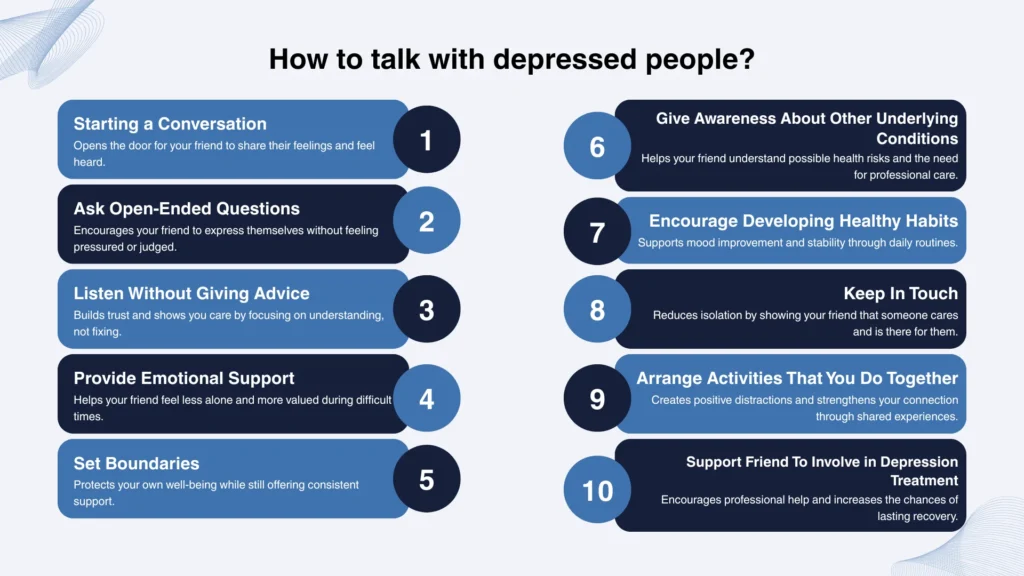
- Starting a Conversation
Start the conversation by asking about their mental health, such as how they are feeling, because this is a critical first step in helping them. Speak to them in a caring and concerned way and let them know what they want to hear. Ask questions gently instead of asking everything at once, because too many questions can irritate them.
If you communicate this way, it can build a strong connection between you and the person. Through communication, you can also encourage professional help so they can recover as soon as possible.
- Ask Open-Ended Questions
Open-ended questions are the best way to begin the conversation with a depressed person. Asking “Are you depressed?” or “Why are you depressed?” can make them uncomfortable, but asking “How are you feeling?” can make them open up and share their concerns and challenges with you.
- Listen Without Giving Advice
If your loved one is struggling and wants to get help, the best thing you can do for a depressed person is simply listen to them. When you listen calmly and with patience, it becomes easier to build trust. That is why it is recommended to avoid advice like “you should live like this” or questions like “how long have you had depression,” because these can make the person feel more depressed.
- Provide Emotional Support
When you are talking with your friend, it is necessary to give them your full attention. Create a safe and comfortable environment so they can share openly. Make sure they do not feel alone. Show your concern and give them full emotional support, because even small gestures can affect their mental health in a good or bad way.
- Set boundaries
Setting boundaries can help a patient recover faster. For example, you can tell your friend they can come to you at a specific time so you can talk. If the person says they are not available at that time, negotiate with them. Offer to help sometimes instead of them expecting your help every day.
- Give Awareness About Other Underlying Conditions
Depression can cause many mental health issues. It can also impair cognitive function. If your friend has to face severe symptoms of depression and anxiety, they may have an underlying condition. If you still ignore these issues, memory loss problems can start because of depression.
- Encourage Developing Healthy Habits
Encourage your friend to build healthy habits such as regular sleep, balanced eating, and light exercise. These small routines can improve mood and create a sense of stability during difficult days. You can also lead by example and make healthy choices together. Over time, these habits can support emotional healing and reduce feelings of isolation.
- Keep In Touch
Keeping in touch shows your friend that they are not alone and that someone cares about them. A simple text, call, or visit can make a big difference, even if they do not always respond right away. Regular contact can help reduce isolation, which is common in depression. Consistent support can also build trust and comfort.
- Arrange Activities That You Do Together
Invite your friend to join simple activities like taking a walk, watching a movie, or sharing a meal. Doing things together can provide distraction from negative thoughts and make them feel more connected. These activities should be gentle and pressure-free so they do not feel overwhelmed. Shared moments can help create positive energy and emotional support.
- Support Friend To Involve in Depression Treatment
Encourage your friend to seek professional help and support them in staying involved with treatment. You can offer to help them make appointments, go with them or remind them to follow their care plan. Our Professional treatment Plan can play an important role in recovery, especially when combined with family or friend support. Your encouragement can make it easier for them to take the first step.
What To Avoid With Depressive Patients
Knowing what not to say to someone with depression is important. Here are some important points that will let you know what you should avoid saying or doing.
Don’t Tell Them Things Could Be Worse
If you keep asking too much, it can become very frustrating for the person. They may feel that you do not understand their condition, even if you are asking with good intentions and trying to make more effort. A person suffering from depression may also feel guilt when someone questions why their progress is getting worse.
Some people know that their condition is getting worse, but they do not take recovery seriously. This can lead to major depressive disorder, and in severe cases it can even lead to death.
Trying to Fix Them
You should not try to fix them, because depression is not solved by forcing solutions. It is better to listen carefully and support them with patience and care. Quick advice can make them feel misunderstood or pressured. Your presence and understanding matter more than trying to control the situation. A calm and supportive attitude can help them feel safer.
Do Promises to keep all Talk Secret
Do not promise that every conversation will stay secret if safety is involved. If the person may harm themselves, you should take the situation seriously. Trust is important, but protection and support come first. You may need to involve a trusted adult, family member, or professional. Getting help early can protect the person and prevent serious harm.
Don’t use hurtful language
Do not use hurtful, rude or judgmental language when speaking to someone with depression.
Words that sound blaming or insulting can make them feel worse. Speak gently and respectfully so they feel accepted and understood. Avoid sarcasm, criticism, and comments that minimize their pain. Kind language can make it easier for them to open up and trust you.
Importance Of Getting Professional Help At Freedom Recovery Center
Getting professional help at FRC ensures you receive accurate diagnosis, personalized treatment, and expert support for lasting recovery. Our experienced team uses evidence-based therapies to help you overcome depression and addiction with care and compassion.
- Accurate Diagnosis And Treatment
Our psychiatrists and professional therapists provide accurate diagnoses and develop personalized treatment plans to help people recover faster. We offer different treatment plans like IOP and PHP that support effective recovery.
- Assess Therapeutic Techniques Needed
Our therapists and counsellors at FRC use different therapeutic techniques to manage depression effectively. These techniques not only help control emotions but also assist in managing withdrawal symptoms.
- Do Intervention If Needed
The team at FRC assesses each person’s condition and provides a customized treatment plan accordingly. Our mental health professionals use interventions in their therapies and treatment so that depression can be overcome quickly.
- Provide Long-Term Support
Choosing professional and experienced staff who use evidence-based therapies helps overcome challenges. We arrange regular counseling sessions so that a person can share their challenges and our professionals can offer the right interventions to help.
Hope Is Just One Call Away
You do not have to face depression alone. Our caring team is ready to listen, support and guide you toward recovery.
Find Supportive and Effective Treatment at FRC
At Freedom Recovery Center, we offer supportive and evidence-based treatment programs designed to meet your unique needs. Our experienced team of psychiatrists, therapists, and counselors provides personalized care to help you overcome addiction and mental health challenges. With flexible options like IOP and PHP, we ensure you receive the right support for a faster and lasting recovery.
Frequently Asked Questions (FAQs)
How Do You Get Yourself Out Of Depression?
Reach out to our mental health professionals at FRC for proper diagnosis and treatment. Make small changes like regular exercise, healthy meals, and enough sleep to start changing the symptoms of depression. Stay connected with supportive people to manage mental health illness.
How To Help A Friend Who Is Depressed?
Listen without judgment and let them know you care and are there for them. Encourage them to seek professional help and offer to help with appointments or daily tasks.
How To Comfort A Depressed Person Over Text?
Send simple, caring messages like “I’m here for you” or “You matter to me.” Avoid giving advice or trying to fix their problems; show you care and are available.
How Long Does Depression Usually Last?
Depression often lasts six months or more, but it varies from person to person. Some people recover within a year, while others may experience symptoms for longer.
When To Walk Away From Someone With Depression?
You should not walk away, but you may need to set healthy boundaries for your own well-being. If the relationship becomes harmful or you feel overwhelmed, seek support for yourself. Encourage them to get professional help while maintaining compassion and care.