Quitting alcohol doesn’t mean you have to stop all at once. Tapering or reducing alcohol intake over time is the safest way for those who drink alcohol on a regular basis. If you stop drinking alcohol cold turkey, you may have to face alcohol withdrawal. Its symptoms may include anxiety, tremors, nausea, insomnia, seizures and delirium tremens. This guide will help you understand how to wean off alcohol safely and what tapering actually means. If you or your loved ones need professional help, you can get support from Freedom Recovery Center to manage alcohol withdrawal effectively.
What Does It Mean To Taper Or Wean Off Alcohol?
Tapering off alcohol is the process that gradually reduces the consumption of alcohol. It can take days or weeks depending on the severity of alcohol addiction. Tapering is the starting point for those who want to stop drinking alcohol effectively. It can be helpful for those who want to stop drinking without facing severe negative symptoms.
For people who are less dependent, treatment may combine a medically supervised detox program with a residential program to achieve recovery quickly. For most patients who are just beginning the stage of alcohol addiction, Freedom Recovery Center offers a partial hospitalization program (PHP) for alcohol addiction. In this program, different therapies and holistic approaches are used to help individuals move from alcohol addiction toward a normal Life.
Start Your Safe Alcohol Taper Today
Freedom Recovery Center helps you reduce alcohol safely with personalized support and professional care. Take the first step toward an alcohol-free future today.
Can I Quit Alcohol Cold Turkey?
Quitting alcohol cold turkey can be dangerous for long-term and heavy drinkers. When they suddenly stop drinking alcohol, they start showing withdrawal symptoms like anxiety, tremors, seizures, or delirium tremens. It can be life-threatening if you don’t seek professional help for it.
When you consume alcohol, your body becomes physically dependent on it. When you stop drinking alcohol all at once, your body has to struggle more and it can show severe withdrawal, which can be dangerous. Alcohol works as a central nervous system depressant. Quitting alcohol can cause your body to produce too much of a substance called glutamate. When alcohol is not available, it triggers withdrawal symptoms. Quitting cold turkey is an effective method to manage withdrawal, but only under medical supervision.
How Tapering Is Different From Cold Turkey?
Tapering and cold turkey are two different approaches to stopping alcohol. The main concern is how quickly you reduce your alcohol intake. Tapering can slowly reduce the amount of alcohol you drink. It allows your brain and body to adjust slowly rather than quitting alcohol immediately. Cold turkey means stopping alcohol consumption all at once without any gradual reduction. Cold turkey can cause withdrawal symptoms in heavy or long-term drinkers.
What Withdrawal Symptoms Might I Experience And When Do They Start?
Alcohol withdrawal mostly starts within 6 to 12 hours after the last drink for someone with physical dependence. Its symptoms typically peak between 24 to 72 hours and can extend into the first week. It can show severe withdrawal symptoms when you are a heavy drinker and want to stop drinking alcohol. These can start with mild issues like anxiety, nausea, and insomnia and can lead to serious problems like seizures or delirium tremens. Explore more about the alcohol timeline and alcohol withdrawal symptoms that help you understand your loved ones struggling with alcohol use disorder.
What Are the Symptoms and Timeline of Alcohol Withdrawal?
| Stage | When It Starts (After Last Drink) | Common Symptoms |
| Mild Withdrawal | 6–12 hours | Anxiety, shakiness or tremors, sweating, nausea, headache, insomnia, rapid heartbeat. |
| Moderate Withdrawal | 12–24 hours | Increased tremors, agitation, confusion, elevated blood pressure and heart rate, mild hallucinations (seeing or hearing things that aren’t there) |
| Severe Withdrawal | 24–48 hours | Seizures, severe confusion, intense agitation, high fever, rapid breathing |
| Delirium Tremens (DTs) | 48–72 hours | Severe confusion, hallucinations, extreme agitation, fever, rapid heart rate, dangerous changes in blood pressure this is a medical emergency |
| 4–7 days | Variable | Lingering anxiety, sleep disruption, mood changes (post-acute) |
How To Wean Yourself Off Alcohol Safely
A detox program is the safest method to wean off alcohol but only under medical supervision. Many people do detox at home due to not having enough time or money. But it is important that if you detox at home, you should be aware of all the risks. Sometimes many people are heavy drinkers, yet they still taper at home even though they need medical support with tapering. These things can make alcohol withdrawal worse. This may include agitation and hallucinations, and alcohol can also cause eye problems. That’s why getting professional help is important if you are severely alcohol dependent.
How Long Does It Take to Wean Off Alcohol?
The time it takes depends on how long the taper is and how well you are able to manage it. It can vary from person to person. Most people’s tapers take a few days to a few weeks. Research suggests that if you are struggling with alcohol withdrawal symptoms, you need to cut down alcohol by 10% every week.
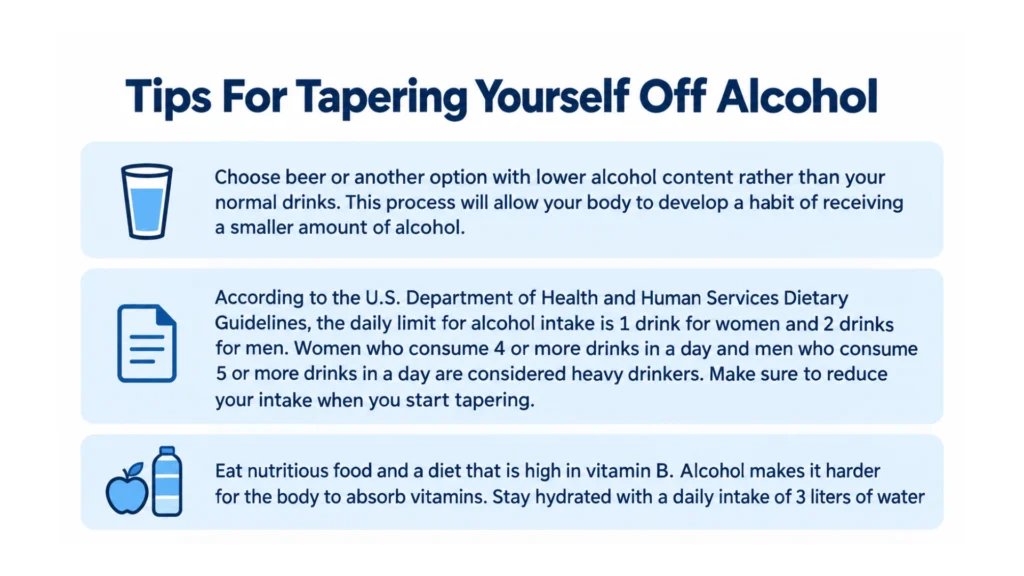
Tips For Tapering Yourself Off Alcohol
Tapering yourself off alcohol requires patience and the right information about tapering. There are a few tapering tips that will help you reduce alcohol intake slowly while minimizing withdrawal risks.
- Choose beer or another option with lower alcohol content rather than your normal drinks. This process will allow your body to develop a habit of receiving a smaller amount of alcohol.
- According to the U.S. Department of Health and Human Services Dietary Guidelines, the daily limit for alcohol intake is 1 drink for women and 2 drinks for men. Women who consume 4 or more drinks in a day and men who consume 5 or more drinks in a day are considered heavy drinkers. Make sure to reduce your intake when you start tapering.
- Eat nutritious food and a diet that is high in vitamin B. Alcohol makes it harder for the body to absorb vitamins. Stay hydrated with a daily intake of 3 liters of water.
Don’t Let Withdrawal Stop Your Recovery
Get professional guidance to reduce alcohol gradually and protect your health. Freedom Recovery Center is here to support you at every step of recovery.
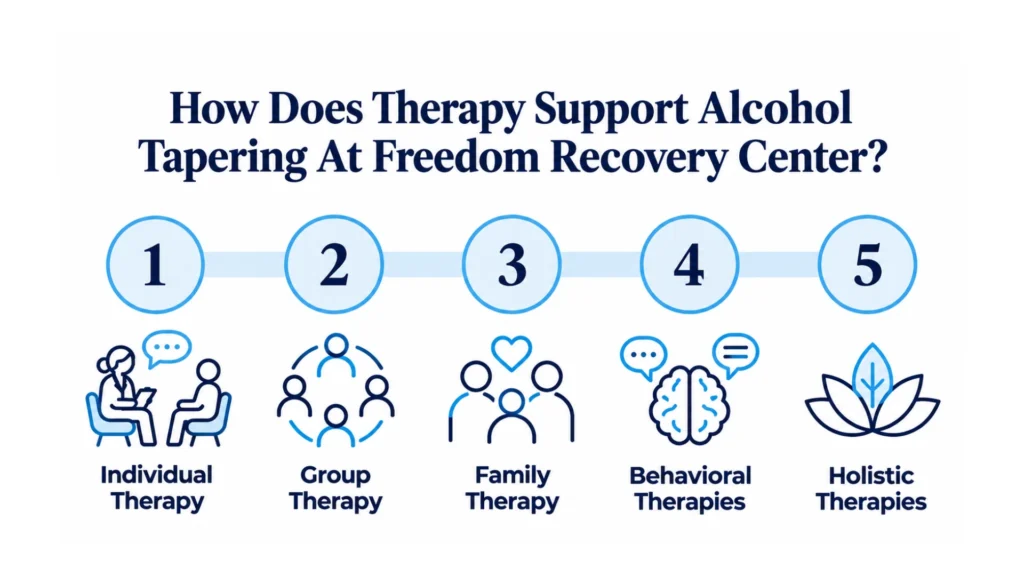
How Does Therapy Support Alcohol Tapering At Freedom Recovery Center?
We understand that recovery is possible with effective treatment and therapy plays an important role in supporting a safe alcohol taper. The experienced and certified therapists at Freedom Recovery Center help patients manage cravings and stay committed to reducing alcohol intake gradually.
Individual Therapy
We offer one-on-one therapy sessions to help patients address the personal challenges, triggers and emotional patterns that can make tapering off alcohol more difficult.
Group Therapy
Group therapy sessions allow patients to share their experiences, challenges, and recovery goals with others who understand what they are going through. It provides encouragement and accountability throughout the tapering process.
Family Therapy
Our licensed therapists involve family members in the recovery process. It helps to rebuild trust and communication while creating a supportive home environment that makes it easier for patients to stay on track with their alcohol taper.
Behavioral Therapies
We provide evidence-based behavioral therapies such as cognitive behavioral therapy (CBT), dialectical behavior therapy (DBT), contingency management, and motivational interviewing. These therapies help patients identify drinking triggers, develop healthier coping skills and build the positive behaviors needed to reduce alcohol safely.
Holistic Therapies
We also offer holistic approaches such as yoga, meditation and mindfulness to support long-term recovery. These therapies help patients manage stress, anxiety and cravings. This makes the alcohol tapering process smoother and more manageable.
Start Your Safe Alcohol Taper at Freedom Recovery Center
Quitting alcohol doesn’t have to mean stopping all at once. At Freedom Recovery Center, our experienced team can help you create a safe, personalized alcohol tapering plan that reduces your intake gradually while minimizing withdrawal risks. If you need medical supervision, therapy or ongoing support, our FRC is always available for every step of the process. Don’t let fear of withdrawal hold you back from taking the first step toward recovery. Contact Freedom Recovery Center today to wean off alcohol safely and build an alcohol-free future.
Frequently Asked Questions To Safely Wean Off Alcohol
Can you quit alcohol cold turkey?
Yes. Quitting alcohol cold turkey can be dangerous for heavy or long-term drinkers. If you stop alcohol immediately, it can cause withdrawal symptoms like seizures, nausea, and delirium tremens. It is best to consult an experienced therapist for effective recovery without negative symptoms.
Is Tapering Safer Than Quitting Cold Turkey?
Tapering is a safer method compared to cold turkey. Slowly reducing the amount of alcohol allows the body to adapt to that habit, and the body will not respond with withdrawal. If you quit alcohol all at once, the body does not get used to it and responds with withdrawal symptoms.
How long does alcohol withdrawal last?
Alcohol withdrawal mostly starts within 6 to 12 hours after the last drink for someone with physical dependence. Its symptoms typically peak between 24 to 72 hours and can extend into the first week.
Can you wean yourself off alcohol?
Yes, you can wean off alcohol but it is important to use the tapering method for the safest wean off. Before using tapering, you should know everything like what the tips are and which things can worsen the condition more.
Can I wean off alcohol at home?
Yes, you can wean off alcohol at home, but only when the withdrawal risk is low. If you are a heavy drinker and have a severe withdrawal risk, you should go to a professional rehab for consultation so you can safely eliminate alcohol.