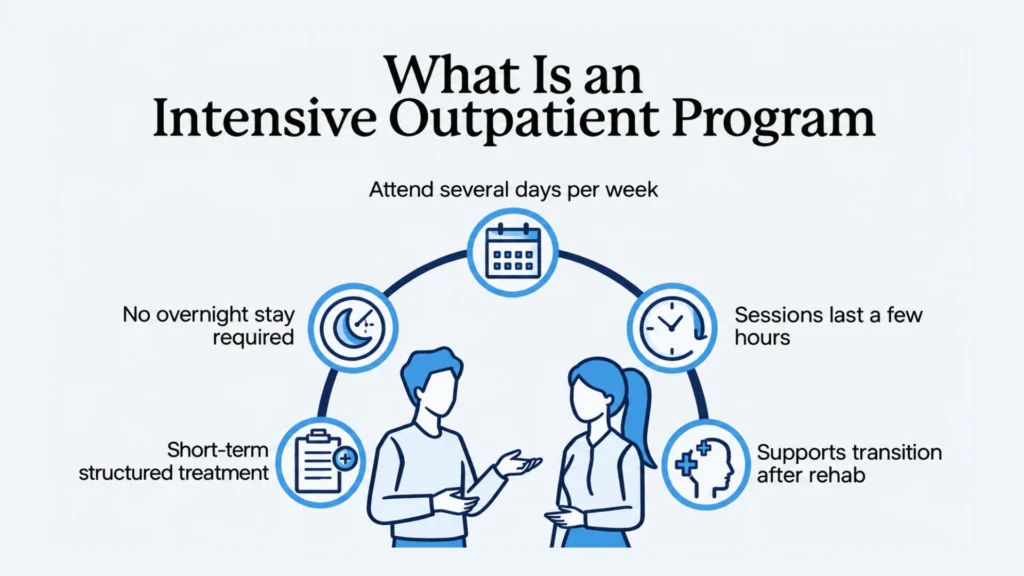
An intensive outpatient program is a non-residential program that requires attending sessions 3 to 5 days a week for a few hours. It allows you to go home after completing the session so you can manage work and family responsibilities effectively. It is especially for those people suffering from substance use disorder or co-occurring disorder who do not require medical detoxification or 24-hour supervision. It bridges the gap between inpatient and standard outpatient therapy. The 2019 National Survey of Substance Abuse Treatment Services reports that 46% of SUD treatment facilities offer IOP treatment that provides more advantages than residential and outpatient therapy.
What Is an IOP and How Does It Help
An Intensive Outpatient Program (IOP) is a structured mental health treatment program that requires going 3 to 5 days a week for 3 to 4 hour sessions. It allows individuals to return home after completing all sessions and therapies that are recommended by therapists according to their needs. It is less intensive than a partial hospitalization program but gives more support than outpatient therapy.
Research shows that intensive outpatient programs are for people with substance use disorder or co-occurring disorders who don’t need medical detoxification or 24-hour supervision. They help to give psychological support and individuals learn relapse management skills at an early stage so they can protect themselves from relapse triggers. Coping strategies in IOP treatment plans use different therapies like individual, group and family therapy so that patients who are facing anxiety, stress, depression and mental illness can be supported.
Who Is IOP Treatment Right For
Intensive outpatient programs are right for people with mild to moderate mental health disorders who don’t need 24/7 supervision. It is best for those people who need support weekly but want to go back home to manage work and responsibilities. It is mostly used to treat anxiety, depression and other mental health conditions through different evidence-based therapies that focus on the individual and provide personalized treatment for effective recovery. There are some conditions that may benefit from IOP include.
- Mental health issues ( Anxiety, Stress, Depression )
- Psychological trauma
- Post-traumatic stress disorder.
- Eating disorder
- Dual Diagnosis
How Does an IOP Program Work? A Day in the Life
An IOP provides structured addiction and mental health treatment that allows patients to live at home. It may include several sessions, such as individual counseling, group therapy, and skill-building activities, to achieve effective recovery. There are some important points that will show you how IOP treatment works to make recovery long-lasting.
1. Initial Assessment And Screening
Assess the patient before starting the Intensive Outpatient Program because our licensed therapists assess the individual’s mental health and substance use history. We include personalized treatment plans that involve various weekly sessions and therapies for effective recovery. This treatment plan also provides educational workshops and support groups so the patient can attend them and improve themselves.
2. Conduct Therapy Sessions
Patients attend regular and structured treatment therapy sessions to treat addiction and mental health symptoms. There are some evidence-based therapies that give support for lasting recovery. Explore some therapies that help to treat co-occurring disorders, manage relapse and withdrawal symptoms.
- Individual therapy: This is a structured one-on-one session where a trained and licensed therapist helps a person struggling with personal issues. This therapy provides support to manage emotional, cognitive and personal challenges in a supportive environment.
- Group therapy: This session involves one or more psychologists leading a group of 5 to 15 patients. The group session can last an hour or two each week, where patients share their challenges and success stories to gain motivation. This group session is designed to target specific problems which may include depression, obesity, co-occurring disorders, chronic pain, and substance use.
- Family therapy: Family therapy is also known as family counseling that focuses on improving communication and resolving conflicts within a family system. We organize this session where the patient and family members sit together and both sides share their perspectives. This reduces communication gaps that were creating misunderstandings. Reducing the gaps between the family and the individual reduces the impact on the entire family and helps the patient to achieve recovery.
3. Duration of the Therapy
IOP covered participants attend the session 3 times a week. It lasts 3 to 4 hours per session and can last 8 to 12 weeks. The duration of IOP sessions can be changed depending on the person’s condition. Inpatient or residential care is mostly recommended for severe patients who don’t benefit from PHP after IOP.
What Are Intensive Outpatient Program Requirements
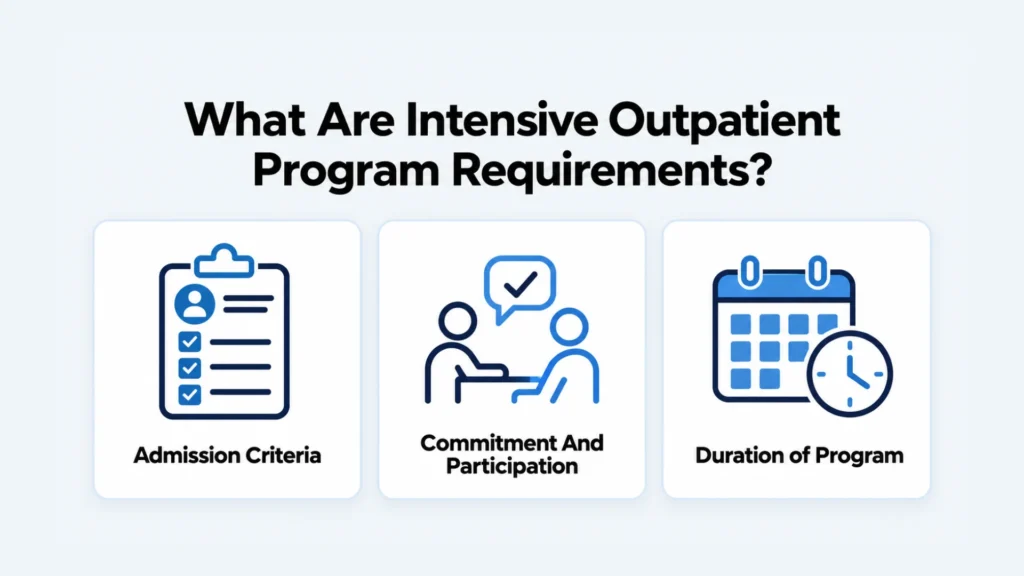
IOP admission requires a clinical assessment to confirm that a person can participate in IOP treatment. Participants must be committed to attending structured sessions and willing to attend 3 to 5 days a week for therapy and counseling sessions. Before enrolling in IOP, you should know if you are eligible for this program. There are some points that show the IOP requirements.
Admission Criteria
Individuals should complete the assessment criteria to determine whether this treatment is appropriate for their health or not. Our certified therapists check medical history, conduct a psychological evaluation, and then recommend a specific treatment that best fulfills their needs.
Commitment And Participation
It is necessary for the individual to attend scheduled sessions to engage in treatment. They should be able to participate in therapy and ensure they will follow the treatment plan to achieve recovery. Regular attendance and involvement in therapy will help you achieve recovery faster.
Duration of Program
The recommended duration of IOP is 90 days. If your addiction and mental health condition do not show any progress toward recovery after attending therapy and counseling sessions. you need to choose more sessions. This intensive outpatient program is not for a long period; you need to choose PHP for more intensive sessions.
Build Skills for Lasting Recovery
Learn to manage triggers, cravings, and emotional challenges through structured IOP support.
How IOP Supports Recovery Through Therapy
IOP supports recovery through structured therapies, counseling sessions, and peer support that allow participants to continue living at home. Freedom Recovery Center in New Jersey provides different evidence-based therapies for effective recovery. We enlist some therapies that are really effective in achieving recovery.
- 12-Step Facilitation
12-Step facilitation is a set of semi-structured therapies that help people recover from alcohol and other drugs. This approach is helpful for introducing Alcoholics Anonymous (AA), Narcotics Anonymous (NA), or Cocaine Anonymous (CA). Roughly twenty percent of twelve-step programs help those struggling with addiction. The other eighty percent deal with a variety of issues from mental health to debt.
- Cognitive Behavioral Therapy
Cognitive Behavioral Therapy helps individuals make the connection between emotions and behavior. It can teach practical skills to manage stress, reduce relapse risk, and develop a healthy lifestyle.
- Dialectical Behavioral Therapy
Dialectical Behavioral Therapy supports recovery by teaching emotional skills, mindfulness practices, and strategies to support relapse prevention. These skills can help manage intense emotions and cravings and avoid impulsive behavior during the recovery process.
- Individual Therapy
One-on-one sessions are provided where a person shares personal issues and receives help with co-occurring disorders. It provides support to manage emotional, cognitive, and personal challenges in a supportive environment. FRC also offers individual therapy where a person’s challenges are heard and emotional counseling is provided to help them achieve recovery.
- Group Therapy
The group session can last an hour or two each week where patients share their challenges and success stories to gain motivation. This group session is designed to target specific problems which may include depression, obesity, co-occurring disorders, chronic pain, and substance use.
- Family Therapy
We organize this session where the patient and family members sit together to improve communication or resolve conflicts within a family system. This reduces communication gaps that were creating misunderstandings. Reducing the gaps between the family and the individual reduces the impact on the entire family and helps the patient to achieve recovery.
How is IOP different from PHP and outpatient therapy
Understanding the comparison between intensive outpatient treatment and a partial hospitalization program is essential because it allows the patient to go home to manage job and family responsibilities. IOP is less intensive than a PHP program, which requires 9 to 15 hours weekly. Outpatient therapy gives less support than PHP vs IOP. To see more detailed differences between these treatments, take a look at the table below.
| Aspect | Partial Hospitalization Program (PHP) | Intensive Outpatient Program (IOP) | Outpatient Therapy (OT) |
| Time requirement | Daily sessions provided for several hours | Sessions provided 3 to 5 days a week for a few hours each day | Sessions provided a few days in a week |
| Duration | 4 to 8 hours per day and 5 days per week | 3 to 5 sessions per week for fewer hours, usually 3 days/week | 1 to 3 sessions per week for shorter durations |
| Intensity | More intensive | Moderately intensive | Less intensive |
| Treatment setting | Allows overnight stay at home | Allows more time at home and managing daily responsibilities | Maximum time at home with minimal disruption to routine |
| Ideal | Ideal for severe symptoms | Ideal for mild to moderate symptoms | Ideal for less severe symptoms |
| Benefits | Holistic approach, immediate intervention, fast recovery, overnight stay at home | Structured support, flexibility, relapse prevention, maintain daily activities | Cost effective, flexibility, maintain daily activities |
Benefits of Choosing Intensive Outpatient Treatment at Freedom Recovery Center
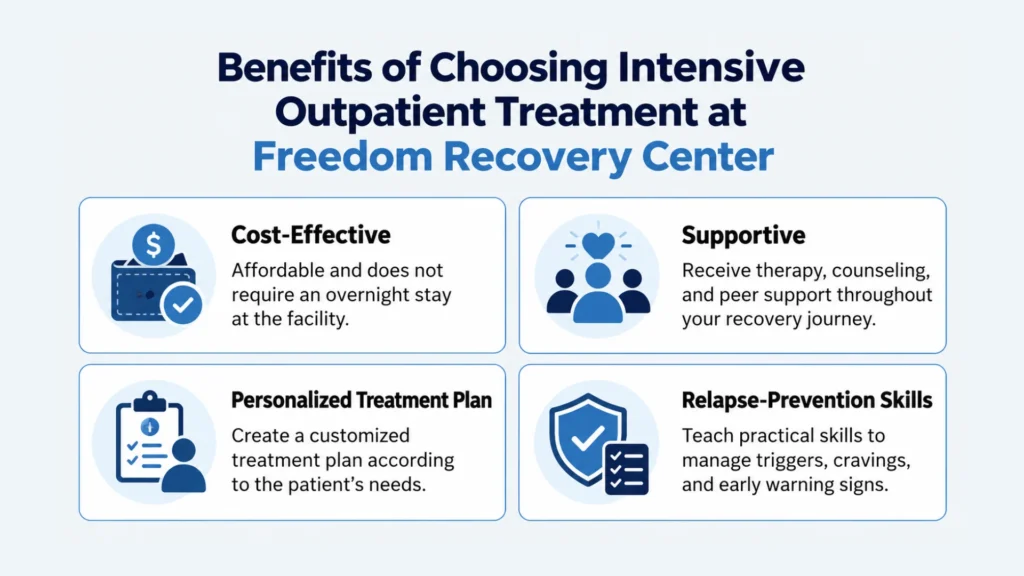
An Intensive Outpatient Program is a structured treatment program that allows you to go home after attending sessions. At Freedom Recovery Center, we also offer an Intensive Outpatient Program that helps individuals with substance use and co-occurring mental health disorders through evidence-based therapies and relapse-prevention planning. Learn more about the benefits and why you should choose our recovery center for IOP treatment.
- Cost-Effective
IOP is more affordable than an inpatient program because it does not require an overnight stay at the facility. You attend therapy sessions, receive clinical support, and return home after completing the sessions. The cost may vary depending on your program and whether you have insurance coverage.
- Supportive
We offer different therapies to support recovery. These may include individual therapy, group therapy, family therapy, Cognitive Behavioral Therapy, and Dialectical Behavior Therapy to support emotional and behavioral health. We help individuals by listening to their personal challenges and strengthening communication for reliable recovery. Family involvement can improve motivation and reduce the risk of relapse.
- Personalized Treatment Plan
Our licensed and experienced staff assess the patient’s condition by reviewing their medical history and communicating with the individual. They create a customized treatment plan according to the patient’s needs. This treatment strategy ensures that each person receives appropriate therapy, counseling, and ongoing support.
- Relapse-Prevention Skills
Our IOP treatment program teaches practical skills to manage triggers, cravings, and early warning signs. We provide individuals with coping strategies and continued care to strengthen their skills so they can handle relapse triggers when they occur.
Does IOP Cover Insurance In New Jersey
Yes, several health insurance plans provide coverage for IOP treatment in New Jersey. The insurance coverage is usually available for Substance Use Disorder (SUD) and mental health treatment. The cost of IOP treatment is $20 to $200 per session with insurance but it depends on the coinsurance and deductibles. Insurance-covered IOP programs may include Alcohol Use Disorder (AUD) treatment, counseling , therapies and dual diagnosis care.
Secure Your Loved One’s Mental Health With Insurance Coverage
Don’t worry about the cost because our intensive outpatient program accepts multiple insurance plans to make the treatment affordable. Verify your insurance today, and let’s move toward completing your recovery journey.
How to Choose the Right Intensive Outpatient Program
If you are searching for the best Intensive Outpatient Program (IOP), there are many options where you can get these services. Just make sure the following things are present in the center:
- Accreditation: Ensure the center you enroll in is accredited, like it follows all regulations and quality standards of behavioral health. Make sure the staff are licensed and have professional certification to provide IOP treatment.
- Experienced Staff: Choose a center with experienced staff, as they will provide better counseling for medical issues and increase your chances of a quick recovery with better case management.
- Insurance Coverage: Select a treatment center that accepts insurance, which will help to cover the cost of treatment. There are many insurance companies that are connected with rehab to give insurance coverage, but it can vary depending on which program you are choosing.
Find Personalized IOP Treatment at Freedom Recovery Center
Freedom Recovery Center in New Jersey offers personalized treatment plans to treat substance use and mental health issues. We first assess the patient’s condition and recommend whether they need IOP or not. This flexible and structured program allows you to go home after completing the session. We include various therapies like individual, group, and family therapy to engage people and help them learn strategies in therapy. Our licensed staff ensures that every patient gets a safe and comfortable environment at FRC with accurate treatment. If you are also looking for the right rehab for IOP treatment, you can visit FRC to achieve better and long-lasting recovery.
Frequently Asked Questions To Know About Intensive Outpatient Program
How to start an IOP program?
Assess the patient to start the Intensive outpatient program. The treatment plan is finalized after reviewing the patient’s medical history and assessing the patient. The licensed therapist gives a customized treatment plan according to their needs.
Is an intensive outpatient program effective for kids?
Yes, IOP is effective for both children and adolescents when it meets their needs. This program includes various therapies to engage individuals for effective recovery.
How long does IOP usually last?
IOP usually lasts for 8 to 12 weeks and with each session lasting 3 to 4 hours. The duration can vary depending on individual needs.
Can you work while in IOP?
Yes, you can work while attending IOP. IOP is designed for those people who are not severely ill and able to get treatment flexibly.
Is IOP successful for mental disorder patients?
IOP is effective for those with mild to moderate mental health issues. For severe cases, you need to choose PHP and an inpatient program.