Do you need a Partial Hospitalization Program instead of outpatient therapy when weekly sessions don’t work? PHP is an intensive and structured treatment that provides 20 to 30+ hours weekly with daily psychiatric monitoring. Outpatient therapy offers 1 to 2 sessions weekly. If you are struggling with severe mental health issues or substance addiction, PHP is the best option where you can get treatment while managing work or family responsibilities. This guide will help you find 12 clear signs of PHP over outpatient therapy to get a faster recovery.
What is a Partial Hospitalization Program? Overview and Benefits
The American Association for Partial Hospitalization defines a Partial Hospitalization Program as an intensive outpatient program used for the diagnosis or treatment of serious mental health disorders. This program allows you to go back home in the evening after completing the sessions. It is used to treat serious mental health illnesses like anxiety, stress, and depression.
PHP typically lasts 4 to 8 hours each day and 5 days a week. It is best for people who want to get treatment for co-occurring disorders while managing job and family responsibilities. Our Freedom Recovery Center offers PHP for co-occurring disorders to treat mental illness. We have licensed and experienced staff who care about the emotions and feelings of individuals to achieve recovery faster.
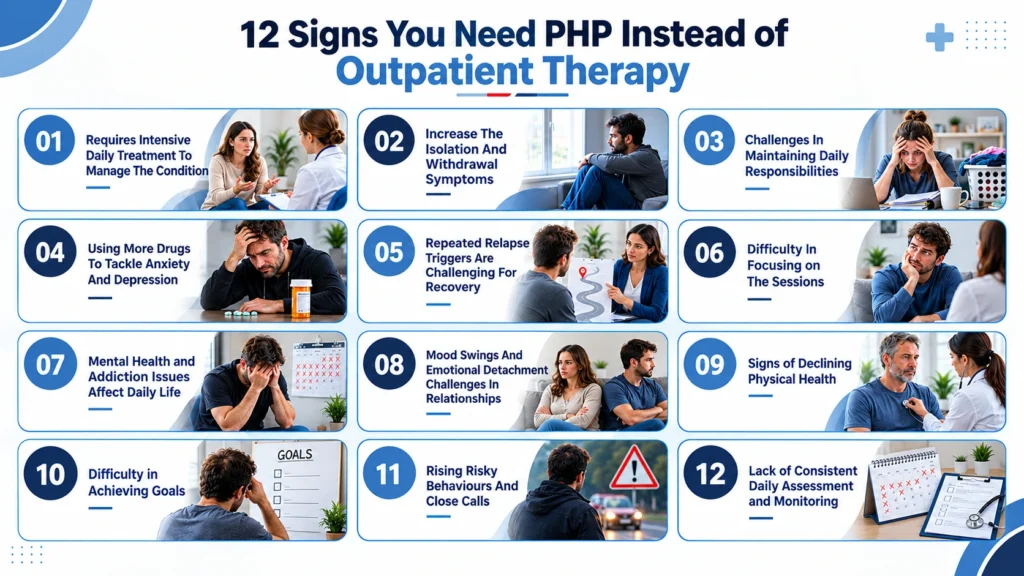
12 Key Signs You Should Choose PHP Over Outpatient Therapy
If you are facing severe mental health issues but are still using an outpatient program and not recovering, PHP is here to tackle the severe symptoms of mental health conditions. There are some signs through which you can estimate when you should choose the Partial Hospitalization Program.
1. Requires Intensive Daily Treatment To Manage The Condition
Individuals with severe mental health issues can benefit from a Partial Hospitalization Program (PHP). It provides intensive care to manage the severe symptoms effectively. People with severe conditions are using outpatient programs, which often do not address withdrawal symptoms, causing their condition to worsen rather than improve.
2. Increase The Isolation And Withdrawal Symptoms
When people use outpatient therapy, they attend therapy or counseling sessions only on the days they are scheduled. Outpatient therapy is not suitable for severe conditions. As a result, the patient’s condition worsens and they prefer to live alone.
A partial hospitalization treatment plan is preferred for severe conditions because the patient’s condition is assessed daily. The patient attends therapy sessions 5 days a week, which involve different skills and learning strategies to control symptoms when they are triggered.
3. Challenges In Maintaining Daily Responsibilities
Choosing PHP and outpatient therapy is good for maintaining daily responsibilities. Both have different effectiveness depending on the severity of your illness. PHP allows you to go home in the evening after attending the session. On the other hand, outpatient therapy requires you to go 3 times a week according to the session, which allows you to manage your work effectively.
When a person is facing many mental health conditions, it can be difficult to fulfil daily responsibilities. Outpatient therapy helps you to manage your work while attending sessions. You don’t need to go daily to these sessions, but it is effective if you have just low-intensity issues.
4. Using More Drugs To Tackle Anxiety And Depression
When people use outpatient therapy and they may get demotivated after seeing no improvement. They start consuming more drugs, which worsens their symptoms and leads to withdrawal symptoms. Choosing PHP is a wise decision when you experience relapse triggers and withdrawal symptoms.
Our Freedom Recovery Centre in New Jersey offers different treatment programs and therapy sessions that may include cognitive behavioral therapy (CBT), Dialectical Behavioral Therapy (DBT) and many holistic approaches. It will help reduce the urge to use drugs and also reduce the withdrawal symptoms.
5. Repeated Relapse Triggers Are Challenging For Recovery
The person who experiences relapse triggers may lose control. They feel an urge for drugs immediately because cravings start to spike. Outpatient programs may be useful at this time, but if you choose this program, you will need many sessions. In this situation, PHP provides the benefit by offering daily sessions with immediate intervention. A Partial Hospitalization Program is best for achieving recovery because our Freedom Recovery Center assesses each patient and gives a customized treatment plan accordingly.
Start Your Healing Journey With the PHP Program
PHP offers a structured environment that tailors to your needs. Call us to begin your journey with better care and support.
6. Difficulty In Focusing on The Sessions
When a patient is already attending outpatient therapy but sees no improvement with this program. They often struggle to stay focused during sessions, which delays recovery. Although outpatient programs provide sessions, these may be infrequent and less intensive.
Partial Hospitalization Programs offer daily sessions, including individual, family, and group therapy. They keep the patient engaged and help to relieve stress. This frequent approach increases focus and supports quick recovery.
7. Mental Health and Addiction Issues Affect Daily Life
Mental health and addiction issues can disrupt daily life. Individuals with co-occurring disorders and substance use disorder may struggle and cravings while choosing outpatient therapy. If the patient does not get drugs immediately, withdrawal symptoms begin to appear. Intensive care is the ideal option that handles the patient immediately through therapies or medication.
8. Mood Swings And Emotional Detachment Challenges In Relationships
Mood swings and emotional disturbance can damage relationships by creating misunderstandings. PHP plans family therapy sessions to clear misunderstandings through communication and help the person gain support from loved ones. It provides daily therapy sessions that increase the chances of achieving recovery faster compared to other programs.
Our FRC in New Jersey provides PHP for family support that may include peer support and family counseling sessions to clear misunderstandings through communication. We ensure that the individual and their loved ones close the gaps by hearing the stories from both sides. These strategies can help to achieve a healthy relationship that brings back a stress-free life.
9. Signs of Declining Physical Health
The person’s health can be disturbed due to changes in appetite and sleep issues. PHP is the most preferred method because it provides educational sessions to teach patients how to tackle specific symptoms. Patients can stabilize both mentally and physically by attending the therapy sessions of PHP treatment.
10. Difficulty in Achieving Goals
Outpatient therapy provides fewer sessions, which causes patients to take a long time to recover. According to the National Institute on Drug Abuse (NIDA), outpatient treatment usually lasts less than 90 days, which is often less intensive than a partial hospitalization program. Individuals with serious illness need to take many sessions of outpatient therapy to achieve goals. That’s why choosing PHP is best for severe illness to achieve quick recovery and last longer.
11. Rising Risky Behaviours And Close Calls
Outpatient programs are not enough to handle rising risky behaviours and close calls. The patient’s safety is compromised due to less monitoring. They can do anything that is dangerous to themselves or others as well. The Partial hospitalization Program provides daily sessions, allowing continuous monitoring and assessment. This helps manage the patient’s behaviour effectively and reduces the chances of harmful incidents.
12. Lack of Consistent Daily Assessment and Monitoring
In outpatient therapy, patients only attend sessions on a scheduled day and don’t get daily assessments. This means they continue to follow the same routine without effective improvement in severe illness.
In contrast, PHP offers daily assessments and monitors the patient’s behaviour. Personalized treatment plans are created after an assessment that help patients recover faster. This consistent evaluation is a major reason to support PHP for better recovery outcomes compared to outpatient therapy.
PHP Vs Outpatient Therapy: Which Is Right For You?
It is necessary to consider the severity of the patient’s condition while choosing the program. If the patient’s condition is not severe, they can recover with a few sessions. You can choose an outpatient therapy that requires only a few sessions a week. It can last 4 to 6 weeks. If the patient’s condition is severe, you should choose the Partial hospitalization Program. This program usually lasts 3 to 4 weeks, but the duration can vary depending on the severity of the person’s condition.
Understand The Key Differences And Benefits of PHP Vs Outpatient Therapy
Understanding the comparison between partial hospitalization program and outpatient therapy is essential before choosing the appropriate treatment. PHP is a highly intensive structured program that requires 20 to 30+ hours a week, and outpatient therapy is less intensive and requires 12 to 16 sessions a week. To see more detailed differences between PHP vs OT, let’s take a look at the table.
| Aspect | Partial Hospitalization Program (PHP) | Outpatient Therapy (OT) |
| Time requirement | Daily sessions provided for several hours | Sessions provided a few days in a week |
| Duration | 4 to 8 hours per day and 5 days per week | 3 to 5 sessions per week for fewer hours and need to go 3 days in a week. |
| Intensity | More intensive | Less intensive |
| Treatment setting | Allows overnight stay at home | Allows more time at home and managing daily responsibilities |
| Ideal | Ideal for severe symptoms | Ideal for less severe symptoms |
| Benefits | Holistic approach, immediate intervention, fast recovery, overnight stay at home | Cost effective, flexibility, maintain daily activities |
Do you need intensive care? PHP is here to help
Don’t wait for the symptoms to worsen. Our experienced staff at FRC is providing you with a personalized treatment plan for better recovery.
Ready To Take The Next Step? FRC Is Here To Help You
Our experienced professionals provide you with a PHP treatment plan and proper consultation, in which they listen to the patient’s past experiences. Visit FRC to get a personalized treatment plan that meets your individual needs to help you recover as quickly as possible. Our PHP services not only manage symptoms but also help you heal to achieve success in life goals. As you know, being mentally stable helps you achieve your goals more effectively. Let’s take the next step toward recovery with bright goals.
Frequently Asked Questions About Signs of Choosing Outpatient Therapy Instead PHP
When to choose PHP?
When your mental health and addiction signs become very severe, you should choose PHP because patients are monitored daily and receive treatment plans based on their condition for faster recovery.
What are the signs that indicate you might need a PHP?
There are some signs to choose PHP, including mood changes, withdrawal symptoms, and rising risky behaviours.
How do I know if outpatient therapy isn’t enough for me?
If you are using outpatient therapy but your symptoms are worsening instead of improving, switch to PHP. This program offers daily therapy sessions that increase your chances of recovery.
What benefits does PHP provide that outpatient therapy may not?
This program provides daily monitoring along with therapy sessions where the person is taught to implement the skills learned. When such a healthy environment is created, the patient recovers faster.
How long do sessions last in PHP?
This program includes daily sessions lasting 4 to 5 hours and usually lasts for 5 to 7 weeks. The duration can change depending on the person’s condition.