Some people are unable to say “no” and “enough” when consuming things. They consume more and don’t know when to stop. They don’t say no because of weakness or confusion. It’s all about personal traits and behavioral patterns. That’s why these people are known as having an addictive personality. Addictive personalities can appear in many forms, such as drug addiction, alcohol addiction, and substance use addiction.
If you are also facing issues with drug addiction, do not worry because our Freedom Recovery Center in New Jersey offers an IOP drug addiction program to treat people who are addicted to different drugs. Our passionate staff uses effective strategies to treat patients faster. Let’s talk about addictive personality, the signs it shows and how to treat this problem effectively.
Ready To Break The Cycle of Addiction?
If you or someone is struggling with addictive patterns or co‑occurring mental health issues. At Freedom Recovery Center, we create personalized treatment plans that address both addiction and the underlying personality traits so you can build healthier coping skills and lasting change.
What Is an Addictive Personality?
According to research, addictive personality is a set of traits that can lead a person to engage in different addictive behaviors, such as substance use and impulse control disorders. When a person struggles with addiction for a long time, it can also lead to co-occurring disorders. That is why it is often linked with an addiction-prone personality, and it can contribute to drug addiction, alcohol addiction, and many other forms of addiction.
It is no surprise that many people worry about developing drug or alcohol addiction, but they often try to find the specific traits of an addictive personality. Many people feel confused about whether a person becomes addicted by choice or whether certain traits make them more vulnerable to addictive behavior.
Debunking The Addictive Personality Myth
Research shows that the idea of an “addictive personality” is very simple to explain addiction, because there is no single personality type that predicts who will become addicted. It suggests that some traits such as impulsivity, low conscientiousness, and sensation-seeking may increase risk, but addiction is better understood as the result of a mix of biological, psychological, and environmental factors.
Repeated drug and alcohol use can also change the brain’s dopamine system: substances may trigger strong dopamine surges at first, but over time the brain’s natural dopamine response can become weaker, which may leave a person feeling low, tired, or less motivated.
Common Characteristics of Personality Traits
Impulsivity
Impulsivity is one of the most recognized traits linked to addictive behaviors. People with high impulsivity often make quick decisions without thinking about long‑term consequences, such as overspending, poor driving or using substances to feel instant relief. This tendency to act on urges rather than pause and makes it harder to set or maintain healthy boundaries around drugs.
Difficulty Dealing with Emotional Behavior
Many individuals prone to addiction struggle to manage intense or uncomfortable emotions like sadness, anger, shame, or anxiety. Instead of using healthy coping skills, they may turn to substances or behaviors that temporarily numb or distract them. This pattern of “emotional avoidance” can quickly become a habit, where any difficult feeling triggers the urge. As emotional regulation stays weak and even harder to face problems without substances or compulsive acts.
Obsession Or Compulsive Behavior
Obsessive or compulsive tendencies show persistent, intrusive thoughts and repetitive actions that feel difficult to stop. The person is constantly thinking about the next drink, drug or binge. This rigid, repetitive pattern can resemble OCD‑like symptoms and increases the risk that a person will continue harmful behaviors even when they cause serious problems in relationships or professional life.
Low Motivation In Social Struggles
People with certain personality traits may withdraw from social situations, feel unmotivated, especially facing stress or low self‑esteem. This social struggle can lead to isolation, loneliness, and a sense of hopelessness. Some may use alcohol or drugs just to feel normal in social settings, while others may avoid people altogether and rely on addictive behaviors for comfort.
Difficulty in Managing Stress
High stress sensitivity and poor stress tolerance are common among those with addictive tendencies. Although these behaviors briefly reduce tension and often create more problems such as guilt, health issues, or added responsibilities. This stress cycle can lock a person into dependence, where the addictive behavior is the temporary way to face life’s challenges.
Genetic And Family History Of Addiction
A family history of addiction significantly raises a person’s risk due to a mix of genetic and environmental factors. For example, growing up in a home where substance use is common or where coping skills never changed to normalize these patterns. While genetics do not guarantee addiction, they interact with life experiences, trauma and mental health conditions.
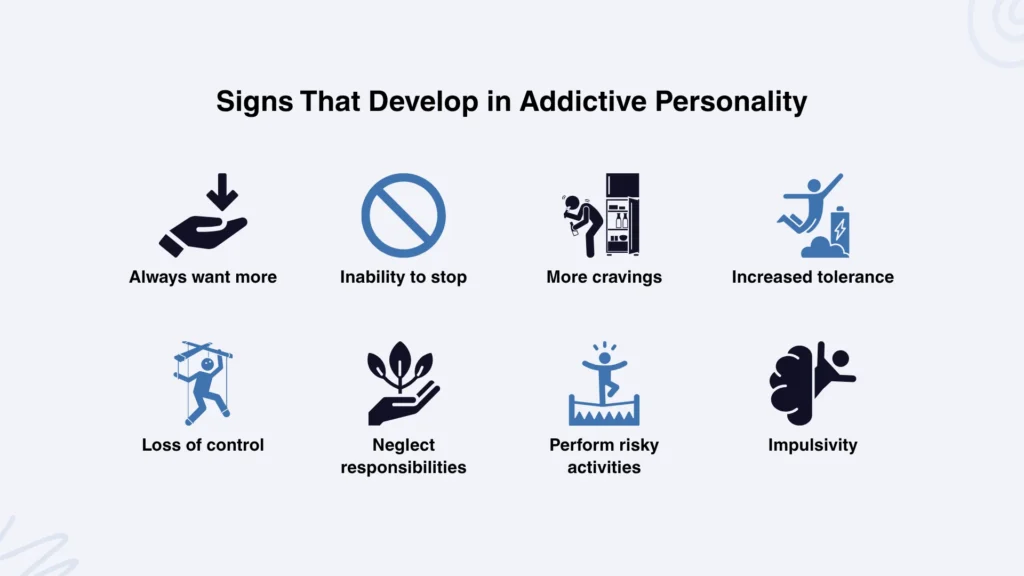
What Are The Warning Signs Of Addictive Personality?
Always want more: The person keeps chasing a stronger or higher and never feels satisfied with what they already have.
Inability to stop: Even when they try to quit or cut back, they find returning to the same substance or behavior again and again.
More cravings: Intrusive thoughts and strong urges pull their attention back to using no matter how hard they try to focus on other things.
Increased tolerance: Over time, they need larger amounts or more frequent use just to feel the same effect they once got from much less.
Loss of control: They end up using more or for longer than they intended even when they promised themselves they would not.
Neglect responsibilities: Forget family duties and self-care because the addiction takes up most of their time and energy.
Perform risky activities: They drive under the influence, use drugs in unsafe settings or take dangerous chances they would normally avoid.
What Are The Links Between Genetics And Addictive Personality
Research indicates that genetics contribute to an “addictive personality” and overall addiction risk, but they do not act alone. Twin and family studies suggest that 40–70% of vulnerability to substance use disorders is heritable that influence impulse control and stress response.
There are Certain genetic variations, especially those affecting dopamine and other neurotransmitters. It is linked to traits like high impulsivity, sensation‑seeking, and difficulty managing emotions, which can make some people more likely to turn to substances or compulsive behaviors.
There is no single gene that determines addiction. Many small genetic factors interact with environmental factors such as trauma, family dynamics and access to substances. This means that having a family history of addiction raises risk but does not guarantee that someone will develop an addiction. Supportive environments and healthy coping skills can significantly offset inherited vulnerability.
Impact Of Mental Health Disorder on Personality Traits
Mental health disorders can affect personality traits by changing the way a person thinks, feels, and behaves. Conditions like depression, anxiety, and other common mental disorders are often linked with higher neuroticism, lower confidence and changes in sociability and emotional control.
Over time, these effects can make a person seem more withdrawn, irritable, or less motivated than before. Research also shows that mental disorders and personality traits influence each other, which means poor mental health can shape personality expression and make daily functioning more difficult.
Take Control. Build A Better Tomorrow.
Recovery is possible with the right support. Our team at Freedom Recovery Center is here to guide you with personalized care and 24/7 support.
Effective Programs to Overcome an Addictive Personality
If you want to achieve recovery from addiction, choosing the right treatment approach is very important for a fast recovery. Our Freedom Recovery Center in New Jersey assesses your condition and provides you with effective treatment. We offer some treatment programs that you can choose from according to your convenience and condition.
- Detox Services: These medically supervised programs are available to control the withdrawal symptoms of the patient. Get detox services under the supervision of experienced professionals and care.
- Inpatient Rehab: In inpatient rehab, patients are assessed all the time, and treatment is provided according to their condition. Patients at this rehab get a peaceful environment for better recovery.
- Outpatient Rehab: This intensive outpatient program in FRC rehab provides patients flexibility to fulfil their daily activities while attending therapy and counselling sessions for quick recovery.
Find Evidence-Based Treatment At Freedom Recovery Center
At Freedom Recovery Center, you can find evidence-based treatment that is designed to support both mental health and recovery needs. Their PHP and IOP programs offer personalized care, family involvement and clinically approved therapies that can help you manage symptoms. It improves daily functioning and moves toward lasting healing in a safe and compassionate environment.
Frequently Asked Questions (FAQs)
Can an Addictive Personality Be Changed?
Yes, an addictive personality can change with the right support and consistent effort. We offer therapy and recovery programs that help people build healthier coping skills to manage and reduce impulsive or compulsive patterns.
Is An Addictive Personality Genetic?
An addictive personality is partly genetic because genes influence traits like impulsivity, reward sensitivity, and stress response that raise addiction risk. Research shows that family history and heredity play a significant role, but there is no single “addiction gene.” Environment, trauma, mental health, and personal choices also strongly affect whether these genetic risks lead to actual addiction.
Are Therapies Effective To Treat Addictive Personality?
Yes, therapies like cognitive behavioral therapy (CBT), dialectical behavior therapy (DBT), and trauma‑informed counselling are effective for reducing addictive behaviors and changing related personality patterns. These treatments help you understand your triggers, regulate emotions, and replace compulsive habits with healthier routines.
Do I Have An Addictive Personality?
You might have an addictive personality if you often chase intense rewards, find it hard to stop once you start, and keep using substances or behaviors even when they cause clear problems.
Why Do I Get Addicted To Things Easily?
People who get addicted easily usually have a mix of biological, psychological and environmental risk factors. Your brain’s system may respond very strongly to certain activities or substances and make them feel hard to quit.