The 5 stages of addiction recovery are precontemplation, contemplation, preparation, action, and maintenance. The recovery is a cyclical process based on the transtheoretical model for long-term recovery. The personalized support on each stage ensures the smooth recovery toward a healthy life, not only stopping drug addiction.
✨ Highlights:
- There are stages of addiction recovery, it doesn’t happen at once.
- Effectiveness of treatment becomes visible during the action stage.
- Continuous maintenance is essential for long-term sobriety.
- Drug addiction recovery phases reflect the behavior and motivation.
5 Stages of Recovery from Drug Addiction
Drug addiction is a persistent condition that affects both physical and mental health. That’s why substance use has effects on an individual’s behavior and brain. The stages of sobriety are also known as the Stages of Change Model or Transtheoretical Model. The five stages of addiction recovery are:
- Precontemplation
- Contemplation
- Preparation
- Action
- Maintenance
Struggling to Understand Where You Stand in Recovery?
Get help from our certified professionals to identify and streamline your recovery journey.
1. Precontemplation (Denial and Resistance)
During the 1st stage of substance use, individuals don’t recognize that drug addiction is a serious problem. They consider that everything is under control while blaming external factors like work, relationships, and stress.
During the first of 5 phases of addiction recovery, people feel confident that quitting drugs is possible anytime, and it doesn’t hurt them. They also don’t consider professional help with the assumption that everyone is using drugs.
Behavioral and Emotional Signs
At the 1st stage of the addiction recovery process, people don’t actively seek treatment. However, they experience different emotional and behavioral signs:
- Denial of consequences for using the substance
- Defensive behavior during the confrontation of addiction
- Continuous addiction despite negative effects
- Persistent resistance to professional advice or treatment
What Helps During Precontemplation
Gentle conversation, empathy, and education are helpful during the initial stage. It is one of the stages of change addiction, where professionals and family members raise awareness without judgment.
It is important to remember that several individuals start the recovery process after experiencing the negative effects. However, compassionate intervention can improve the recovery process for individuals.
2. Contemplation (Awareness and Ambivalence)
In the 2nd phase of the 5 addiction recovery stages, people start to acknowledge that drug addiction is a real problem. However, they can’t decide whether to continue using the substance or quit.
Individuals have different ambivalent thoughts during the 2nd stage of addiction recovery. They know that drug addiction is affecting their lives, but they are not ready to quit. Moreover, they also have the fear of failure during the substance use recovery.
Emotional and Mental Signs
Individuals are aware of drug addiction, but they are unable to make a clear addiction on receiving professional help. The signs of contemplation include:
- Shame or guilt
- Fear of relapse or withdrawal
- Feelings of anxiety without drugs
- Comparing the benefits and drawbacks of quitting
Why Contemplation is Important
Individuals search for treatment options but are not willing to take the serious actions to withdraw successfully. Motivation helps people during the contemplation phase of recovery. It is one of the important stages of change in recovery where encouragement and motivational interviewing are effective.
3. Preparation (Decision for Change)
Preparation is one of the top 5 stages of addiction recovery in which individuals decide to bring change in their lives. During this phase of substance use recovery, individuals start bringing small, meaningful changes in their lives.
Individuals with a drug addiction problem also focus on an active recovery plan. They research the rehab center and talk to a drug recovery counselor. They reduce substance use and set a date for quitting drugs.
Signs of Readiness
During the preparation phase of drug addiction recovery, individuals make effective decisions to break the cycle of addiction. The signs of readiness are:
- Awareness of triggers
- Realistic recovery goals
- Willingness for treatment
- High confidence in recovery
Why Treatment Planning Matters
The ideal preparation eliminates the fear while boosting the success rate of addiction treatment. A solid treatment plan includes a detox program and therapy options. Relapse prevention techniques and aftercare support build a solid foundation for long-lasting recovery.
4. Action (Active Treatment)
Action is one of the effective stages of recovery from addiction, where the recovery becomes more visible for individuals. People with substance use disorder can engage in the treatment phase with the prominent lifestyle changes.
This treatment stage involves the medically supervised detox program to decide on inpatient or outpatient treatment. There are also options of partial hospitalization or intensive outpatient programs for people struggling with drug addiction.
We also offer personalized medication-assisted treatment (MAT) based on individuals’ needs. There are behavioral therapies like CBT or DBT for smooth recovery. Individuals receive trauma-focused care during drug addiction treatment.
Challenges of the Action Stage
It is the most demanding and intense stage of substance addiction recovery. Let’s take a look at the challenges individuals face during treatment:
- Emotional lows and highs
- Triggers and cravings
- Physical withdrawal symptoms
- Mental health conditions
What is the Importance of Professional Treatment
Addiction impacts the brain and demands transformative treatment. The rehab options ensure accountability and structure for the proper emotional healing. During the 4th phase of addiction recovery, professional and peer support help you build coping skills for relapse prevention.
Ready to Take Action and Start Treatment at FRC? Schedule Your Appointment Now!
5. Maintenance (Long-Term Sobriety)
The maintenance stage of recovery focuses on relapse prevention and an addiction-free lifestyle. It is important to consider that recovery is a long-term process that continues even after the treatment.
It is the last of the 5 stages of addiction recovery that includes ongoing counseling and therapy sessions. Individuals can also access 30 peer support strategies for a healthy routine with stress management.
Common Maintenance Challenges
There is a risk of relapse for individuals during the maintenance phase. However, they need effective coping skills to manage the relapse. The common signs include:
- Complacency
- Emotional triggers
- Overconfidence
- Stressful life
Why Relapse is Not Failure
It is essential to remember that relapse is not a failure for individuals. Relapse acts as a signal of the need for additional adjustment or support during the recovery journey. Several individuals return to the recovery process after the relapse.
Non-Linear Addiction Recovery Process
It is crucial to understand that recovery is a cyclical, non-linear process. Individuals can move back and forth between the stages of alcohol recovery. They can also spend more time in one phase than another.
The cyclical process allows individuals to re-enter the earlier phases of addiction recovery after the relapse. It is important to consider that recovery is a growth process, not a straightforward journey.
How Long Can the 5 Stages of Addiction Recovery Take?
There is no fixed or exact timeline for the 5 addiction recovery stages. However, these recovery phases can take months to years for completion. It means recovery can start within months for some individuals, and it’s a lifetime journey for others. The recovery depends on the following 5 factors:
- Severity of addiction
- Physical and mental health
- Personal motivation
- Treatment quality
- Support system
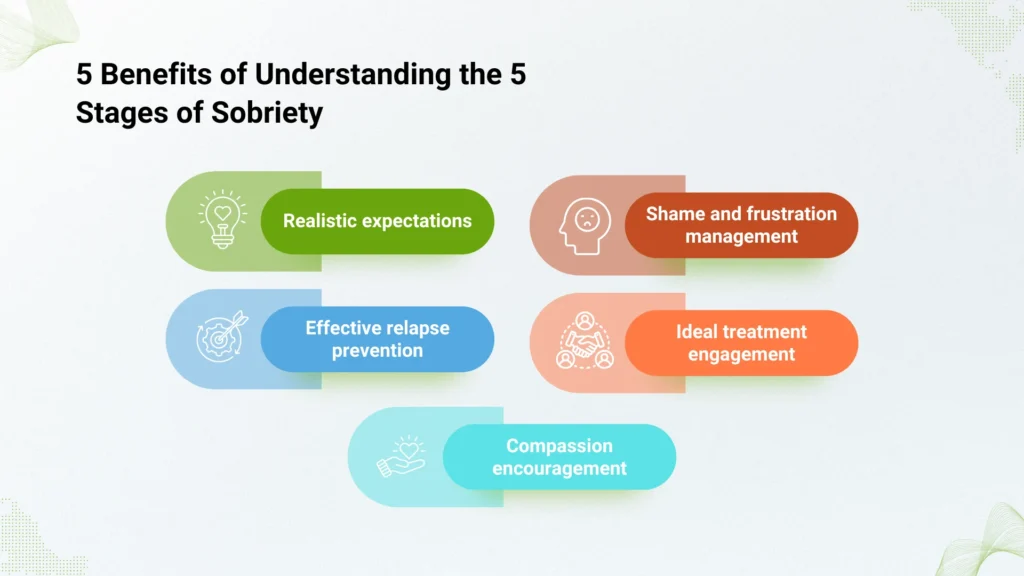
What are the 5 Benefits of Understanding the 5 Stages of Sobriety?
It is a fact that knowledge empowers the recovery journey for individuals struggling with drug addiction. Individuals need to consider the benefits of partial hospitalization or an intensive outpatient program during the phase of recovery.
Let’s explore the advantages of the five phases of sobriety:
- Realistic expectations
- Shame and frustration management
- Effective relapse prevention
- Ideal treatment engagement
- Compassion encouragement
Start the 5 Stages of Addiction Recovery at Freedom Recovery Center NJ
We are proud to offer a smooth addiction recovery process at the FRC to individuals struggling with substance use. Every recovery stage matters, whether you are in denial, ambivalence, decision, active treatment, or maintenance. Let’s contact us today to proceed with the 5 stages of addiction recovery at Freedom Recovery Center!
Recovery Starts with Dedication and Decision.
Reach out now and take the initial step toward a healthy, drug-free lifestyle.
Top Questions and Answers Related to 5 Stages of Addiction Recovery
Let’s explore the answers to the frequently asked questions about the different phases of addiction recovery.
What are the five stages of change in recovery?
The five stages of change in recovery are:
1. Precontemplation
2. Contemplation
3. Preparation
4. Action
5. Maintenance
What are the 5 P’s of recovery?
The 5 P’s of recovery are as follows:
1. Purpose
2. Practice
3. Perseverance
4. Pray
5. Praise
What are the 7 R’s of recovery?
The 7 R’s of addiction recovery are mentioned below:
1. Recognition
2. Responsibility
3. Regret
4. Restitution
5. Recovery Plan
6. Relapse Prevention
7. Reconnection
What is the number one rule of recovery?
The number one rule of recovery is to change your life by starting the treatment safely and smoothly.
What are the three stages of a relapse?
The three stages of a relapse are:
1. Physical Relapse
2. Mental Relapse
3. Emotional Relapse
What is considered early sobriety?
The initial phase of recovery after stopping the use of alcohol or drugs is considered the early sobriety stage.