Understanding bipolar vs BPD is essential because both are confused due to shared symptoms such as impulsive behavior and mood instability. These mental health disorders differ in their patterns, causes, and treatment options. Exploring the differences may help you seek the right care for a smooth recovery.
✨ Key Takeaways:
- Symptoms of bipolar and borderline personality disorder can be overlapped.
- Both mental health conditions differ in terms of causes and treatment options.
- Understand the causes and risk factors of BPD and bipolar disorder.
- Start your recovery journey at the Freedom Recovery Center.
What is Bipolar Disorder?
It is a mood disorder that usually includes extreme changes in activities, energy, and mood. These changes may not occur suddenly but in the form of episodes that can last for days, weeks, or months. Severe changes in the mood usually affect daily functioning.
Types of Bipolar Disorder
There are 3 types of bipolar disorder, which are categorized differently to affect the individual’s mental health. Each type has a distinctive pattern that affects the appearance of symptoms and treatment planning.
- Bipolar I Disorder: It involves severe manic episodes, disrupting daily life and requiring hospitalization. Intense highs are usually followed by depressive episodes.
- Bipolar II Disorder: This bipolar disorder involves hypomania that is less intense than full mania. It also includes major depressive episodes that affect daily functioning.
- Cyclothymic Disorder: A chronic bipolar disorder that involves mood fluctuations with milder intensity. Over time, mood changes can affect emotional stability.
Struggling with Bipolar Disorder or BPD?
Get in touch with the Freedom Recovery Center to receive personalized treatment for BPD or bipolar disorder.
Key Symptoms of Bipolar Disorder
The symptoms of bipolar disorder can start with mood swings and interfere with behavior, energy, and daily life. Let’s explore bipolar vs BPD to receive timely help and recover smoothly.
- Depressive Episodes: Persistent loss of interest, fatigue, and mood in daily life activities. These depressive episodes affect productivity, motivation, and quality of life.
- Mood Swings: Mood changes usually occur without external triggers. These triggers may last for weeks to months, making it distinct from the reactive emotional changes.
- Prolonged Manic Episodes: Individuals experience increased activity level, reduced sleep, and high energy. These manic episodes may lead to impulsive or risky behavior.
💡 Did You Know
Approximately 1 in 200 individuals lives with bipolar disorder. In 2021, approximately 34 million adults were struggling with bipolar disorder.
What is Borderline Personality Disorder (BPD)?
Borderline Personality Disorder (BPD) is a mental health condition that affects an individual’s feelings and thinking processes. This personality disorder may lead to unstable relationships and intense emotional reactions.
Key Symptoms of BPD
It is important to understand the symptoms of borderline personality disorder vs bipolar disorder. Environmental factors and interpersonal stress are responsible for the mood changes as compared to bipolar disorder.
- Fear of Abandonment: Individuals may make prominent efforts to avoid imagined or real rejection. This fear can cause intense emotional instability in relationships.
- Impulsive Behavior: Different actions like risky choices or overspending without knowing the consequences. Emotional distress contributes to impulsive behaviors.
- Intense Relationships: There are relationship struggles tangled between conflict and closeness. This pattern may lead to continuous emotional stability in relationships.
- Quick Emotional Changes: The sudden emotional shifts can occur within minutes or hours. External conditions may trigger emotional changes, disrupting lifestyle.
- Unstable Self-Belief: There is a quick shift in the self-identity that may affect both values and goals. This instability may affect decision-making skills.
💡 Did You Know
Approximately 1.6% to 5.9% of adults in the United States are struggling with borderline personality disorder.
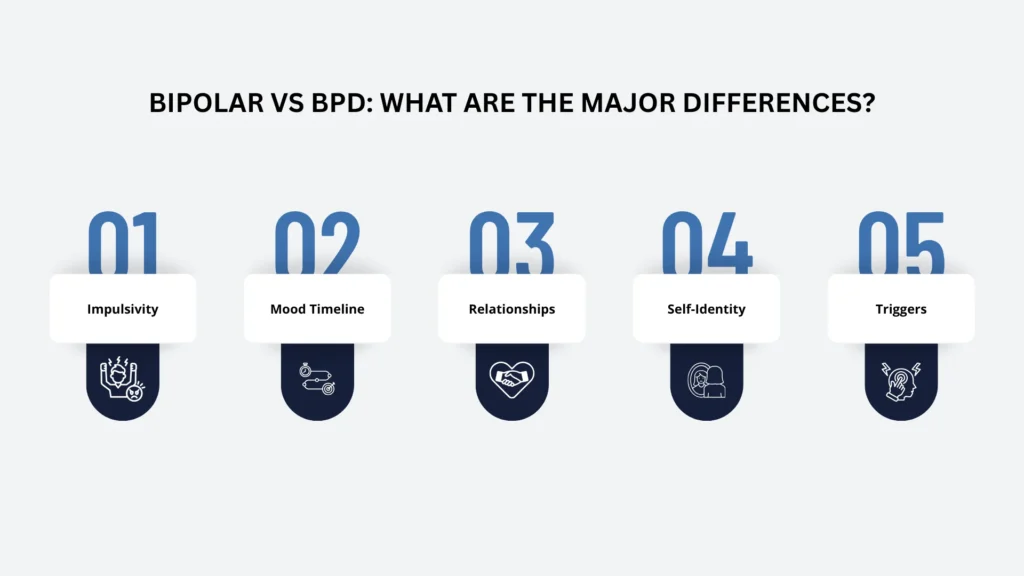
Bipolar vs BPD: What are the Major Differences?
Understanding the difference between BPD and bipolar disorder is necessary because both mental health disorders may seem similar. It is a fact that underlying patterns may indicate clear differences, which can impact both diagnosis and treatment plans.
| Factor | Bipolar Disorder | BPD |
| Impulsivity | During manic | Continuous |
| Mood timeline | Days to months | Hours to days |
| Relationships | Less unstable | High unstable |
| Self-Identity | Usually stable | Frequent changes |
| Triggers | Commonly internal | Usually external |
Impulsivity
- Bipolar Disorder: Impulsive behavior may happen during the hypomanic or manic episodes. The increased energy and mood changes often contribute to these actions.
- BPD: Individuals may experience a continuous and consistent pattern of impulsivity in borderline personality disorder. Emotional distress may lead to impulsive behavior.
Mood Timeline
- Bipolar Disorder: The mood swings may last for days, weeks, or months. These prolonged changes are usually based on the cyclical pattern, not the quick changes.
- BPD: Emotional changes commonly occur within hours or days. These changes are rapid and usually intense; emotional feelings may become unpredictable.
Relationships
- Bipolar Disorder: Mood swings may affect relationships, but become stable over time. Apart from the mood changes, it is easy to maintain consistent connections.
- BPD: Relationships may become unstable and intense due to the emotional changes. It is true that relationships are usually shifted between conflict and closeness.
Self-Identity
- Bipolar Disorder: The sense of self-identity may remain stable between the mood swings. Personal values and self-image are often consistent over time.
- BPD: Self-identity may change dramatically and frequently. Borderline personality disorder can affect personal identity, decision-making skills, and life goals.
Triggers
- Bipolar Disorder: Individuals can experience mood changes without clear triggers. Chemical and biological factors may influence the triggers of bipolar disorder.
- BPD: External factors usually influence emotional reactions in borderline personality disorder. Perceived rejection or interpersonal problems may lead to mood changes.
Bipolar vs Borderline Personality Disorder: Mood Swings
The biggest confusion in bipolar vs BPD is based on mood swings, even though triggers and duration highlight the difference. Understanding the emotional changes may help you receive the treatment.
Bipolar Disorder Mood Swings
The episodic mood changes may last for an extended time, even without clear external reasons. These mood shifts commonly follow the cyclical patterns, leading to the depressive and manic phases. These episodes may feel unpredictable because internal intention is the main influential factor.
Borderline Personality Disorder Mood Swings
There are fast and intense emotional changes in specific conditions. The emotional shifts usually occur in response to interpersonal stress, such as the fear of abandonment and conflict. Individuals can experience the quick changes within hours. Therefore, it becomes overwhelming and hard to control.
BPD vs Bipolar Disorder: Causes and Risk Factors
Understanding the root causes of bipolar disorder and borderline personality disorder helps you understand how emotional patterns and symptoms differ. Both are mental health problems, but they differ in their underlying causes.
Bipolar Disorder
Genetic and biological factors may influence bipolar disorder. It affects how the brain can regulate the energy level and mood over time.
- Genetics Influence: The family history increases the risk of developing bipolar disorder. Genetics plays a major role in how the brain regulates mood.
- Brain Chemistry: The imbalanced neurotransmitters may impact mood stability. These biological factors can lead to extreme emotional changes.
- Family History: There are risks of bipolar disorder if you have close relatives with the mood disorder. This specific mental health problem includes inherited vulnerability.
BPD
Emotional experience and environmental factors influence borderline personality disorder. This mental health disorder is linked with early development.
- Childhood Trauma: Experiences such as abuse or neglect are the most common factors of BPD. These factors usually shape the emotional responses in life.
- Emotional Environment: Growing up in an invalidated environment may affect emotional regulation. It may make it difficult to manage relationships and stress.
- Stress Life: Continuous stress may worsen the symptoms of BPD over time. The stressful events usually trigger emotional instability in daily life.
What is the Treatment Approach for Bipolar Disorder?
The treatment options for bipolar disorder focus on mood stability. Mood stabilizers and antipsychotic medications are used to stabilize the mood. Moreover, cognitive behavioral therapy in the partial hospitalization program helps manage behaviors and thoughts effectively.
The treatment specialists at Freedom Recovery also offer sleep regulation, routine building, and stress management to address bipolar disorder.
What is the Treatment Approach for Borderline Personality Disorder?
BPD treatment involves the use of a therapeutic approach for interpersonal skills and emotional regulation. That’s why dialectical behavior therapy in PHP or an intensive outpatient program is considered the gold standard in treating borderline personality disorder.
At FRC, the certified and experienced rehab professionals offer additional support through skills training, such as distress tolerance and mindfulness. There is also a limited use of medications to address the specific symptoms.
Can Someone Have Both BPD and Bipolar Disorder?
Yes, it is possible that someone can have both bipolar disorder and BPD at the same time. Having both conditions simultaneously is known as the dual diagnosis or co-occurring disorder. The symptoms of borderline personality disorder and bipolar disorder may intensify and overlap.
For treating both conditions, the treatment may become more complex. A combined treatment approach of individual therapy and medication is ideal for the treatment of both mental health disorders. An accurate diagnosis is required to receive effective treatment.
Looking for the Treatment to Address Bipolar Disorder and BPD Simultaneously?
Call the Freedom Recovery Center and receive a combined treatment for recovery from BPD and bipolar disorder.
Start Treatment for Bipolar Disorder or BPD At Freedom Recovery Center
There are significant differences between bipolar and BPD, even though they appear similar. Getting the right diagnosis is the first step towards lasting recovery. At Freedom Recovery Center, we are ready to offer structured support to treat borderline personality disorder and bipolar disorder.
Answers to the Most Common Questions About Bipolar vs BPD
Frequently asked questions about bipolar disorder and borderline personality disorder are answered.
What is the difference between bipolar disorder and BPD?
Bipolar is a mood disorder that includes the long-term cycles of depression or mania. On the other hand, BPD is a personality disorder that is based on fear of abandonment, fast mood changes, and unstable relationships.
Can bipolar disorder be misdiagnosed as borderline?
Yes, bipolar disorder can be misdiagnosed as borderline personality disorder because both mental health conditions share similar symptoms. These symptoms include emotional instability, impulsivity, and intense mood swings.
How to determine if you have bipolar or borderline personality disorder?
You need to consider the professional evaluation from the Freedom Recovery Center to determine if you have bipolar or BPD due to overlapping symptoms such as mood instability and impulsivity.
Which is worse: bipolar or BPD?
Neither BPD nor bipolar disorder is worse because both are severe mental health conditions with distinctive challenges. Bipolar disorder involves long-lasting mood cycles, and BPD involves quick mood swings.
Can you have BPD and bipolar?
Yes, you can have BPD and bipolar, which is a co-occurring disorder and is known as Borderpolar.